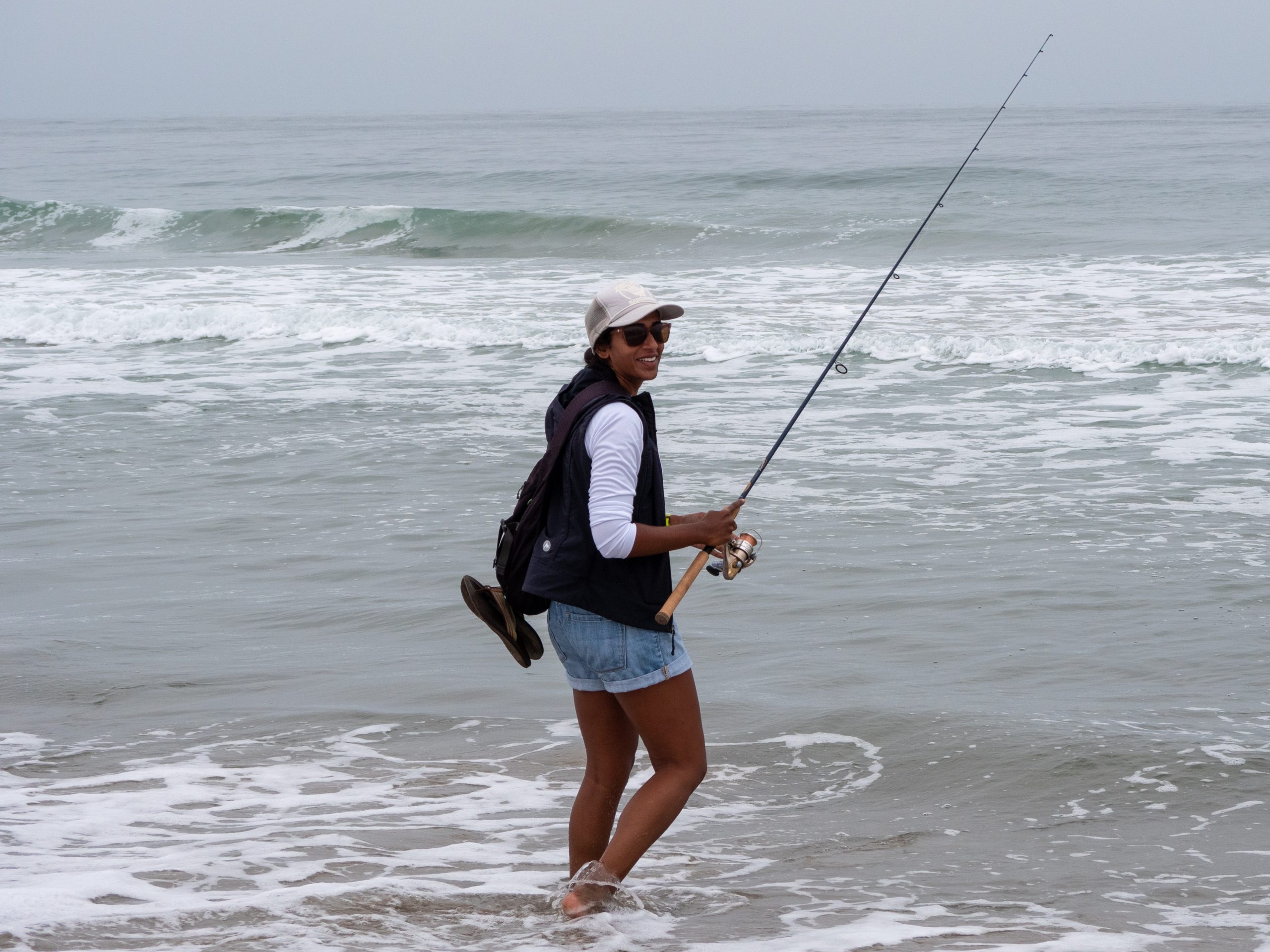
Originally published on August 30th, 2011, Climbing Mount Chernobyl is one of my personal favorite posts. It feels appropriate to re-post it today for World Ocean Day.
Continue reading Climbing Mount Chernobyl: a repost for World Ocean Day
|
Originally published on August 30th, 2011, Climbing Mount Chernobyl is one of my personal favorite posts. It feels appropriate to re-post it today for World Ocean Day. Continue reading Climbing Mount Chernobyl: a repost for World Ocean Day
Earlier this week, I asked my twitter followers what they thought about shark fin bans, which prompted a long and stimulating discussion. What follows is my first attempt at “Storify”, shared in the hopes that the discussion can continue here. As I’ve said before, I’m not a big supporter of shark fin bans because they don’t allow for sustainable, well-managed fisheries to supply the market. Additionally, they promote the common (and false) belief that shark fin soup is the only major problem facing sharks, and don’t address many of the other important issues associated with shark conservation. Instead, I favor a comprehensive approach to shark management, including requiring that sharks be landed with fins attached (i.e. a ban on “finning” but the fins can still be used if the shark is landed whole), special protections for threatened and endangered species, science-based fisheries quotas for species that can sustain fishing, time/area closures or gear restrictions when necessary, and careful monitoring (including requiring that all fishing nations report the species composition of their catch). Check out the great discussion if you missed it, and let me know what you think of this important issue in the comments of this post. Continue reading Shark fin bans: A storify of this week’s twitter discussion
John Shepherd once said that counting fish is like counting trees, except that fish move and you can’t see them because they’re underwater. This is true with sharks as well. It’s basically impossible to know how many sharks there are. Fortunately, a variety of methods exist that can be used to determine population trends. In other words, even if we can’t know how many sharks there are, we can tell if there are more or less than there used to be. Presented here are brief descriptions of some of these methods and the conclusions of major shark conservation studies that used them. Though no one method is perfect, the fact that so many different methods have such similar conclusions is quite telling. Continue reading How severe are shark population decreases, and how do we know? A press release circulating on Twitter, which claims that a “deadly expansion” of a California fishery will negatively affect critically endangered leatherback sea turtles, has been making waves in the marine conservation and fisheries communities, inspiring a series of interesting discussions. Is it better to buy US-caught seafood with some bycatch than foreign-caught seafood from fleets with less strict environmental regulations? Is the current “Pacific leatherback conservation area”, a large region of the ocean where no fishing is allowed, too much of a restriction on U.S. fisheries? Can there be a balance between fisheries and conservation? I invited Jonathan Gonzalez, a California graphic designer with a strong interest in marine conservation issues, to write a guest post about the swordfish fishery in question. You can follow him on Twitter here, and he’s happy to answer your questions about this issue in the comments section of this post. In addition to his graphic design work, Jonathan has served as the assistant director of the Santa Barbara Marine Mammal center, and has worked with the California Shark Coalition to gather support from fishermen for the state’s recent ban on shark fins. by Jonathan Gonzalez Fisheries are complicated and often misunderstood. We often see conflicting information about what fish we should or should not eat and we see general statements about certain gear types that over simplify an extremely complex issue. But don’t be discouraged, learning about fisheries can be very fun and can lead to eating seafood with confidence, free of any guilt or confusion. One particular fishery I want to talk about that is not only complicated, but in my opinion it is California’s most misunderstood fishery. I’m talking about the drift gillnet (DGN) fishery for swordfish and common thresher sharks (CTS). Swordfish, CTS and mako sharks caught in Hawaiian set longlines are also landed in California, but I am not going to talk about that here. I am going to focus on the DGN fishery because this fishery has been in the headlines a bit lately because of recent motions that were voted on at a Pacific Fisheries Management Council (PFMC) meeting. Here is a press release you may have seen that in my opinion is full of factual errors and a few downright slanderous statements. I’m not going to point them all out and I’m not going to try to tell you what to do. Instead I am going to give you some background about the fishery and provide you with information that will hopefully help you to make an informed decision for yourself. Continue reading Good intentions and negative transfer effects: A guest post about the California swordfish fishery
The recently-released movie “The Grey” tells the story of a pack of wolves that hunts the survivors of a plane crash. In addition to both being the subject of inaccurate and negative media portrayals, wolves and sharks share many ecological similarities (sharks have been called “the wolves of the sea”). A panel of wolf scientists and conservation experts agreed to answer my questions about these animals and their thoughts on how “The Grey” might impact their conservation. Dr. Sylvia Fallon is a senior scientist with the Natural Resources Defense Council. She has worked for the American Association for the Advancement of Science, the Environmental Protection Agency, and the National Park Service. DeLene Beland is an independent science writer whose work has been featured by the Charlotte Observer, Earth Magazine, and Wildlife in North Carolina. She blogs at Wild Muse, and is the author of an upcoming book about wolves in the Eastern United States. Cristina Eisenberg is a Ph.D. student at Oregon State University. Her dissertation focuses on the ecological effects of the loss of wolves from forest ecosystems. ![]() Image taken from the South Florida shark fishing club online forum. Photographer undisclosed. I have blocked out the angler's face to protect his identity Update: The angler who originally caught the shark has responded. Please see below.
On February 5th, while standing on a beach in Miami, a fisherman caught a 14 foot great hammerhead shark. According to his account, ”we had it beached within an hour of hooking it. The fish weighed too much her girth was huge. Just the 2 of us wasn’t enough to get it out of the water….We snapped some pictures with our dying camera, measured it at 170 inches and spent the next hour walking back and forth with HER reviving her…it swam off slow and steady” While this might appear to be a simple case of catch-and-release recreational fishing, it is not. My lab and I are supporters of sustainable catch and release fishing. However, it is important to note that since January 1, 2012, great hammerheads (an IUCN Red List Endangered species) have been a protected species in Florida state waters and have additional legal protections. The Florida code indicates that:
In this incident, the shark was brought ashore. We can infer from the statement “the fish weighed too much her girth was huge. Just the 2 of us wasn’t enough to get it out of the water” that the fisherman attempted to pull it all the way out of the water, but was unable to do so (an important legal distinction) . Instead, he ended up beaching it, bringing it so far out that it could not move or breathe. The angler did not immediately release the animal. According to the angler’s account, it was measured and photographed prior to the attempt to resuscitate it. The shark was not released alive and unharmed. By the angler’s own admission, it took over an hour of resuscitation before the animal was able to even swim away slowly. Continue reading Florida angler catches (and likely kills) Endangered great hammerhead shark
I want to apologize to our regular readers for stating something that should be incredibly obvious. Sharks in in no way connected to the global supply of atmospheric oxygen. If every single species of shark went extinct, there would be a variety of negative ecological effects, but a reduction in the global supply of atmospheric oxygen would not be among them. There is not a shred of scientific evidence supporting the idea that the loss of sharks would affect our oxygen supply- not a single scientific paper, not a single technical report. I’ve attended a dozen scientific conferences focusing on marine ecology or shark biology (including three international conferences) and I’ve never seen or heard of anyone presenting or even discussing this. To the best of my knowledge, not a single person who has authored a scientific paper or technical report supports this idea. Despite the complete lack of any kind of credible evidence, and despite many recent blog posts thoroughly debunking it (see here here here here here here and here ), this pseudoscience just won’t die. The premise of the sharks and oxygen claim is as follows: Continue reading “Sharks create oxygen”: A scientific perspective
Watch their answers below.
Earlier today, the National Ocean Council released a new Implementation Plan for the National Policy for the Stewardship of the Ocean, Our Coasts, and the Great Lakes. We asked our colleague Morgan Gopnik, formerly a senior advisor to the U.S. Commission on Ocean Policy, to summarize this new plan.
As most readers of Southern Fried Science probably know, the last decade has produced many depressing stories about declines in ocean health: overharvested fish stocks, waning biodiversity, “dead zones,” invasive species, oil spills, etc. It has also produced a number of studies and high-level Commission reports suggesting solutions to these problems, most notably the U.S. Commission on Ocean Policy’s “Ocean Blueprint for the 21st Century,” released in September 2004. (Full disclosure: I served as Senior Advisor to the Commission.) The Blueprint provided lots of recommendations (212 in all) about controlling pollution, managing fisheries, protecting shorelines, and addressing other specific problems. But its major theme and most significant contribution was to emphasize the need to fundamentally change our approach to ocean management and governance. Continue reading U.S. Ocean Policy Takes a (Small) Step Forward |
||
|
©Southern Fried Science and the explicit author of each piece, 2013. All rights reserved.
|
||
Recent Comments