Andrew is a post-doctoral researcher in North Carolina focused on population and conservation genetics in hydrothermal vent communities.


David is a graduate student in Florida. He studies the ecology and conservation of sharks.


Amy is a graduate student in North Carolina studying local ecological knowledge within small scale fisheries.


Chuck is a graduate student in North Carolina focusing on apex predators and how they interact with fisheries.


Lyndell is a graduate student in North Carolina, studying the feeding ecology of cownose rays.


Iris is a graduate student in Washington studying habitat use and feeding habits of juvenile Pacific salmon and herring in Puget Sound.


Michael is a graduate student in Maryland investigating the visual systems of mantis shrimp.


Archives

Overfishing Rap Battle – Dead and Gone

So I’m sitting in my office revising a manuscript when Dr. Bik over at Deep Sea News dropped some serious overfishing beats on me. In case you thought there was only one overfishing themed rap parody video out there, we’ve got some news for you:

Warning: video contains some graphic footage of sea turtle and shark finning.

Word.

in which four environmental scientists play Oilsprings of Catan, destroy world

Catan: Oilsprings. image by Andrew Thaler

Catan: Oilsprings. image by Andrew Thaler

This weekend I assembled a small team of marine and environmental scientists, including a molecular ecologist, a human geographer with experience in environmental justice, a political ecologist with experience in common-pool resource theory, and a veteran of the US Commission on Ocean Policy with extensive experience in marine spatial planning, to test out the new expansion for Settlers of Catan, Catan: Oilsprings. Settlers of Catan is a popular and expansive board game that focuses on resource management, development, and trading. Oilsprings is designed to add an element of “Tragedy of the Commons” to the game by introducing a new resource, oil, which allows rapid development, but at a cost that affects all players.

Continue reading in which four environmental scientists play Oilsprings of Catan, destroy world

The indelible stamp – Scientists and their tattoos

How do you declare your undying love for science? How do you immortalize your doctoral dissertation? How can you let the world know about your eternal love affair with tardigrades, Euler’s Identity, caffeine, or the voyager spacecraft? If you answered any of these with “get a tattoo!” than you’ve probably already heard about Science Ink: Tattoo’s of the Science Obsessed, by Carl Zimmer.

Over the last several years, Zimmer has been compiling scientists’ tattoos at the Science Tattoo Emporium, which now contains 255 pieces of ink. In Science Ink, Zimmer has selected the best looking,  most memorable tattoos from his online collection and published them in a beautiful book featuring both artwork and insight into each piece.

Zimmer is among the best of the “science communicators”, those who distill the essence of important concepts into comprehensible units. Each tattoo come with either a description of the story behind its origin, its meaning to the canvas, or the fundamentals of the concept it represents. The book covers an extensive range of topics, from mathematics to natural history to physics and astronomy. When I first heard about this project, I was expecting a coffee-table style book of tattoo photographs, but it is much more than that. The tattoos are simply prompts for a deeper exploration into the meaning of science to society, as well as a delightful collection of (very) short stories about individuals experience in science.

Continue reading The indelible stamp — Scientists and their tattoos

The historical origins of ‘whales as people’

In an attempt to garner attention and raise awareness regarding the problematic use of orcas and other marine mammals in captivity for entertainment, PETA, an animal rights group, has sued Sea World, a corporation that builds and manages aquariums and marine parks. Opposition  to Sea World’s brand of entertainment-driven aquariums is nothing new, but this fresh lawsuit adds a novel twist to the boilerplate “intelligent animals don’t belong in captivity” – PETA is suing Sea World for violating these oceanic dolphin’s constitutional rights under the 13th amendment.

The 13th amendment to the United States Constitution explicitly outlaws slavery or involuntary captivity:

Continue reading The historical origins of ‘whales as people’

Are you ready for Hagfish Day?

Ratty would be proud.

Misunderstood Marine Life # 1 – The five biggest myths about Marine Biologists

It’s the moment we’ve all been waiting for, the single most misunderstood marine creature that calls our oceans its home: the rare, elusive, often smelly, occasionally employable, Marine Biologist!

For something so incredibly popular, articulate, good-looking, and revered, there sure are a lot of misconceptions about who marine biologists are and what they do.

Myth # 1 – All Marine Biologists have beards.

Yes, if you look through a history of marine scientists, you’ll find many pictures of old, bearded men. But that’s true if you look through the history of any science and reflects a long cultural history of gender discrimination and outright misogyny. Couple that with a long standing tradition among maritime cultures that women don’t belong on boats, and you might be led to believe that most marine biologists are men. That fact becomes futhur from the truth every day. Among the pioneers in marine science are Mary Rathburn, Julia Platt, and Rachel Carson, while modern barrier breakers range from Ruth Turner, the first woman to use the DSV Alvin for research, to Cindy Lee Van Dover, the first to pilot it (incidentally, no one has a beard on the Alvin, since it would interfere with the emergency respirator should the oxygen system fail).

The website Women Oceanographers (http://www.womenoceanographers.org/) has a spectacular series highlighting the contribution of women to marine sciences.

Myth # 2 – Marine Biologists all study whales and dolphins.

No, we don’t. Some of us don’t even particularly like whales or dolphins. For that matter, we don’t want to work at Sea World.

Myth # 3 – Marine Biologists hate fishermen.

Perhaps one of the most insidious rumors is that we have it out for fishermen. In retrospect, it’s not hard to see where this would come from. Any catch limit, fishery closure, or fishing regulation is going to track back somehow to the work of a marine biologist. And there are some marine biologists who are opposed to fishing, just like there are members of the general public opposed to fishing. But Marine Biologist and fishermen have the same goals – we both want a healthy, productive ocean (that both our livelihoods depend on). Most marine biologist that I know fish, eat fish, and support our local fishermen. In fact, if I didn’t screw up the schedule, I’ll be out fishing when this post is published. Unfortunately, as overfishing is one of the biggest problems facing the ocean, conflicts are unavoidable and we’re going to butt heads on important issues.

Even so, most Marine Biologists would love to see the ocean return to a state of abundance where fishermen can harvest without regulations. Dare to dream.

Myth # 4 – Marine Biologists spend their lives on the water.

This myth is more prevalent among aspiring Marine Biologists. The job looks glamorous, with trips to tropical islands, extended cruises, and life on the beach. While I hate to burst the bubble of the next generation, Marine Biology is mostly lab work and sitting in front of your computer. If I’m lucky, I’ll get maybe 3 months of field work every 2 years. The rest is endlessly freezing and thawing samples, pipetting clear liquids into other clear liquids, and typing, typing, typing. Don’t get me wrong, I love (almost) every minute of it, but it’s a far different lifestyle from what Jacques Cousteau led me to believe.

Myth # 5 – Marine Biologist are all just like Jacques Cousteau.

Milton Love said it best when he wrote ”We really like Jacques Cousteau, too. But, drinking thousands of gallons of red wine while scuba diving around the world does not make you a marine biologist. It makes you a wonderful and effective spokesperson for the sea, and gives you a liver with the consistency of a chocolate necco wafer, but it does not make you a marine biologist.” Most research cruises are more akin to the Life Aquatic, anyway, but with more disasters and less research turtles surviving. A personal submarine would be nice, though.

Misunderstood Marine Life # 6 – Jellyfish

photo by Amy Freitag

“Yikes! It’s a jellyfish, get out of the water!”

I can’t remember how many times I heard this shriek from my friends as a kid around the end of July, when loads of comb jellies washed ashore, the casualties of their massive breeding efforts. Like most kids with a good poking toe, however, I figured out that these jellies couldn’t hurt me. For a number of reasons, not all jellyfish equal a painful sting.

Furthermore, like many sea creatures, they are symbolic of a beautiful greater ecosystem at work but often lead to squeaks and squeals of fear rather than smiles of appreciation. I’ll go so far to say that jellyfish are a good candidate to be a charismatic creature of the sea.

Continue reading Misunderstood Marine Life # 6 — Jellyfish

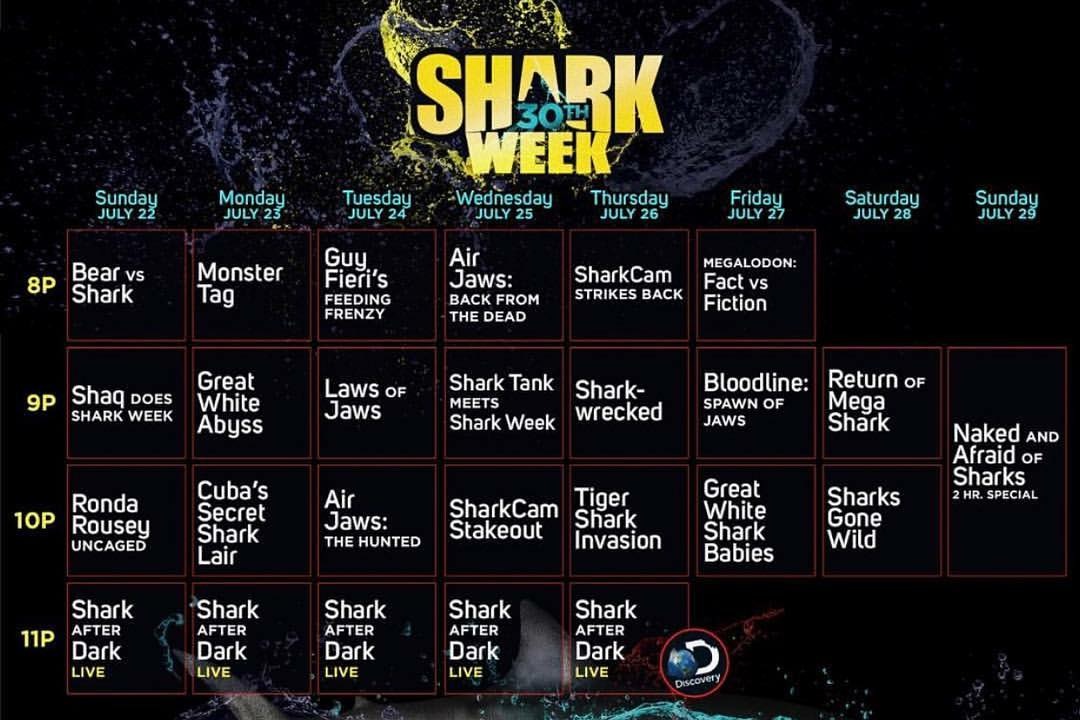
Happy Shark Week!

Love it or hate it, it’s the only week long holiday devoted to nature’s most misunderstood predator. Here’s a little documentary to clear up some misconceptions:

httpv://www.youtube.com/watch?v=GCpKp73kJtI

Crude Rage – A Sea in Flames reviewed

In the year since the Deepwater Horizon sunk, killing 11 people and pumping untold millions of barrels of oil into the Gulf of Mexico, much has been revealed about the causes and effects of this disaster: the chain of events leading up to the explosion, the response (or lack of response) from BP and the US government, the impact of sealife and coastal fisheries. In his most recent book, A Sea in Flames, Carl Safina lays out the timeline of the disaster, the factors the lead to such an egregious lapse in safety, the role that several corporate and government entities played, and the anger. Above all else, this book is about the rage one man feels about a situation that is almost impossible to comprehend.

Continue reading Crude Rage — A Sea in Flames reviewed

Things you might like to know about Physical Oceanography – Tsunamis

This entertaining and informative video comes to us from physical oceanography graduate student Katie Smith.

Hat Tip: Girls are Geeks