Andrew is a post-doctoral researcher in North Carolina focused on population and conservation genetics in hydrothermal vent communities.


David is a graduate student in Florida. He studies the ecology and conservation of sharks.


Amy is a graduate student in North Carolina studying local ecological knowledge within small scale fisheries.


Chuck is a graduate student in North Carolina focusing on apex predators and how they interact with fisheries.


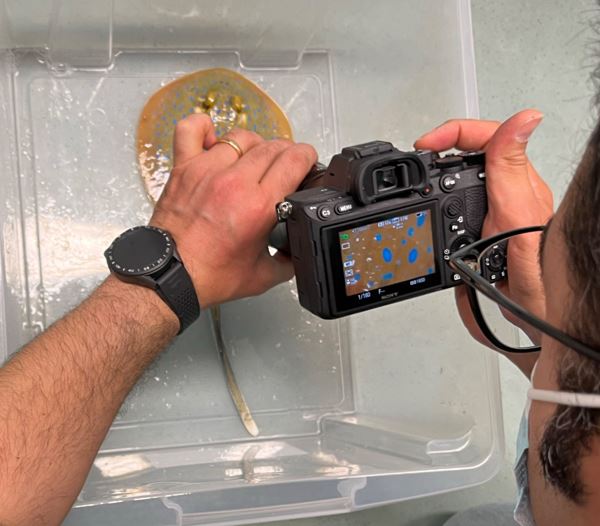
Lyndell is a graduate student in North Carolina, studying the feeding ecology of cownose rays.


Iris is a graduate student in Washington studying habitat use and feeding habits of juvenile Pacific salmon and herring in Puget Sound.


Michael is a graduate student in Maryland investigating the visual systems of mantis shrimp.


Archives

Securing the Conservation of Sharks and Rays

At the 2nd International Marine Conservation Congress, Dr. Nick Dulvy and the IUCN Shark Specialist Group organized a special symposium called “Securing the Conservation of Sharks and Rays”. This symposium featured leading scientists, international policy experts, the founder of a creative non-profit, a National Geographic conservation photographer… and me. It was, without a doubt, the greatest professional honor of my (admittedly brief so far) career.

After everyone gave a 15 minute presentation, the speakers sat on a discussion panel and took questions from the 100-strong audience, which included scientists, conservationists, and fisheries managers from all over the world. The discussion was fascinating and we kept it going more than an hour longer than planned.

Image courtesy Rupert Ormond. From left to right: Nick Dulvy, Sonja Fordham, John Carlson, Claudia Li, Mahmood Shivji, Lucy Harrison, David Shiffman, Sarah Fowler, Thomas Peschak, Rupert Ormond, David Ebert

In addition to providing valuable support for the symposium, the Save Our Seas Foundation also filmed each talk, many of which can be seen below (we are waiting on receiving permission from a few more speakers, and if we receive it, I’ll add the videos to this page). The question and answer session of each talk, as well as the panel discussion, will not be publicly available.

Introduction- Dr. Nick Dulvy (Co-Chair of the IUCN Shark Specialist Group / Simon Fraser University)

The challenges and opportunities of biodiversity conventions for sharks- Dr. Sarah Fowler (Naturebureau)

Strategies for the recovery of smalltooth sawfish, Pristis pectinata - Dr. John Carlson (NOAA National Marine Fisheries Service)

The role of modern communication technology in shark conservation- David Shiffman (University of Miami/ SouthernFriedScience.com)

An overview of the FAO International Plan of Action for sharks- Dr. David Ebert (Moss Landing Marine Laboratory)

The wedding contest model for shark conservation-  Claudia Li, Shark Truth

I’d like to once again thank Nick Dulvy and Lucy Harrison of the IUCN Shark Specialist Group for organizing this wonderful event, the Save Our Seas Foundation for providing travel support to speakers, and each speaker for allowing me to put the videos of their talks online.

If you have a question for any of the speakers, please leave it as a comment below and I’ll make sure that they see it.

5 comments to Securing the Conservation of Sharks and Rays

  • Thank you for your valuable work!

    Like or Dislike: Thumb up 2 Thumb down 0

  • Keep up the great work!! And as a fellow marine biologist, I’m truly proud of your efforts. =)

    Like or Dislike: Thumb up 1 Thumb down 0

  • Gorka Sancho

    Great job putting up the videos, having my biology of fishes undergraduate class watch a few of them!

    Like or Dislike: Thumb up 0 Thumb down 0

  • Tom J

    Spoke to you yesterday(RSMAS). Keep up the good work.
    Since you have the spotlight – take a look at how many sharks you can buy as pets. Simple example google “shark sale”, then try variants. Doesn’t seem to be on radar for many. There have been more available species over the years.
    EX: link to sharksupply.com
    The first exotic shark species (US) was found by a dive operation in WPB 2006. I had spoken to its owner and forwarded the report to USGS NAS (Chiloscyllium punctatum ). Wobbegongs (and their egg cases) have been for sale locally for over a decade.

    Like or Dislike: Thumb up 0 Thumb down 0

  • Roxane

    Great job… I’m truly proud of your efforts.

    Like or Dislike: Thumb up 0 Thumb down 0