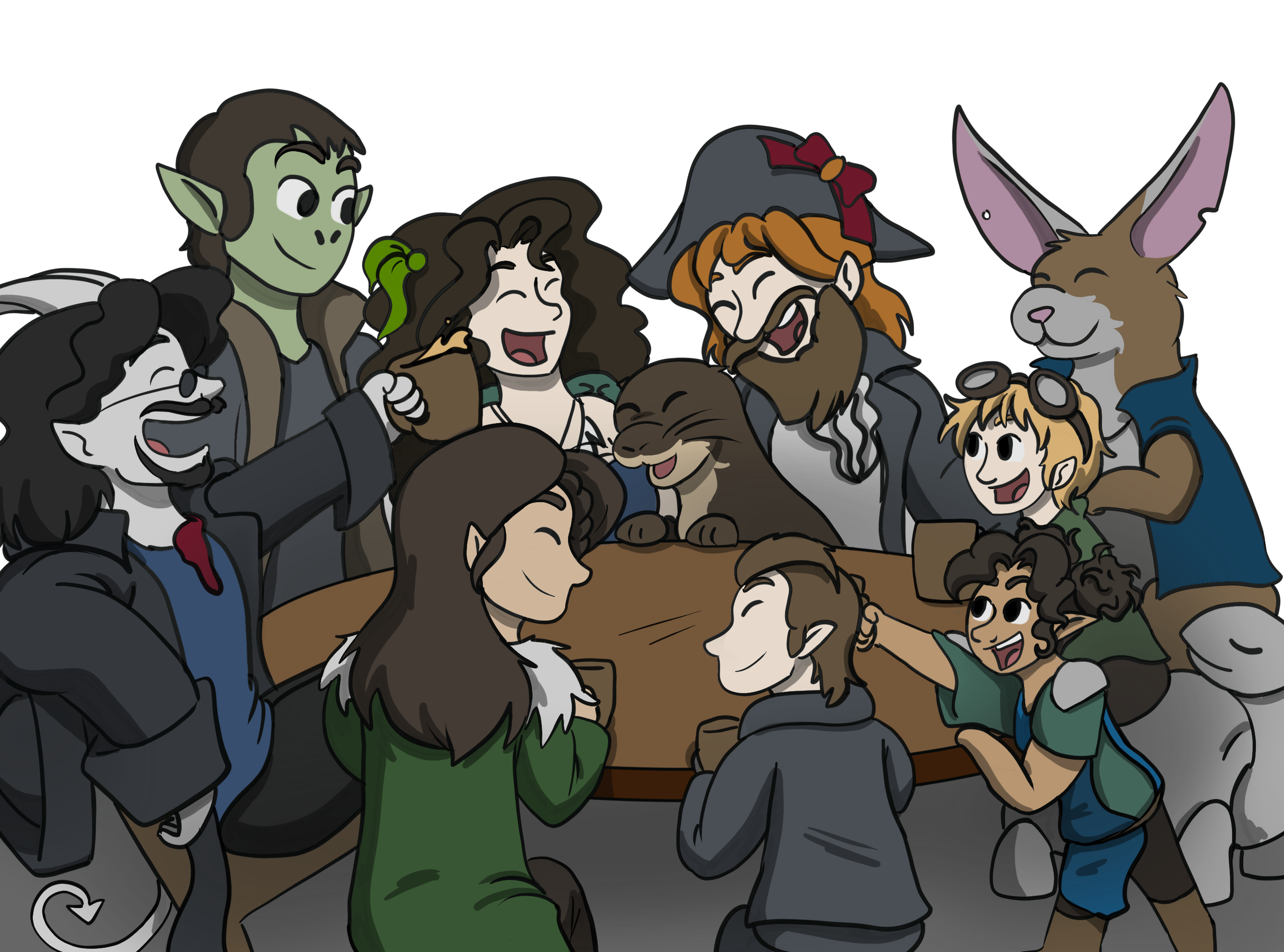
Andrew is a post-doctoral researcher in North Carolina focused on population and conservation genetics in hydrothermal vent communities.


David is a graduate student in Florida. He studies the ecology and conservation of sharks.


Amy is a graduate student in North Carolina studying local ecological knowledge within small scale fisheries.


Chuck is a graduate student in North Carolina focusing on apex predators and how they interact with fisheries.


Lyndell is a graduate student in North Carolina, studying the feeding ecology of cownose rays.


Iris is a graduate student in Washington studying habitat use and feeding habits of juvenile Pacific salmon and herring in Puget Sound.


Michael is a graduate student in Maryland investigating the visual systems of mantis shrimp.


Archives

Crowdsourcing ConGen

Conservation genetics provides essential information for the management and protection of species and ecosystems. Despite it wide applicability and concrete, quantifiable output, very few people in management and policy making positions, as well as in the general public, understand what conservation genetics is and how it can be used. Concepts like F-statistics, effective harmonic population size, the coalescent, along with a host of complex and convoluted equations tend to make the literature impenetrable. Add to that an ever changing host of molecular markers – allozymes, AFLPs,RFLPs, SNPs, microsatellites, mtDNA, 28s, and others – each with their own methods, assumptions, and caveats, and the field becomes almost unapproachable, even to other geneticists.

This is a problem. This is a huge problem because the whole purpose of conservation genetics is to inform management practices and conservation goals. If the average manager can’t understand conservation genetics data, what’s the point?

So this is my goal for the next year or so. To produce what is essentially a guide to understanding conservation genetics for someone coming from a non-science background. But I’m not crazy enough to assume that I can produce something like that on my own. This is where you come in.

Crowdsourcing is the process of opening up a resource to a community for input and contributions. Throughout the coming year I’ll be posting manageable pieces of this document for the audience of Southern Fried Science to read and review. If you are knowledgeable about conservation or population genetics, I’d love all your input, but I’m much more interested in those who are not. I’ve always been an adherent to the axiom that if a reader doesn’t understand something, it’s usually the writer’s fault. I want to know where things are not clear, where they are too technical or too simplified, where you get lost in the text and where you need more information before you continue. My goal is for this project to produce a document that is accurate, clear, concise, and approachable.

Keep watching this post for updates regarding the project, and check back every few weeks for the next installment of Crowdsourcing ConGen.

  1. The Conservation Context in Population Genetics, Part 1
  2. Crowdsourcing ConGen – Populations in Hardy-Weinberg Equilibrium
  3. Crowdsourcing ConGen – Effective size of a population in flux
  4. Crowdsourcing ConGen – A Reading List

~Southern Fried Scientist

8 comments to Crowdsourcing ConGen

  • “If you are knowledgeable about conservation or population genetics, I’d love all your input, but I’m much more interested in those who are not.”

    What if you don’t know anything about genetics, but are taking a class on it finally after years of your friend telling you that you need to know it? Because if you want those kinds of people, I may know someone who can help…

    Seriously though, this is a great idea.

    Like or Dislike: Thumb up 0 Thumb down 0

  • Let me know if you need some input. I can give you some experience and info on the Florida panther and some of the Caribbean coral species, as well as some dealings I have had in trying to make the connection between conservation genetics and policy makers.

    Cheers,

    Mark

    Like or Dislike: Thumb up 2 Thumb down 0

  • Emmanuel Buschiazzo

    I think this is a fantastic, exciting, though challenging, idea. I would definitely help you in any way I can.
    I have experience with microsatellites and genetics, but I haven’t applied microsats as tools for my own research yet. And I would like to focus more on conservation aspects. So I am sort of middle range of knowledgeable people I guess.
    Please let me know!
    Manu

    Like or Dislike: Thumb up 3 Thumb down 0

  • Sounds cool, I am interested to know how it turns out! My dissertation work focused on conservation genetics of salamanders. I was interested in how well landscape models described genetic isolation, and how genetic data could inform population viability analysis. If you’re interested, the publications from that work are online here:
    link to ambystoma.net

    The projects I just described are the Conservation Biology and Biological Conservation papers (landscape models) and the Animal Conservation paper (PVA).

    Good luck with the project!

    Like or Dislike: Thumb up 2 Thumb down 0

  • Megan Dunning

    This sounds like a great project! Let me know if I can help contribute – my graduate work was in ecological genetics before I moved over to environmental education. I can contribute experience and information on plant population genetics (with large SNP sets in particular), plant-enemy interactions…and some perspective on interpretation for the general public and land managers.

    Like or Dislike: Thumb up 2 Thumb down 0

  • This might be a good idea for a wiki document. I am sure there is a plugin to put a wiki page of some sort on SFS. Perhaps as an embeddable document. Or, consequently, edit Wikipedia, Earth’s most trusted resource. No need to duplicate efforts after all.

    Like or Dislike: Thumb up 0 Thumb down 1