
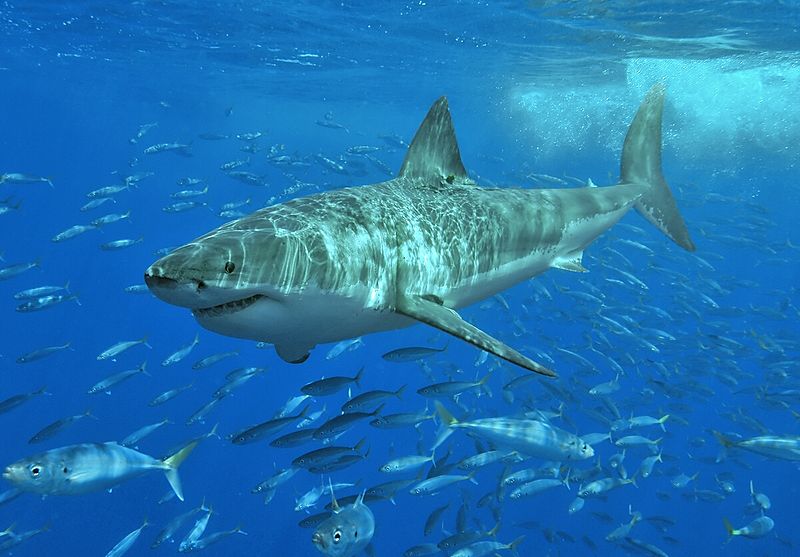


Following the deaths of two whale sharks in 2007, many animal rights activists harshly criticized the Georgia Aquarium for keeping these animals captive in the first place. I recently visited the Georgia Aquarium for blogger day, and the aquarium’s Chief Science Officer Dr. Bruce Carlson agreed to answer my questions about their whale sharks. I know that many of you have strong opinions about shark issues, but I wanted to provide the Georgia Aquarium’s side of the story.
WhySharksMatter (WSM): How did you get whale sharks to Atlanta?
Bruce Carlson (BC): Georgia Aquarium’s whale sharks came from Taiwan’s commercial fishery, which until 2008, caught a quota of whale sharks annually for food (the Taiwanese used large nets to collect them) . The whale sharks at Georgia Aquarium were taken out of that quota. The animals were flown more than 8,000 miles on a specially configured B747 freighter aircraft from Taipei, Taiwan, through Anchorage, Alaska, to Atlanta. All of the whale sharks were under the care and supervision of Georgia Aquarium professional staff, and were maintained by a highly advanced marine life support system.

WSM: Please explain the medical care that your whale sharks receive.
BC: We have a novel, comprehensive health care/preventative medicine program for all our animals, including whale sharks. We routinely take samples including blood, which permits us to not only gather individual health data but generate biological profiles for several species.

WSM: How are the whale sharks fed?
BC: The whale sharks are fed a diet consisting of krill, small shrimp and gel nutrients. Stationed in boats, Georgia Aquarium animal care specialists feed each shark individually by ladling the food into the water as the sharks swim alongside the boat.
(WSM interjection- I witnessed this feeding process and it was pretty cool to watch. Also, the Ocean Voyager tank is indeed large enough that multiple boats can fit in it)

WSM: I have in the past argued that while the life of an individual shark might be worse in an aquarium than in the wild, the presence of sharks at an aquarium helps sharks as a whole by promoting education and conservation to the public. Would you say that your current whale sharks are better or worse off than they would be in the wild? Would you say that the presence of whale sharks in the Georgia Aquarium helps whale sharks as a species?
BC: The immediate answer to this question is “of course they are better off!” The whale sharks on exhibit at the Georgia Aquarium were all destined for the fish market in Taiwan and would have been killed years ago had they not been obtained for this exhibit (NOTE: Taiwan has now banned the killing of whale sharks in their waters). While they are now confined to an aquarium (albeit an immense aquarium!), they are healthy, well fed and receive expert veterinary care.
The ultimate impact that these animals have on the public is of great value. Prior to 2005, only a handful of Americans had ever had the opportunity to observe a living whale shark. Seeing a whale shark was only possible for those who could afford travel to far-off locations, or the lucky few fishermen and boaters who happened upon one out at sea. Since the opening of the Georgia Aquarium, over 10 million people have now had the opportunity to observe these magnificent animals and listen to an informative presentation about their biology. Standing only inches away from a 20’ living animal has significantly more impact than watching a two-dimensional animal on television or viewing a photo in a magazine. I am certain that there are now many more people who care about whale sharks and who would advocate protecting them, than there would have been without this exhibit. And, after watching the response of thousands of children, I have no doubt that at least a few of them will want to become marine biologists as a result of their visit to the Aquarium to see whale sharks. These animals will thus have an impact far into the future. Finally, as noted elsewhere, revenues generated by the Georgia Aquarium have been used to help promote research and conservation of whale sharks in the wild, particularly off the Yucatan coast of Mexico.

WSM: In 2007, the two whale sharks you had at the time died. Animals rights advocates used this as proof that certain animals shouldn’t be kept in captivity. What happened to Ralph and Norton?
BC: Several months prior to their deaths, the Aquarium’s husbandry team observed that both Ralph and Norton stopped eating within a few days of each other. One theory to this loss of appetite was a series of conservative treatments used in 2006 to manage parasites in the 6.8 million gallon Ocean Voyager exhibit (other theories were also considered). The other whale sharks inhabiting the exhibit did not experience this same course of treatment (one that is commonly used in professional aquariums). As a precaution, the Aquarium immediately stopped using this treatment after the loss of appetite was observed. The necropsy performed on Ralph indicated that peritonitis, an inflammation of the membrane that lines the abdominal cavity, was the cause of death. Norton’s necropsy did not produce any immediate findings that explained the possible cause in the decline of his health.

WSM: The Georgia Aquarium is one of the few in the world that allows SCUBA divers to swim in the shark tank for a fee (my local aquarium uses volunteer divers like myself). Some have criticized this program, particularly in the wake of the deaths of Ralph and Norton. Convince us that the program is safe for the animals in the tank.
BC: There are actually several Aquariums that have dive immersion programs, many of which allow people to dive with sharks. And as noted in the question above, we have a theory as to the deaths of the two whale sharks. In Georgia Aquarium’s dive immersion program, the safety of our animals and guests is our top priority. All gear used by the participants is aquarium owned and managed, thus we are able to sanitize the equipment, mitigating the concern of introducing something undesirable to the exhibit. During the pre-dive orientation, safety rules are carefully explained. Guests are instructed on the proper procedures and the importance of observation only during the event. The dive program is a guided tour; it is not a free swim. Any behavior outside of the instructions (such as trying to touch the animal or get to close to it) results in the removal of the guest from the exhibit. After the initial orientation, guests receive an additional on-deck briefing, reiterating the safety rules during the guided tour. Guests are instructed to stay together in buddy pairs and to follow the lead dive master. A safety diver brings up the rear and monitors and assists the guests, while another safety diver maintains the group from the side. Both the safety dive master and lead dive master carry a visual and physical barrier for the animals if necessary. A fourth dive master on deck monitors the dive and is prepared to enter the water and activate emergency response if necessary. For the safety of our guests, a first aid kid and oxygen are always on deck, as well as an AED. All dive masters are rescue and first responder trained and participate in semi-monthly extrication drills. There is also constant communication between the dive team and animal care specialists to ensure everyone is fully informed and aware. In addition to all of these measures, the Georgia Aquarium team appreciates and respects the animals and are ever diligent as to their locations and actions within the environment.

WSM: Advocates for zoos and aquaria often say that money generated by ticket sales goes into research and conservation efforts. What conservation and research efforts is the Georgia Aquarium involved with?
BC: While the Aquarium already has participated in a multitude of research programs, in 2010 Georgia Aquarium is financially supporting and participating in more than a dozen research projects. Some of those include, but are not limited to:
· Three projects researching different aspects of dolphin biology in Florida and Georgia
· Three projects studying beluga whale biology, including continued field research in Bristol Bay, Alaska
· Continued whale shark research in Mexico, with two new foci on offshore aggregations and how they find food
· A study of spotted eagle ray populations off the coast of Florida
· Several clinical veterinary research projects that apply science to improving the care of the animals in our collection
· Sea turtle population monitoring in National Wildlife Refuge(s) on the Georgia Coast
· We will begin our first collaborative project studying Northern right whales, Georgia’s state marine mammal

End of interview
Dr. Carlson paints a very different picture of the aquarium’s relationship with whale sharks than that of the animal rights activists.
The aquarium’s whale sharks were bought from fishermen, and would have otherwise been eaten by hungry Taiwanese. They have access to world-class medical care and healthy food. Money generated by ticket sales goes towards whale shark research and conservation in the wild, and the aquarium itself is full of excellent signage and enthusiastic volunteers who educate people about sharks.
In short, I think that the Georgia Aquarium has done a great service to these particular whale sharks and to the species as a whole. However, ethical debates aren’t just about what I think.
Do you think that it is acceptable for whale sharks to be held in captivity?
Do you think that whale sharks as a species benefit from the captivity of these few individuals?
Are you satisfied with Dr. Carlson’s explanation of the deaths of Ralph and Norton?
Do you think the “dive with the sharks” program is appropriate?
~WhySharksMatter
Note: This ethical debate is a heavily modified re-post of an earlier ethical debate on the old site, which can be found here. It is part one in a series of two interviews with Dr. Carlson about the Georgia Aquarium
While I do understand the importance of raising revenue for various research projects, I was woundering is the Georgia Aquarium doing anything to raise funds/ awareness of shark finning, which is one of the major causes of elasmobranch population decline?
They are raising awareness through their “Planet Shark: Predator or Prey?” exhibit. I’ll have a post on that sometime soon.
Various research projects??Raising any kind of awareness thru Aquariums is simply non existant, ludicrous and hypocritical..Nonhuman mammals have NO place in anything BUT their natural environment.
Or should we witness another death?
In an ideal world all creatures would be wild and free and live happily ever after. Unfortunately we are destroying habitats all over the world. If keeping some creatures in captivity helps educate people so that they help save all the endangered places and creatures, then it is a necessary price to pay. The other benefit is always financial – who would donate enough money to fund all the research that is needed? Ticket sales make a huge contribution.
While I can sort of understand the arguments used promoting the keeping of some wildlife in captivity and the greater good is serves, I also do not agree totally on the notion that seeing things in captivity live necessarily motivates kids to become something in later life. I believe that is achieved more so by how the parents raise the children and what experiences overall they provide for them. In any case, any kid at a young age who KNOWS what he/she wants to do at a later age and actually follows through with that is probably in the minority and is probably going to be ending up that way anyway. Fish may be one thing to keep in captivity, but intelligent animals are another issue entirely. I for one prefer to see any animal in the wild, and for whale sharks this is no exception, especially after having the pleasure to swim with them.
The one point that wasn’t touch upon was whether the sharks are happy. I think if one could demonstrate that, it would be much easier to argue acceptability.
Anyone know what a happy whale shark looks like?
I thought he didn’t really give an explanation: they had a theory, but he didn’t connect it to the autopsies.
Its all about balance, and right now there is no way to hit the nail on the head, if there is no real experience ( a human characteristic – the senses) associated with it, so Aquariums are still important features in a society.
I developed a passion for the Ocean world and in particular Dolphins, when I had a chance in 2009 to touch one in a research institute, the animal was going about its normal daily activities, swiming, and jumping around, but the scars on its body revealed a different story of hardship and near death experiences that it had lived through.
So I try in any way I can to support the cause of these sea creatures and I guess that is the promient ’cause and effect’ of Aquariums.
For and against aquariums:
I like that people can see what’s in the ocean up close; a lot of people do not have the opportunity to snorkel or scuba dive, and it can be hard to see things even if you do! For everyone to be able to get an appreciation of what’s under the sea, and what’s in their local area in particular, is a beautiful thing.
However, I am concerned about the impact upon the natural environment of aquariums of all sizes. Allegedly, many aquarium fish (for home as well as commercial aquaria) are taken from areas without adequate controls to ensure that the impact on the ecosystem is managed and sustainable. I’ve seen fish in US mail-order catalogues which are very difficult to find in the areas that they are from and appear scarce. As such, I’m dubious about the sustainability of keeping wild-caught fish of any kind.
Further, as we saw with Finding Nemo, increased exposure of fish can lead to an increased rate of fish-keeping and increased pressure on fish stocks. As an aside, I’m still horrified by the irony of a film about the misery of being held in a tank leading to an explosion in the keeping of tropical fish in tanks…. Anyway, obviously it won’t be a problem with Whale Sharks specifically, but if people seeing fish in aquaria leads to them wanting their own fish-in-a-tank at home, it could further pressure fish stocks and damage coral reef ecosystems (in particular).
To what extent do aquariums educate and to what extent do they add to pressure upon fish populations? I suspect it’s a difficult question to answer!
I am currently carrying out a study in to whale shark growth rates in wild populations. However, to date, apart from a study on 15 deceased specimens in South Africa, all accurate growth data has come from aquariums. Including live neo-natal specimens removed from the uterus of a pregnant female caught and killed in Taiwan.
Such information can be utilized to determine age at maturity of individual whale sharks and, when incorporating that information in to the study of population dynamics, should help to form a starting point in predicting the responses of populations to various perturbations.
This data, amongst others obtained from captivity, could consequently have a positive impact on our overall knowledge of the biology of whale sharks and therefore may assist in the conservation of the species.
This is obviously only one small part of the argument, and I could go on both for and against for many pages but this is worth bearing in mind.
Why not buy the shark from the Fishermen and then release it ? That would have been a better option.!
I have recently seen ” Sammy ” the whale shark in the Atlantis Hotel Dubai and it’s a disgrace…many articles you can read about it on the web !
KEEPING WHALE SHARK IN AQUARIUM IS SIMPLY NON ADEQUATE!!!!
I think they keep great white sharks as well….:-(((
I left already a comment about it on Facebook, but i really find it monstrous, and simply unbearable to see these species turning in circle in aquarium!!..:-(
What else can we do ???????? if nothing is understood….???
When he says “The whale sharks at Georgia Aquarium were taken out of that quota” does he mean that the sharks were taken as part of that quota or the sharks that were caught and sold didn’t count for the quota?
Whale sharks aren’t mammals. They are fish.
Also, if these particular whale sharks weren’t in captivity, they would be dead now. They were purchased from fisherman who had already caught them and were instead going to sell them to a fish market.
“I also do not agree totally on the notion that seeing things in captivity live necessarily motivates kids to become something in later life. ”
When I was about three years old, my favorite thing to do was to sit by the shark tank at Pittsburgh’s aquarium.
They don’t have great whites at the Georgia Aquarium.
Why do you find it monstrous?
The quota refers to how many whale sharks can be caught and removed from the ocean in the first place. What happens to them after, whether they are sold at the fish market or placed in an aquarium, is irrelevant from a fisheries management perspective.
These individuals animals would have otherwise been sold at a fish market, and no additional animals were sold at a fish market as a result of these guys going to the Georgia Aquarium.
My question was does “taken out of the quota” mean that the whale shark that was sold was “taken out” of the final count for the quota, which would have allowed another whale shark to be caught, or does he mean that the whale shark was taken as part of the quota?
Monterrey Bay Aquarium has a juvenile Great White.
As part of the quota. No other animals were caught as a result of these ones being used by the aquarium.
Do they presently have one? I know they did a few years ago, but I thought they released it. Amy (Hamilton, not BlueGrass Blue crab) and I were pondering a road trip to visit it back in 2007 but I thought it was released.
Did they get another one?
I think I would be much more passionate about the release of these animals if the wild was a safe place for them. With thousands and thousands of dollars worth of fin on the whale shark an aquarium seems like the safest place for them to be. It’s sad that it seems like a death sentence to release them. Unless evidence was found a la The Cove that whale sharks are so unhappy in captivity or people would stop freaking finning sharks into extinction, I think they should probably stay where they are. It seems that they are well attended to but it’s hard to trust what anyone says. The aquarium is, of course, going to say they’re happy and healthy. But that’s probably a different discussion 🙂
What bothers me the most is the way they acquired the shark. The aquarium seems to think they did a good thing by taking the shark from the Taiwanese quota. They paid for the sharks, keeping the hunt for the sharks alive and are now them selves profiting from them as well… something i am very much against.
But i am torn on the matter.
My daughter is now almost 2 years old and i would love to take her to aquariums to see sharks and dolphins in the hope she shares my passion for marine life, and later the protection of it. IF these experiences help build her into a better person, it is hard to say no… sadly the image of kids tapping on glass windows also comes to mind.
I hope that she does the same i do and later in life takes a trip and swims with whalesharks in the wild… the way it is supposed to be. I am sure going to do my best.
“The aquarium seems to think they did a good thing by taking the shark from the Taiwanese quota.”
I think they did, too. The sharks are now alive, healthy, and being used to educate the public about sharks. The alternative was that they would simply be eaten- in which case they would be dead and not educating the public about sharks. What exactly is the source of your outrage here?
“They paid for the sharks, keeping the hunt for the sharks alive and are now them selves profiting from them as well… something i am very much against.”
Wait, are you against fishing for sharks or against the concept of profit?
The demand for these sharks was there before there was an aquarium. If there wasn’t a Georgia Aquarium, there would still be demand for the meat of these sharks.
That said, Taiwan has since made fishing for whale sharks illegal, so this particular “hunt for sharks” is in fact no longer alive .
I don’t know if I’ve ever seen (or heard of) a fish demonstrating happiness… or sadness for that matter.
Some fish are stressed in captivity, and that doesn’t seem to be the case for these particular whale sharks from what I could tell from staring at them with my jaw dropped for four hours. That was hardly a medical assessment, though.
The Georgia Aquarium staff perform medical assessments on their whale sharks, and they told me that the animals are not stressed.
http://www.montereybayaquarium.org/cr/cr_whiteshark/whiteshark_ours.aspx
Oh, cool. Amy’s back from Peace Corps now, I’ll see if she wants to road trip out there. Thanks for the link.
“I think they did, too. The sharks are now alive, healthy, and being used to educate the public about sharks. The alternative was that they would simply be eaten- in which case they would be dead and not educating the public about sharks. What exactly is the source of your outrage here?”
Ofcourse it is a good thing the sharks are now alive and not on a plate, and as i said later in my message if the visitors walk away with a different view on sharks i am all for that as well. But that does not have to happen in a sealed environment, is it not better to go out onto the ocean to view the sharks in the wild?
“They paid for the sharks, keeping the hunt for the sharks alive and are now them selves profiting from them as well… something i am very much against.”
“Wait, are you against fishing for sharks or against the concept of profit?”
Both, i am against fishing for sharks and profiting on either their death or capture. Education is a hard one, as i said i would love to show my daughter the sharks… but i can not shake the bad taste in my mouth. If you can, please help me see this differently.
And as shark hunting in Taiwan being illegal, i don’t think it would be all to hard to find shark pochers and polititions turning their heads there…. but that is a different story 🙂
Whoooops… wrong thread 🙁
I can understand both sides. The whale shark would have been killed and eaten so it was saved by taking to Georgia Aquarium. It is getting great care while there.
I am not yet convinced that it is good to keep in captivity. The results in deaths of Ralph & Norton are part of that reason. I am not happy with report after necropsy. There was not enough information as to why the second one died. Was it loss of companionship? They are living, caring beings even tho they are fish.
On the other hand, the fact that the whale shark has been seen by so many people is great for educational purposes and many more people are interested in saving the species. I think education is the main key in saving all animals.
I hope to be able to see the facility for myself sometime in the near future and get a better prospective.
We conserve what we love. We cannot love something to which we cannot relate. We cannot love something that is abstract, distant or hidden, or else we love the mere fact that it IS abstract, distant or hidden.
As a shark biologist now, I am a testament to this. I LIKED sharks my whole life, but not until I had the privilege of sharing the company of sharks in their natural environment that I truly LOVED these animals. Nothing compares to seeing sharks in person. Discovery Channel does not do these animals justice. The sharks’ utter beauty and grace are so often masked in documentaries by scary, dissonant background music.
However, most folks do not have the time or money to travel far distances to swim with or dive with sharks in the wild. Aquariums are the next best thing. I fully support having whale sharks (and baby white sharks for that matter in the Monterey Bay Aquarium) in appropriate captive spaces, such as Georgia Aquarium. The benefit of people seeing these animals to science and conservation far outweigh the “sacrifices” made by these particular captive animals.
That being said, we must be careful about assigning human emotion to these animals (the same goes for captive killer whales and dolphins). The animal rights activists like to say these charismatic captives are lonely, swimming in their own urine, cramped swimming in a “bathtub,” etc. The truth is, these sharks only care about two things: getting food and mating. And getting food is the most important. If they are fed, the are “happy.” Sharks in aquariums are certainly well fed. And in many aquariums captive sharks mate on a regular basis. Animals mating in captivity is perhaps the single greatest indicator of “happiness,” that is, that all their needs are being taken care of.
For the sake of conservation and getting the public excited about loving and protecting sharks, these whale sharks and the like must be taken into captivity to let people see them. There is no better way to incite that desire to conserve!
When I saw my first whale shark in Galapagos it was the most incredible experience. They need to be free and not turning and turning in a big box.
A complicated issue, especially given the general state of global shark populations. The tragic reality is that as much as any shark lover fights to prevent it, we are losing the fight. Conservation movements have made giant leaps in protecting sharks, but the numbers are still staggering. Millions are taken legally every year, millions more illegally by finners. As long as there is a profit to be made, there will always be poachers. Public perception and understanding has become the primary focus of shark conservation, and there is NO better way to do this than by letting people see them face to face.
However, any aquarium is still a business at heart. They will always state that their animals are happy and their needs are met. Even if there is no concrete way of actually measuring this. Andy is right in saying we need to stop with the anthropomorphic descriptions of how these animals are feeling. “Happiness” is a complex emotion probably not capable in fish, just based on the structure and processing capabilities of the brain. This has become a weapon used by activists in their arguments against captivity, but is ultimately biased.
I can see both sides to the debate. The idea of confining any creature for our profit and amusement is abhorrent and arrogant. As is the complete butchering of entire wild populations. Seeing an aquarium shark is an unforgettable experience for anyone, but seeing one in its natural environment is that and more.
I’ve never understood why some people get so upset about captive whalesharks, but not by captive grouper, or lionfish, or something else in a proportionally similar tank.
I also don’t understand why some people get more upset by captive whalesharks than they do about captive dolphins.
My only guess is that they don’t know much about the biology of the critters. Maybe a visit to the aquarium would help them out? 🙂
“And, after watching the response of thousands of children, I have no doubt that at least a few of them will want to become marine biologists as a result of their visit to the Aquarium to see whale sharks.”
Is it actually that powerful, having seen it?
On the topic of the deaths of the two sharks, I fail to see how a parasite treatment would cause peritonitis, as I’m unfamiliar with whale shark medicine (crazy, huh?). Correlation isn’t causation, and if the only evidence is that those sharks received the treatment and one died of peritonitis, they probably need to revise their theory.
Also, where’d they get veterinarians trained to manage whale shark health? They’re not commonly held, and I’d imagine that they’re very few and far between. You know, unless there’s a required vet school class entitled “Random animal health 754: What to do when you’re totally just WTF why do you have this?!” I’d imagine that the Hotel Atlantis would have been able to provide some help, but I do wonder exactly how much is written on the topic.
Ethically, though, I don’t have a problem with them keeping whale sharks, once I get over the shock of the idea. As an exotic pet hobbyist, my attitude is that, as long as you can give an animal the absolute best care available, you can keep it, and as a conservation-minded person (being a 3rd semester bio major doesn’t really afford me the right to say “conservationist”) I say as long as it was caught sustainably, you can buy it. It sounds like the Georgia aquarium fits those criteria, so I’m a-okay with them.
The only part where I have an issue with it is where it’s too far away for me to visit. I guess I’ll have to make do diving with sturgeon who suck on my head at the local aquarium.
I think the single most important question (to me) hasn’t been answered- are the sharks happy and content or are they miserable and unable to express it?
If someone saved my life, only to keep me captive and on display, I wouldn’t be grateful, I’d be pissed. I know people believe that animals like this don’t have the same range of thought/emotion, but until someone can prove it to me, I choose to err on the side of caution.
Also, saying they have the “best care available” is tricky. If they live longer in the wild than they do in captivity, then NO aquarium offers the “best care available”. I know this is true killer whales, not sure how whale sharks fare.
Good thing sharks aren’t human. You’re anthropomorphizing.
I’ve not heard that no aquariums offer less of an extended lifetime- actually, I’m fairly certain that captive-held animals live up to twice as long, depending on the animal. Most reptiles (bearded dragons for sure) live at least 3-6 years longer than they do in their natural environment. It’s reasonable to extrapolate that this trend might apply to aquaria as well. I can speak to professional aquarists on Tuesday if you’d like.
Saying “the best care available” isn’t tricky. It simply means give the animal the highest quality care based on the best information possible that you can.
With all my respect to the two sides of the story, I do not really understand how dose Georgia aquarium knows that there are whale sharks had just been caught now in Taiwan by fishermen?
I don’t understand your question. They bought the shark from fisherman.
Good reporting, Dave. Again you raise the bar for science blogs and science reporting. Since you are brave enough to seek opinion, I’ll offer this…
The MOST dangerous place for a whale shark to be is in Taiwanese waters. Since these two sharks were bought from the fishery they would have been bush meat, so they were imminently better off at Georgia Aquarium.
There is no question in my mind that aquariums are good for the ocean. They actively raise awareness, and support research. Hopefully the lessons learned will be applied elsewhere.
The captivity issue is a charged one. My guess is that captive animals are not happy. Certain behaviors are indicative. Ideally, the animals would rotate back to the wild (not Taiwan!). If that’s not possible, the tanks should be very large, as they have apparently done in Georgia.
So, in my book, GA did all the right things, and made a positive difference for whale shark populations. Thanks again for the story.
@Sam: The lifespan of Killer Whales (O. orca) is shorter in captivity than in the wild. Granny (J2) is and extreme case but she is 99 years old.
Do we have any idea of what it means to keep captive a migrating animal like a Whale Shark?
We need a better understanding of what it means to various animals to be captive. I have no idea of whether keeping a Whale Shark is OK or not.
Tom
I can’t help but feel that an animal this large just should not be help in captivity. I do not fault the Georgia Aquarium and I understand the reasoning behind capturing wildlife for research purposes. However, I think this issue goes ethically deeper than research and “more people seeing a whale shark”.
I agree with Sweetwater Tom. Do we know what captivity means to animals that normally cover immense spans of ocean? Well, we sure will if we keep catching them and they keep dying.
Our inability to observe a creature in nature to me does not justify forcefully creating the situation.
Jasen…“I also do not agree totally on the notion that seeing things in captivity live necessarily motivates kids to become something in later life. ”
WSM…”When I was about three years old, my favorite thing to do was to sit by the shark tank at Pittsburgh’s aquarium.”
Ok, fair enough…but maybe you MIGHT have ended up doing the same job regardless? No proof of anything…simply anecdotal and also doesn’t prove me right either. As I mentioned, I do not TOTALLY agree it works, which means I do a bit, but am not sure about the solid connection. It’s not an overly scientific correlation just because one or two people have that experience. Someone needs to do a proper study on the subject.
I believe that there are pros and cons to keeping whale sharks at an aquarium; however I do think that some of the pros given in this article require further explanation. One of the interesting things is that whale sharks are there to educate the public, however where are the whale sharks mainly found? What I mean is can the people that are being informed about the whale sharks, really make a difference in the life of the whale shark in the wild? For example the issue at hand is that whale sharks are captured for food in Twain. How are people at the Georgia Aquarium able to save the whale shark population from becoming food? I believe that there are animal rights groups that truly make a difference in the life of endangered species, however the way that the argument is presented “educating benefits the whale shark population in the wild,” does not clear explain the actual benefits that this education has produced.
The one thing that I don’t agree with about holding animals in captivity is the fact that in most cases we hinder them from their natural instincts. For example in the case of the whale shark, these sharks are feed individually so if they ever were released back into the wild how would they fend for themselves. It seems to me that once an animal is brought into captivity, the likelihood of the animal being released back into the wild again is slim. There are organizations out there that nurse animals back to health and release them into the wild. I hope happens in more cases of regarding captivity.
To me the main point that I was able to gather from the article was the Georgia Aquarium bought the whale sharks to benefit their business first, with the animals concern next. I think that it is important to educate people of the conditions that wild animals are facing, however having the whale shark at the aquarium is very profitable, with such activities as being able to swim with the shark. I don’t necessary agree with allowing any person that can scuba, swim with the animals in the aquarium. The main point of the aquarium is to educate people about the animals, not to make them a tourist attraction.
“What I mean is can the people that are being informed about the whale sharks, really make a difference in the life of the whale shark in the wild? ”
Yes. People who visit the aquarium and learn about whale sharks often donate money to aquarium-run and Taiwan-based conservation and education efforts.
Also, whale sharks don’t just live in Taiwan. They are globally distributed, and we even have them (sometimes) here in South Carolina.
Finally, the threats facing whale sharks actually face most species of sharks, including more local species.
I would love to see a proper study on whether or not aquariums influence people to go into marine biology.
I know that a great many of my marine biology friends also grew up spending lots of time at the aquarium, but that is still anecdotal evidence.
Do you think that it is acceptable for whale sharks to be held in captivity? I think that in this case it was acceptable for the whale sharks to be held in captivity. I think they were better off in captivity where they were being fed and safe from Taiwanese fishers who would have eventually have fished their species to extinction.
I think that whale species as a whole benefited from the captivity of Ralph and Norton because they allowed more exposure to their species and many people were able to see them up close and personal and were able to learn more about them.Before people either saw them on magazine covers or if they were fortunate enough to travel to places where whale sharks lives. Now that people got to see them at the Georgia Aquarium they feel a larger sense of responsibility in preserving these species. While I cant say that I am completely satisfied with the deaths of Ralph and Norton because Dr. Carlson did not really give a complete description of the treatment that they were doing in the aquarium where Ralph and Norton were kept. I think that the “dive with the sharks” program is definitely appropriate, it allows divers to get a more up close and personal look at various species and in turn they can educate others about these animals and the importance of conservation which is always important for studies and future generations.
@WhySharksMatter “I would love to see a proper study on whether or not aquariums influence people to go into marine biology.”
I would love to see a study on this as well. Unfortunately, I suspect that unless forced to go with a class of some kind, many of the people visiting aquariums go because they already have some kind of an interest in marine biology. I think there needs to be a way to get the word out on the subject to get more people in these aquariums. If we could get a more diverse crowd in the aquarium to begin with, I think this newly exposed crowd could see what an impact they could make in this great science.
As far as the whale sharks go, I think this particular aquarium was put in a sticky situation. I commend them for their initial intentions of rescuing these whale sharks. However, I’m not entirely sold on the care system. For two to die in such a short time, something is obviously not being taken care of properly. Now that the laws have changed in Taiwan, I hope to see a change in not just their care of these creatures, but ours as well.
This article is very interesting to me, I thought the interview was a really good idea, and having it opened it up to the public even more. I think that it is ok for these whale sharks to be held in captivity, like Dr. Carlson said, it helps scientist get to know the sharks more, and then help the other sharks in the ocean. Also, It obviously better then having the sharks be killed and eaten.
I thought that Dr. Carlson’s explanations of why Ralph and Norton died was a bit brief, I thought it was a little sketchy, he just brushed over it, and really did not give any straightforward answer.
I think as time goes on, the ‘dive with the sharks’ program will be stopped, I think that there is more risk then there is benefit, although these people who swim in the tanks are trained and briefed about what they can and can not do, I think there is still the possibility that one of these huge sharks could attack, or one of the swimmers provoke it, and the swimmer is killed. It will end up being a huge lawsuit for the aquarium, so in the long run, I think its better to not have people be able to swim in the tanks.
Under these circumstances, there is little evidence the Georgia Aquarium is at fault for “housing” these incredible Sharks. The sheer effort taken to successfully and safely transports the sharks says a lot in itself. The sharks were facing the open market of Taiwan where the meat surely would have laid upon the extravagant pallets of Taiwanese consumers.
The absolute beauty of these fish is enough for the public to easily obtain a new found respect and appreciation for the sharks along with other aquatic animals.
Under the Georgia Aquarium’s circumstances, which may or may not be common within the realm of renowned aquariums, I must agree with their efforts of keeping these incredible whale sharks captive.
Very interesting. Do you have the full interview?
Keeping animals in captivity is a touchy subject. I believe it all boils down to circumstance when the question is brought up about animals being in captivity. Why are the animals there? What would be happening to them if they were not there? And most importantly, How are they treated? The whale sharks at the Georgia Aquarium, as seen through this interview, are obviously very well taken care of. Also, as mentioned in the article, if they were not there they would just be used as food. I think that, although this whale sharks are not in their native waters they are still be taken care of and do not see a problem with them being held in captivity.
Due to the situation, it appears like the best action is to keep the sharks in captivity. It is better for the sharks to stay at the aquarium if they’re going to fed, cared for, and promote knowledge to others. They would also be less exposed to danger if they are not released back into the wild. The “Dive with the Sharks” program probably isn’t the best if the participants are not going to be fully trained how to interact with the animals.
While I do not think that animals should be held in captivity just for people’s entertainment, I believe that the whale sharks in the Georgia Aquarium actually benefit from living at the aquarium. In addition, I think that the sharks at the aquarium are better off given that they are still alive; had they still been in Taiwan, they probably would have been killed and eaten by now. According to the Chief Science Officer at the Georgia Aquarium, the whales receive proper care for their health and they are well fed; therefore, I think that it is perfectly acceptable for them to be held in captivity, in this case. While the deaths of Ralph and Norton are unfortunate, it seems that the aquarium staff learned something from their deaths, and they will ensure it does not happen again. Although the specific reason for Ralph’s and Norton’s deaths is uncertain, I think that Dr. Carlson provides good theories concerning their deaths. The “dive with the sharks” program seems like a great program because there are many professional divers assisting the scuba divers; so, the program sounds safe, and it is a great opportunity to arouse an interest in marine biology.
“Do you think that it is acceptable for whale sharks to be held in captivity?”
By and large I think the less animals in captivity the better. But for THESE specific whale sharks I don’t see the the ethical error in rescuing them. And it is obvious from this interview that a lot of good has come from this particular exhibit.
“Do you think that whale sharks as a species benefit from the captivity of these few individuals?”
Again, it is obvious from the information presented in the interview that a lot of good has come from these individuals. It raises both resources and public awareness necessary for research and conservation efforts. And its not like they are in bad care.
“Are you satisfied with Dr. Carlson’s explanation of the deaths of Ralph and Norton?”
Although the deaths of the two whale sharks are still ambiguous, I am satisfied with the explanation. I believe that the aquarium investigated to the best of their abilities. Why wouldn’t they? I do not believe that the unfortunate deaths of these two animals is any reflection of the morality of having them in captivity. As stated above, they would have died anyway so at least more good for the species as a whole was achieved before their death.
“Do you think the “dive with the sharks” program is appropriate?”
I don’t see why not. The equipment is properly managed and sanitized by aquarium staff, it seems necessary safety precautions are upheld, and I believe it further increases revenue and education.
I completely agree with what the aquarium has done and see no ethical faults.
As humans, we have to make the decision for this animal. If the animal is affected poorly by the aquarium then I don’t think its a good idea to have it. I visited this aquarium a while back and feel like they are just like every other aquarium. They all do their best to make the animals feel like home….it just doesn’t work sometimes.
Well as us humans, I think its our responsibility to protect these sharks when other people tries to harm or kill them. I believe sharks should only be held in captivity if its better for that shark and they have a better chance of living longer. I do not think the dive in with the sharks is appropriate considering the two previous deaths but yet these are still wild animals. Another reason why sharks should be held in captivity is if they are on the verge of going extinct but other than that just leave the sharks where they are. I know I wouldn’t like getting put in the box for the rest of my life.
I agree with Cinderella about sharks should not be held for entertainment and to make a profit off of. The Georgia Aquarium takes pretty good care of those sharks and I the sharks do benefit from it. I just do not agree with the dive in program because these wild animal have not been tamed. They was born to eat anything they want in the water. These are powerful, strong creatures. I feel sorry for Norton and Ralph’s death though.
I agree that it was right for the Georgia Aquarium to buy the sharks form the fishermen. I do think that it did help the spiecies has a whole, that those sharks where studied. The Doctor did not explain in depth to what really happened to the sharks. The Doctor only talked about one of the sharks and not the onther one. So the question is still how did the other one die. Was it because of old age or something else. The program that the Georgia Aquarium offers is pretty cool. The way the Georgia Aquarium does the program seems safe. I think it is a good idea because it will let people see that sharks are not really “killer mechianes” like everyone and the movies portray them to be.
Doctor who?
Whale sharks eat microscopic plankton. They aren’t terribly frightening unless you’re a copepod.
Personally, I have always been in love with whale sharks. I think they are one of the most amazing fish that have ever existed. I love the idea of knowing that they are in the ocean swimming freely, but if it wasn’t for the Georgia Aquarium I may have never stumbled upon how fascinating these fish are.
So, in my opinion, I agree that it is acceptable for the Georgia Aquarium to hold whale sharks in captivity for a couple of reasons:
1)If the two whale sharks were not saved by the Georgia Aquarium, they would have been on someone’s plate in Taiwan long before they passed away in Atlanta. (Plus, I never would have seen them.)
2)I have not only been to the Georgia Aquarium, but I have also seen the Killer Whales at Sea World, and in my personal opinion, the whale sharks at the Aquarium live a way better life (in what also seems to be a way better tank).
3)Georgia Aquarium takes extensive time and effort into taking care of their whale sharks. They show true interest in this particular fish and I feel that they truly want it to not only be a fascinating experience for visitors, but also a learning experience.
4)With proper care and environment, I feel that these whale sharks can thrive and that the Georgia Aquarium is doing them a favor.
5)Although the explanations for Ralph and Norton’s deaths are not very straight forward, I am satisfied with the answer. Peritonitis is easily caused by bacteria, so instead of arguing about whether or not keeping the whale sharks captive is acceptable, we should be arguing over things to do to make it a better place for them. I am sure that the aquarium did all that they could.
6)The “dive with the sharks” program is amazing. The aquarium handles this dive better than any aquarium I have seen before. They are very clear on the rules and they truly want your experience to be worthwhile. I read a newspaper article not too long ago about people paying a man in Taiwan to take them swimming with whale sharks in the open ocean. What makes it any different in an aquarium? In fact, it’s a lot safer and in my opinion, has done no harm to the whale shark. It is a great learning experience that does not need to go away!
Overall, I think that the whale sharks are being treated right and could thrive properly in the Georgia Aquarium. Killer Whales attack divers at Sea World all the time, but they still wake up the next morning and put on a show. Yes, it’s sad that two of the whale sharks died, but does that mean it was a terrible idea to have these amazing creatures in captivity in the first place?
As far as the question on is it beneficial to hold any animal, in this case the whale shark, captive in a aquarium, I have to say in my opinion it is. I believe there are many species that very few people understand or know about unless they go to aquariums or zoos. As far as the whale shark goes, I feel it is very beneficial for them to be relocated in Georgia because I myself have never seen a whale shark in person but I loved to read of their massive size and how they survived on such little prey in zoo books growing up and this exhibit will help to as well explain these animals to many who will never get to experience them in real life. For these sharks that would have been food, I am sure they are satisfied with where they have ended up. They are not only getting personal care from their trainers but they are allowing us to view their majestic ways and get a chance to better understand their purpose in our world with all the different programs offered by the Georgia aquarium. Although there is always the questionable topic of it being safe to hold these animals outside of their natural habitats I do feel it is sometimes necessary to take a few and maintain them in aquariums to allow people the ability to see and understand the purpose of the species in person.
I believe that it is acceptable for whale sharks to be held in captivity, as long as they are well taken care of and not showing any signs of distress; especially if keeping sharks in captivity allows people to study them and help the population in the wild. Even though I didn’t understand the exact cause of Norton and Ralph’s death, I believe that whatever was found will help the future lives of other whale sharks that are captured. The “dive with the sharks” program seems to be a great program for shark lovers and people who want to explore the sharks living environment. Overall, as long as the fish that are captive are treated well and kept healthy, I think this is a great idea and it educates people who are interested but don’t have the funds or resources to actually see any of these fish. I also think the interview with Dr. Carlson was great! It definitely gives insight on the Georgia Aquarium!
If one were to take the view that captivity is wrong in all manners, then he would oppose all aquariums and zoos. Aquariums and zoos are very advantageous for learning. We start learning about animals at a very young age. Each one of us can remember at least one visit to a zoo or aquarium during our childhood. Whether we knew it or not, we were learning. For example, I am a visual learner, so the combination of reading the information about the animal provided on the sign with the presence of the animal reinforced what I had just read. Beyond one’s childhood, aquariums provide a place for students studying marine biology to actively learn. Their interaction with the animals, including whale sharks, in the aquarium prepares them for the possibility of working in the animals natural environment in the future. In general, the topic of keeping particular animals in captivity is relative. For example, saving an animal that is following the path to extinction from being eaten is a relatively good reasoning for placing it in captivity. For animals that are threatened by extinction, temporary captivity in order to increase reproduction and/or population may be advantageous, but this, of course, is also dependent upon the species (long gestation, aggressive, prey/predator) and its natural environment.
Having a dive program available at an aquarium is a great learning opportunity, but I think it should be limited to those with scuba diving certification; otherwise, the program would be too risky, both for the shark and the diver. If this stipulation presents itself as a problem, maybe the aquarium can partner with a school or organization that gives scuba certification and give referrals.
It seems that the Georgia Aquarium is promoting whale sharks in a positive way by allowing the public to see these huge, magical fish up close. Seeing animals in captivity makes me sad sometimes, however I know that the animals are actually better off in an aquarium where their health and diet is closely monitored. People that work in the aquarium are able to observe the animal’s habits, and promote those observations to others in a way that will help the species as a whole. All animals die at some point, and mistakes can be made without realization, so I don’t think the Georgia Aquarium was to blame for the recent deaths of a couple whale sharks. I wonder, however, if aquariums consider keeping a whale shark for only a year or so, and replacing it back into the wild to live a normal life? I guess that could be too much trauma for the shark once it has adapted to a more domesticated lifestyle.
I can remember the first time I went on a father daughter trip to see the Baltimore aquarium. I had always had a fascination about the sea and I was happiest at the water’s edge. I would always be the last one of my siblings to beg my parents to stay after the sun fell whenever we visited the beach. However, standing at the oceans edge does not compare to the excitement and discovery I experienced at the Baltimore aquarium. The exhibits at the Baltimore aquarium fed my curiosity. For the first time I was actually seeing what l had only imagined rested below ocean waves. The Georgia Aquarium’s whale shark exhibit is unique and I see no harm in its existence. And the sharks were saved from their track to a white platted dinner? Then yes, the sharks were better off inside Georgia Aquarium’s walls. It looks like they even had a first class plane ride over from Taiwan. Their guaranteed food, and they have health insurance? Sounds like a good deal to me. The biggest benefit I see by their presence in the Georgia Aquarium, however, is their ability to spark the imagination of millions of kids. Many never get to see what lies beneath the undulating ocean waves, now millions get an IMAX-type view. The appreciations for the ocean that can be birthed inside the walls of an aquarium are priceless.
Not to be redundant, but one must consider the small percentage of these creatures that are being put on “display” for the greater good of the entire species. By sparking the awareness, fascination (funds) for these creatures they are given a greater opportunity for survival in the “big picture.” The media and animal activists love to dwell in the seeming “I told you so” stories (such as the death of the two whale sharks) however, seeing how they WERE destined to die before they were even brought to live in the seemingly ample conditions in the first place, it is not as if their lives were extended somewhat anyways.
I agree with what you said regarding the difference between fish held in captivity and intelligent animals. I don’t think a fish, even a big fish such as a whale shark has as much of an intellectual sense as say a monkey. Also, there are few people that have the opportunity to swim with whale sharks in the ocean, so aquariums are a good way for people to get live experience up close with the fish.
I believe that the procedures shown and followed by the workers and volunteers at the Georgia aquarium are very professional, and as long as all whale sharks are kept in the same condition, I believe it is perfectly acceptable for whale sharks to be kept in captivity. At least in captivity we know they’re safe as opposed to the open ocean where they are subject to fishermen.
I do believe that the whale sharks as a species benefit from the captivity of a few individuals. Like it was said, not many people are able to see whale sharks first hand, and their exposure to the world makes people much more aware of their cause and more likely to have more interest.
I believe that Dr. Carlson gave the best answer to his knowledge that he knew about the whale sharks and how they died. He was not very specific about what the procedures of the conservative treatment were, but that is the best guess they have for the loss of appetite in the whale sharks. If there was a more through explanation I would find that more beneficial.
I believe that the “dive with the sharks” program is appropriate because the aquarium is taking several precautions to keep the whale sharks safe and are preventing any human error from messing with the sharks. As long as those policies are kept in place I believe it is appropriate.
Zoo’s and aquariums perform an important function in conservation efforts. Empathy is a powerful tool and allowing people to view and establish real connections motivates and drives conservation. Sometimes trying to establish connections lead to programs like diving with the sharks. The dive with the sharks program seems a little unnecessary, but I have no real problems with it unless the whale sharks become agitated by the presence of divers in their tank.
Not only do these experiences create empathy but being able to monitor these whale sharks over a long period of time allows researchers to track and learn more about whale sharks in general, which is also important to conservation efforts.
I’m satisfied with Dr. Carleson’s explanation of Ralph and Norton’s death. Though there was no definitive cause of death, I felt reassured that it wasn’t due to intentional lack of care.
First, does the shark know it’s held captive? NO! So, it’s cool. But seriously, I agree with the idea that the sharks are better off alive (as opposed to being item #43 on a Chinese restaurant menu) and serving to educate the public. The whale shark is, to me, the most beautiful and captivating animal at the Georgia Aquarium. I can’t begin to imagine how many inner city children’s lives were changed by seeing such a magnificent creature.
It is very much acceptable for whale sharks to be held in captivity, especially in an environment that takes their best upbringing into great consideration. As stated in the introduction/ interview segment, Georgia Aquarium proudly states that their profits received from ticket sales and other things are used for the caring of their animals. So, who would argue that these whale sharks should have been Taiwanese dinner rather than being displayed for all of us to see in a healthy supportive environment?
Dr. Carson generously supported his response to the deaths of Ralph and Norton, and assured us that these deaths were not in any way correlated to maltreatment in the aquarium, so yes, I am satisfied with his statement.
The “dive with the sharks” program does not tend to phase me so much, and I do not feel it should phase anyone for that matter because these divers aren’t going into the fish tanks to harm the sharks in any way possible. I actually think it is great that there are individuals out there that are interested in engaging themselves with the sharks and getting a closer look at shark activity in the water.
“if aquariums consider keeping a whale shark for only a year or so, and replacing it back into the wild to live a normal life? I guess that could be too much trauma for the shark once it has adapted to a more domesticated lifestyle.”
Transport of a forty foot fish is extremely expensive, and probably a little traumatic in of itself.
Once again I do not like animals being held in captivity unless it is in order to help them health wise. They need to be released after that. I do not like animals in captivity just for profit.
Doctor Carson saved a number of whale sharks from being served on a plate with chopsticks. Kudos goes to him and the Georgia Aquarium for their passionate work. Being able to dive with whale sharks would be an unforgettable experience and instead of hoping to spot them in the wild (with a more than hefty price tag) you can support the Georgia Aquarium programs and these animals by paying a fee and being guaranteed a swim with the whale sharks. For one, you know where your money is going and you’re not risking as much as you would if you tried to do the same out in the wild. When an animal dies in captivity there are always those who want every animal released into the wild. That would be a bad idea and there is no telling how many whale sharks are dying out in the wild, but they are. While Doctor Carson and his team of scientists have their theories on why Ralph and Norton died, I have mine on why a whale shark in the wild died; how about the trash that your cruise line dumped over board.
I do not believe that there should be complete blame on the Georgia Aquarium on the death of the sharks. It is a natural thing for animals to die, and the death of these sharks were not due to neglect among the aquarium’s part. It can be seen that they were taken care of and monitored regularly, and due to this regulation there are clear theories to the reasons of the sharks deaths. Would this situation be different if it wasn’t a shark whale? What if it was a dolphin? They are not the one’s to blame; they have taken the proper procautions in order to make sure they were taken care of.
I completely agree with you that it was a good thing that these whale sharks were bought from fisherman in Taiwan. I do not think that there is an argument that these sharks would be better off had they been left be eaten. The fact that there stress levels are lower in the aquarium then in the wild shows that they clearly are not suffering from their current condition. As for people being able to dive in the sharks’ tank I do not see this being a problem to anyone as long as it is being done safely, which it seems like it is. It is fun for the customers as well as beneficial to the aquarium in raising money for research and conservation. If it seemed like these sharks were struggling at all I would definitely agree they should be living in the wild, but from what I can see they are not. Although, the deaths of Ralph and Norton are tragic their deaths should not be used as an explanation of why this is unethical. There will never be completely perfect conditions in the wild or in captivity. If they had died in the wild though they would not have people researching and scrutinizing every factor that could have lead to their death, which is beneficial to the other whale sharks.
I think animal activists need to worry about something else. The whale sharks are obviously being taken care of and monitored. The staff at the Georgia Aquarium clearly cares about the well being of these whale sharks. As soon as they saw that the sharks had lost their appetite they immediately stopped the treatments. Another thing I would like to address is the money factor. Some of the money that the aquarium makes goes to research. The money also goes to help us better understand and save aquatic wildlife. These whale sharks are better off where they are. If the aquarium did not buy them, they would have been dead anyways. If the activists have beef then they should just go to Taiwan. These animals are being held for their benefit and our benefit.
My point on this is that the aquarium is now funding the hunting for and wild capture of whale sharks as well as other exotic animals and thus threatening whale shark population numbers.
Too many sea creatures are being fished from coral reefs and our oceans to fill the growing demand to see wild animals up close, through pet shops, tropical fish collections and aquariums.
If no-one can see sense on this, maybe they should stop acting like they know better and research on animlas, conservation, bio-diversity and the need that animals have in the wild that can not be met in captivity.
I would not now go to a zoo and stand there, looking at whale sharks or lions and think, ‘Hey, that animal looks so powerful and amazing behind that glass, so big and beautiful.’ And to also think and feel that it belongs there for me to look at, often for an hour or two, once every couple of months or so? NO. I DON’T THINK SO. As it shoud be roaming free and following it’s natural behaviour. That is what it is all about(because it is safer.. are you kidding me??! If every animal should be in captivity than in the wild for safety.. well I think the human race will really have gone too far I destruction and messing up the eco-systems of the earth.
Some zoos and places are allowing a positive image for conservation but only if they are funding real research and field work in the field of conservation and most zoos do not. Nor do they ever release their animlas or try to. Most of these places are rescue organistaions which do take in animals in need and the best ones try to rehabilitate and release.
My side is with those who do so. The people from South-west England who own/lease an island in Africa near the congo and rehabiliate gorillas from a young age back into the wild, with success, are much better to be honest than those who like a whale shark, an animal with strong wild instincts to be locked up in unnatural conditions.
How do you know for certain that the whale sharks were going to be eaten? It could very well be a spin story on getting people to accept the fact that the sharks were ‘needed’ ie taken, for the aquarium. What if that were true btw? Depleting the oceans of sharks and other animals is wrong and what if we just could not stop?
There has been much proof on top of dolphins in captivity being harmed, distressed and even dying through the trauma of capture and also other problems and consequences that people just do not want to face up to. Is it okay just for people, many of whom, especially the average person, have no strong interest or understanding really of animal behaviour, conservation status/issues or need to be a free, wild animal?
“An international effort is necessary to ensure a safe haven for the whale sharks in the world’s oceans. If action is not taken soon, we may only ever watch these majestic animals through a glass barrier.” This is the reason given for the excuse to take animals out of the wild and place them behing bars. The trend at the moment is for whale sharks, what will be next? Humpback whales? You get my meaning.
Holding a whale shark in a highly constraining artificial environment, where it is unable to feed or swim long distances naturally, has been implicated in the early death of every whale shark known to have been held in captivity in other countries.
Taking a potential breeder from the wild removes not only one whale shark from the population, but also the offspring she could produce in her natural environment.
I would rather an animal be naturally distressed in the wild from encountering a natural reaction from having been chased by a predator or falling from a tree.. than to be unnecessarily distressed by captivity and the problems that it brings, such as loud humans; machine noise; bubbles in tanks; chlorinated water; human toxins (from skin, lotions and plastic); small living areas; restriction of movement and the need to migrate or breed; dying early and then replaced, much to the public’s ignorance of this occuring; lack of companionship; trauma of capture and relocation and the list goes on. Please do feel free to try to turn this around on me but take into account a wild animal’s needs and the needs of those as a species and what that would mean to us. Thank you for reading.
“How do you know for certain that the whale sharks were going to be eaten? It could very well be a spin story”
Because the whale sharks were purchased from fisherman at a fish market.