
 As promised, here are the results of my first ever PCR. Here is some background:
I am going to be running some population genetics on sandbar shark DNA with the intention of comparing subpopulations from South Carolina with those from Virginia.
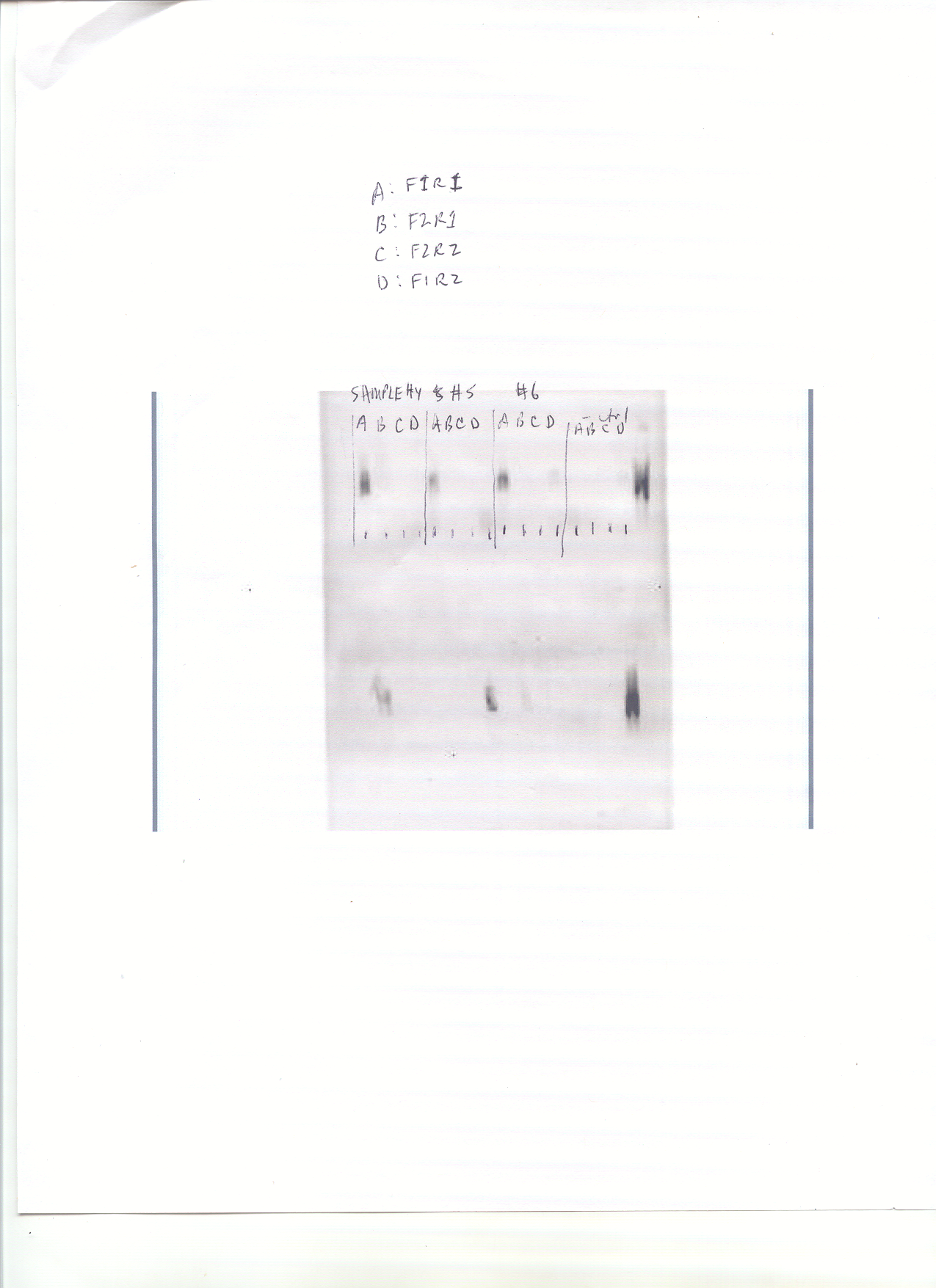
I am in the very early stages- seeing which primers work for PCR. Four primers each were tested- called A, B, C and D- on three shark DNA samples and a negative control. Ignore the samples on the bottom, they are from another student’s project. The four samples in the upper right are my negative controls.
The PCR was run yesterday (my first PCR), and I ran the gel today (my first gel).
It seems to me that Primer A is successfully copying my DNA during PCR, while B, C, and D are not.
Pah, that’s no good. The first time I ran PCR, I even amplified DNA from my negative control. You’ve got a long way before you reach MY proficiency.
Where’s your size standard?
Is a size standard the same thing as a “ladder”? If so, it’s on the far right.
He means you don’t have any sort of measuring device in the photo so we can’t see what the scale is.
What happened with the ladder?
Your ladder had a seizure than. You want bands, not blobs.
Undoubtedly it’s not a clean gel, and I will be trying it again early next week.
However, is it still reasonable to conclude that primer A resulted in PCR amplifying DNA and primers B, C and D did not?
No way. Without a clear size standard you have no idea how big the fragments are. Primer pair A could have just annealed to each other and created 50 base pair primer dimers.
The smeariness of the product also suggests you have quite a bit of non-specific amplification.
LOL that is the shittiest gel I’ve ever seen. I agree with SFS that with this image you cannot conclude anything. But hey, congrats on doing some science finally! Just need a little more practice and you’ll be rocking the shark DNA.
Thanks for the advice and encouragement, guys! Once I get a good looking gel, I’ll post that. This was my first one, so I was pretty happy that I didn’t burn the lab down accidentally.
It’s actually a very good sign. As a general rule, your first gel will either be the best you ever see or the worst. Make your sacrifice to the PCR gods, google Kery Mullis, and enjoy.