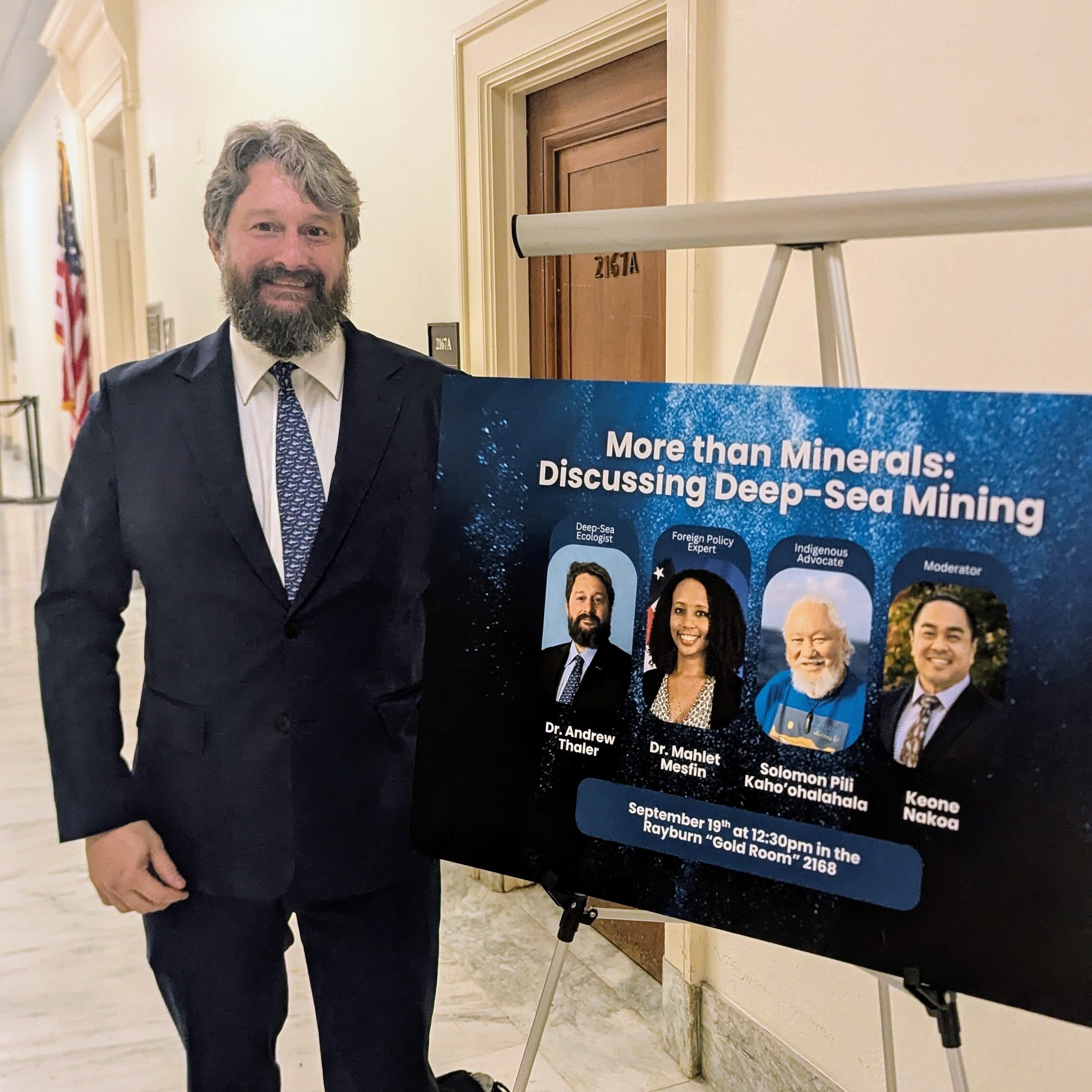

Andrew is a post-doctoral researcher in North Carolina focused on population and conservation genetics in hydrothermal vent communities.


David is a graduate student in Florida. He studies the ecology and conservation of sharks.


Amy is a graduate student in North Carolina studying local ecological knowledge within small scale fisheries.


Chuck is a graduate student in North Carolina focusing on apex predators and how they interact with fisheries.


Lyndell is a graduate student in North Carolina, studying the feeding ecology of cownose rays.


Iris is a graduate student in Washington studying habitat use and feeding habits of juvenile Pacific salmon and herring in Puget Sound.


Michael is a graduate student in Maryland investigating the visual systems of mantis shrimp.


Archives

Debate and celebration from CITES: A Storify of #CITES4sharks tweets

davesquare

The 16th Conference of the Parties of CITES (Convention on International Trade of Endangered Species has been truly historic in terms of shark and ray protections. I’ve created a Storify featuring some highlights of the ongoing twitter conversation, organized by proposal. The tweets include links to fact sheets and scientific research about the species up for protections, as well as original content such as summaries of arguments made by delegates for and against CITES protections. Tweets come from experts in attendance at CITES, and those following along from around the world (including me). For those of you who didn’t follow along live, or if you did and want to relive the experience, check it out! Warning- there are a LOT of tweets.

Continue reading Debate and celebration from CITES: A Storify of #CITES4sharks tweets

Who are “The Lucky Ones”?

We interrupt our regularly scheduled marine science and conservation discussions and frequent Aquaman adulation to bring you this important announcement:

“My legs creak as I climb the stairs to our meeting room. I lean against the wall to steady myself. I could have taken the elevator, saved myself the pain, but I need to heal. I am lucky. I can still walk after the disease ravaged my body, but my legs are weak, my arms emaciated, my face scarred and hollow. I keep my body moving, to help it heal. That’s why we are all here: to heal.

I don’t know why I still come, though. I don’t get much from these meetings. They used to be comforting, but now they’re just tedious. The survivors, overcome with grief or anger or disgust, are more likely to descend into fits of rage than to open up to any of us about their experiences. They are fighters, they had to be. You didn’t survive, uninfected, by being soft. They internalized everything. Many were so consumed with guilt that they couldn’t continue. Survivor suicides are an almost daily occurrence now.”

Head over to Nature (yes, that Nature) to continue reading my freshly minted short story “The Lucky Ones” in their Futures section.

Aquaman is back!

headshot-thalerSMALLLong-time readers know that I am a dedicated fan of the one true king of Atlantis, Arthur Curry–Aquaman. Since his reboot in DC Comic’s New 52 series, Aquaman has risen above the Justice League pantheon, casually crushing his critics with humor, style, and pure, aquatic power. My original plan was to review the marine science in Aquaman, but, since the Trench, our hero has spent relatively little time in the sea. We can forgive that. Between protecting his old gang, the Others, from arch-nemesis Black Manta, and saving the surface dwellers while reclaiming his crown in Throne of Atlantis, Mr. Curry has been quite busy.

Now, with Aquaman #17, it looks like things are about to change.

littleaqua

“I won’t fail you again.” Aquaman #17. DC Comics.

So, this is pretty much my all time favorite piece of comic book art. I love that so many invertebrates get starring roles–colossal squid, octopuses, crustaceans of all sorts. I love that whales are relegated to the background, dolphins are barely more than shadows, and elasmobranchs other than sharks are prominently featured. Artists Paul Pelletier and Art Thebert did a fantastic job creating an ocean biodiversity tableau that shuns the Wyland-esque tropes characteristic of the genre. This is a tough, gritty Aquaman. His ocean is not all sunsets and dolphins.

This also settles the longstanding debate about Aquaman’s telepathy. Aquaman talks to fish. Whether they talk back is a different story.

Continue reading Aquaman is back!

A guide to following shark conservation proposals at CITES on twitter

davesquare

CITES logoRight now, delegates from 178 countries are meeting in Bangkok, Thailand to discuss a variety of conservation proposals. At the 16th CITES Conference of the Parties, among many other worthy topics, delegates will be debating a record-number of shark and ray proposals. These include iconic species like hammerhead sharks (3 species) and manta rays (2 species), as well as oceanic whitetip sharks, porbeagle sharks, and three species of freshwater stingray.

In addition to a record-number of shark and ray proposals, this year’s Conference of the Parties also has a record-number of attendees live-tweeting the meeting.Those of you who follow me on twitter know that I’ve been re-tweeting lots of information about CITES and these shark conservation proposals. In case you want to get the information directly from the source, I’ve prepared a guide to following along with the meeting on twitter.

1) Follow #CITES . Though this hashtag isn’t exclusively focused on sharks (and isn’t exclusively in English), there’s a lot of good information being shared.

2) Follow #Cites4Sharks . Also use this hashtag if you’re sharing any relevant links or information.

3) Follow the 13 accounts I’ve highlighted below (and let me know in the comments if you have suggestions for any accounts I should add to the list):

Continue reading A guide to following shark conservation proposals at CITES on twitter

ScienceOnline Oceans: The planning wiki is now open, and other important updates.

davesquare

sciooceansI have a few important updates to share about ScienceOnline Oceans! For those of you who haven’t yet heard, ScienceOnline Oceans is a conference (affiliated with the NC-based ScienceOnline) that will explore how marine scientists and conservationists can use the internet for collaboration, education and outreach. The meeting will take place October 11-13th at the University of Miami (Miami, FL), and will include an expert panel discussion on current ocean conservation issues, a day of conference-style programming, and a day of field trips allowing attendees to explore south Florida’s marine environment. Scientists who want to learn more about collaboration and outreach applications of the internet are welcome, as are science communicators who want to learn more about ocean issues.

1) The Planning Wiki is now online, and will be until April 1st! If you have an idea for a session, now is the time to submit it!  For those of you new to the ScienceOnline community, theplanning wiki can be thought of as similar to a traditional conference submission page, but there are three important differences:1) everyone can see what everyone else has submitted, 2) anyone can add to what anyone else has written (including questions, suggestions, etc.), and 3) the person who proposes a session can, but does not have to, actually run that session- you can simply suggest a topic that you’d like to see discussed and ask people to volunteer to run it (and you can also volunteer to help run sessions that others have suggested).

We are offering four kinds of sessions at ScienceOnline Oceans. Skills workshops (taught by a hands-on leader to help people learn a skill), panel discussions (3-4 experts on a topic sharing their expertise, possibly including time for audience questions at the end), directed discussions (led by 1 or 2 discussions leaders, primarily consisting of the audience asking questions of the discussion leaders), and facilitated conversations (unconference-style discussions, essentially discussions between audience members facilitated by 1 or 2 moderators, which can be a follow-up to a panel discussion or directed discussion). Here is the link to the planning wiki.

Continue reading ScienceOnline Oceans: The planning wiki is now open, and other important updates.

Breaking News! “Most Comprehensive Estimate of Mortality”: Between 63 and 273 Million Sharks Killed Each Year

davesquare

A new study* has estimated that the total number of sharks killed by fisheries each year is between 63 and 273 million, with a average of approximately 100 million.In an interview, lead author Dr. Boris Worm explains the importance of this estimate:

This is by far the most comprehensive estimate of shark mortality yet,” he said,  ”because we consider all sources of mortality, from direct fishing, finning, and discard mortality. the estimate was derived by crunching numbers from almost 100 publications on the catches and mortality of sharks.”

Of all the numbers this team crunched, the most important thing to consider is whether the exploitation rate is greater than the rebound rate. In other words, is this level of exploitation more than the populations can recover from? Though many estimates and approximations went into calculating these figures, it seems quite clear that sharks are being harvested at an unsustainable rate.

Continue reading Breaking News! “Most Comprehensive Estimate of Mortality”: Between 63 and 273 Million Sharks Killed Each Year

Return from the Cayman Abyss: cruise post-mortem and some thoughts on media coverage

AndrewThumbAt 7 AM EST on Monday, February 25, the ROV Isis rose from the depths of the Cayman Abyss, bringing to a close the 82nd cruise of the RRS James Cook. During JC82, we explored two recently discovered hydrothermal vents fields in the Cayman Trough: Von Damm, named for the late marine geochemist Karen Von Damm, and Beebe, named for the 20th century explorer William Beebe. By any measure, JC82 was a massive success. The samples and videos we’ll bring back will provide ecologists, geologists, and chemists with new insights into fundamental ocean systems for years. The images alone, some beautiful, some heart-breaking, have already inspired.

bacteriamatssmall

Eyeless shrimp, dancing anemones, and a garden of filamentous bacteria. I’m a pretty good writer, and I can’t even begin to describe how beautiful this is. Photo Credit: NERC

Since I last updated the blog on our adventures exploring the Cayman Trough, we’ve had a steady stream media coverage, most of which has been excellent, some of which has been… strange. It’s been fascinating watching the articles come out, seeing what different media outlets consider the story, and, most important to me, getting a chance to share our adventure with a wide audience. Now that the #DeepestVents cruise is officially over (and we’re in transit to yet another, equally exciting bolt on cruise to investigate submerged lava flows off the island of Montserrat), I thought it would be a good opportunity to reflect on the cruise, the story, and how the media shaped it.

Continue reading Return from the Cayman Abyss: cruise post-mortem and some thoughts on media coverage

The Endangered Species Act and Marine Animals: To List or Not To List?

ChuckprofilephotoEndangered species seem to be coming up around here more often than usual, mostly due to the potential state-level listing of great white sharks in California.  This move has been resisted from some surprising corners, including researchers who are generally pro-shark conservation.  The reasons why scientists might want to oppose an Endangered Species listing are laid out by Dr. Chris Lowe in an earlier post on this very blog, so I won’t reiterate all of them here.  Surprisingly, I have yet to see any comments accusing Dr. Lowe of being a shill for the drift gillnet fishery.

There seems to a be a real sense among some conservation-minded folks that Endangered Species listing is something of a “holy grail” for species protection and recovery, and some petitioners would have you believe that anything less is unacceptable (and probably the result of corruption).  However, the Endangered Species Act has a very specific process by which species receive protection, and a defined set of limitations.  A lot of well-meaning people seem to have limited knowledge of this process and limitations.  To do my little part to help fix this, this post will be a short primer on the Act and will show how a marine species has recently navigated the entire process for listing.  With any luck, maybe this will result in one or two fewer misguided online petitions.

Continue reading The Endangered Species Act and Marine Animals: To List or Not To List?

How to make a completely useless online environmental petition in 5 easy steps

Sites like Care2 and Causes, for better or for worse, make it easier than ever to write and distribute petitions

Sites like Care2 and Causes, for better or for worse, make it easier than ever to write petitions

Online petitions have become a popular tool of the conservation movement. A well-written petition can be an important tool for helping to shape policy, particularly when used as part of a larger and well-organized lobbying and advocacy campaign. Many petitions, however, are so badly written as to be ineffective or even counterproductive when it comes to influencing real policy change. Even worse, they falsely perpetuate the idea that an activist has “done something” about the problem, which may prevent them from participating in a process that could result in real change.

In case you want to join the numerous  activists who are filling my Facebook news feed and e-mail inbox with useless petitions, here is an easy 5 step guide for you to to follow, using examples from some real petitions I’ve been asked to sign.

A note on terminology: Petitions typically contain a few basic elements, which I term here “the problem”, “the target”, and “the solution”. The problem briefly describes the undesirable situation that the petition hopes to remedy. The target is who the petition is directed at. The solution is what should be done about the problem.

Continue reading How to make a completely useless online environmental petition in 5 easy steps

Your homework: Find an environmental problem on campus, and fix it! Increasing sustainability at the UM food court

davesquaregreenuIn the fall of 2012, I took a class entitled “Using Communications to Influence Health and Environmental Policy: Theory and Practice”. The readings and discussions were fascinating, but what really got me excited was the semester project. Working with a group of other students, we were asked to identify an environmental problem on campus, and come up with a detailed plan to fix it. Our group was concerned by the lack of sustainable and recyclable options at the University of Miami’s food court, and focused our project on that issue. Below are modified excerpts from our group’s final project (the full document is approximately 50 pages). Though the class is over, I and others from my group will still be working with the University’s Office of Sustainability to help implement our project in the coming months. We welcome your feedback, suggestions for improvement, and assistance in achieving these goals! 

That's it- only trash cans. There are no recycling bins in the food court.

That’s it- only trash cans. There are no recycling bins in the food court.

The University of Miami has made a series of public commitments to campus sustainability, but progress has been extremely slow. One of the most obvious and public examples of waste occurs in the food court. Located in a central area of campus, the UM food court has over 3,000 transactions each day, and serves students, faculty, and visitors alike. Most of the food court restaurants provide packaging materials, plates, cups, and utensils that are not recyclable. Almost 2,000 pounds of plastic wrappers and utensils are thrown away every week, a figure that does not include the national chain restaurants. There aren’t even recycle bins located in (or near) the food court for the few recyclable materials provided by vendors!

The first step was determining what other universities do to reduce waste at their on-campus restaurants. We evaluated reports on this topic by four leading institutions: the Sierra Club, the Advancement of Sustainability in Higher Education, the Sustainable Endowment Institute, and the Princeton Review. Interestingly, no schools appeared on all four reports’ lists of the schools with the best sustainable practice, but Oberlin College appeared on 3, and three schools (University of Washington, Cal Tech, and Arizona State) appeared on 2 lists each. No schools located in the state of Florida were on any list, but the (relatively) nearby University of Florida received an overall grade of a B+.

Continue reading Your homework: Find an environmental problem on campus, and fix it! Increasing sustainability at the UM food court