Andrew is a freelance marine biologist in North Carolina focused on population and conservation genetics in hydrothermal vent communities.


David is a graduate student in Florida. He studies the ecology and conservation of sharks.


Amy is a graduate student in North Carolina studying local ecological knowledge within small scale fisheries.


Chuck is a graduate student in North Carolina focusing on apex predators and how they interact with fisheries.


Lyndell is a graduate student in North Carolina, studying the feeding ecology of cownose rays.


Iris is a graduate student in Washington studying habitat use and feeding habits of juvenile Pacific salmon and herring in Puget Sound.


Michael is a graduate student in Maryland investigating the visual systems of mantis shrimp.


Archives

Saving Bimini: A campaign to protect a Bahamian gem (guest post)

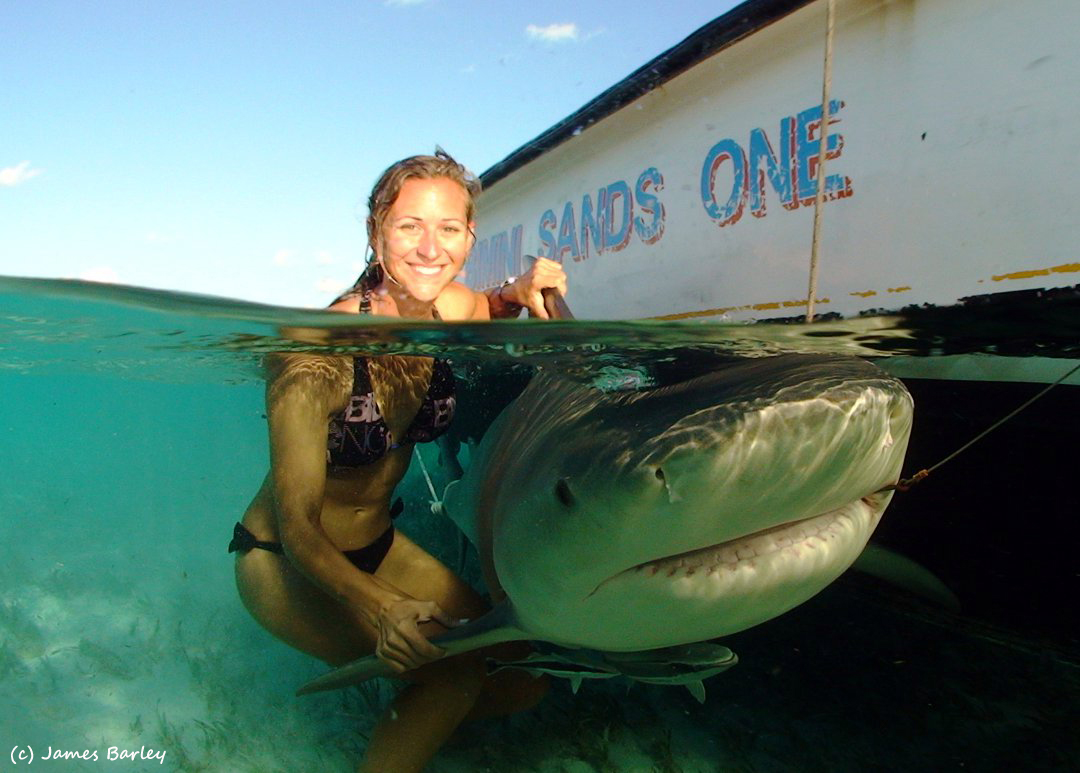
Kristine Stump is a PhD candidate in Marine Biology and Fisheries at the University of Miami’s Rosenstiel School of Marine and Atmospheric Science (RSMAS).  Her dissertation focuses on the effects of anthropogenic nursery habitat loss on juvenile lemon sharks in Bimini, Bahamas.  She was the Principal Investigator of the Bimini Biological Field Station (BBFS, or Sharklab) from 2008 – 2011 while collecting field data for her degree and has been heavily involved in the process of establishing a Marine Protected Area in Bimini.  Kristine has an M.A. in Marine Policy from RSMAS, and prior to entering the doctoral program, she spent five years working in Washington, DC at Ocean.US – the National Office for Integrated and Sustained Ocean Observations (now the NOAA IOOS Program).  In addition, she has worked for the Census of Marine Life program office at the Consortium for Ocean Leadership in Washington, DC. 


There is an apex predator roaming the seas.  For hundreds of thousands of years, this beast has hunted in the waters of the world’s oceans.  Relentless is it in its search along the shorelines for that which satisfies its primal urges.  Its numbers ever on the rise, the destruction in its path knows no bounds.  And now, in 2012, it wants to dominate the sea more than ever before: it wants glass-bottom bungalows.  It needs yacht dockage at its vacation home.  It craves manicured fairways.  IT MUST HAVE AN INFINITY POOL!

If you haven’t already guessed, the apex predator here is man.  Throughout history, the environment has shaped man, but now more than ever, man is shaping the environment.  In the current era of environmental awareness, however, we have learned that there are limits to the anthropogenic changes ecosystems can withstand while still maintaining ecosystem function.  Luckily, we have learned to implement mitigation strategies to offset, to some degree, the negative effects of human expansion.

Continue reading Saving Bimini: A campaign to protect a Bahamian gem (guest post)

International research team tracks threatened oceanic whitetip sharks

Oceanic whitetip sharks are considered by many to be a poster-child for shark conservation. Once one of the most abundant species of pelagic sharks on Earth, unregulated overfishing throughout their global range had led to a precipitous decline in their population. In some parts of their range, the species has declined in population by more than 70% in the last few decades. Scientists haven’t been able to find them in significant numbers for many years. One of the few remaining known aggregation sites is Cat Island in the Bahamas, and that’s where an international team of researchers just went to find these animals.

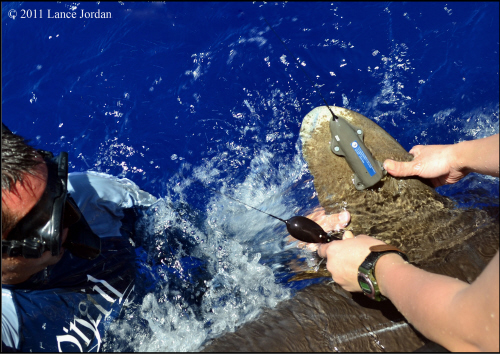
An oceanic whitetip shark is fitted with a satellite tag. Photo credit: Dr. Lance Jordan, Microwave Telemetry, inc.

Continue reading International research team tracks threatened oceanic whitetip sharks