Andrew is a post-doctoral researcher in North Carolina focused on population and conservation genetics in hydrothermal vent communities.


David is a graduate student in Florida. He studies the ecology and conservation of sharks.


Amy is a graduate student in North Carolina studying local ecological knowledge within small scale fisheries.


Chuck is a graduate student in North Carolina focusing on apex predators and how they interact with fisheries.


Lyndell is a graduate student in North Carolina, studying the feeding ecology of cownose rays.


Iris is a graduate student in Washington studying habitat use and feeding habits of juvenile Pacific salmon and herring in Puget Sound.


Michael is a graduate student in Maryland investigating the visual systems of mantis shrimp.


Archives

Bluefin Tuna, Big Game Hunters, and the Conservation Vortex

Bluefin Tuna. Public Domain NOAA

Bluefin Tuna. Public Domain NOAA

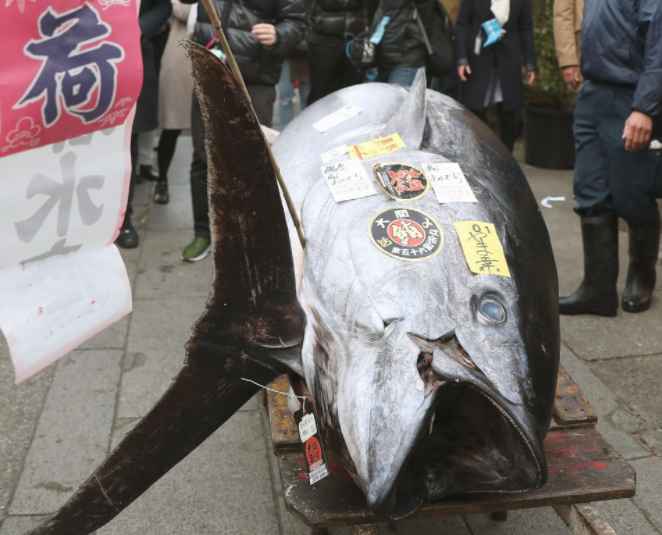
Why are we still killing Bluefin Tuna? This question has resonated through the ocean blogosphere recently, as various experts weigh the issues surrounding overfishing and wonder why, when we know how limited the Bluefin Tuna populations are, and how precipitously they’ve declined in the last decade, do they demand record-breaking prices able to support an industry that must range further afield to chase that last, lonely fish? Other conservation writers discuss the recent extinction of not one, but two, rhinoceros species and ponder the fate of large terrestrial mammals. Knowing how rare these rhinoceroses were, why did they continue to be poached? Where does this demand come from?

Continue reading Bluefin Tuna, Big Game Hunters, and the Conservation Vortex

New research lists tuna species as threatened; will fisheries managers act?

Image courtesy Keith Ellenbogen, OCEANA

Bluefin tuna have become a posterchild for the marine conservation movement. A single bluefin can sell for tens or even hundreds of thousands of dollars, which results in heavy fishing pressure. Conservationists and fisheries scientists have tried for years to get the fishing quota reduced. They tried to get  CITES protection for the bluefin. Citing both heavy fishing pressure and the fact that the oil spill occurred in bluefin spawning grounds in the Gulf, some recently tried to get these animals protected under the Endangered Species Act. To date, these efforts have fallen short, resulting in just a modest quota reduction at ICCAT. New research, however, shows just how important protecting this group of fishes is.

Continue reading New research lists tuna species as threatened; will fisheries managers act?

Weekly dose of TED – Barbara Block: Tagging tuna in the deep ocean

Tuna are rather magnificent fish. Do you still eat tuna? Why or why not? Do you draw a line at different species?

Might as well eat 'em: A semi-serious April Fool's Day ethical debate

Sushi! Image from OpenClipArt.org

Bluefin tuna are some of the most endangered fish in the sea. Prized by the sushi industry for their delicious flavor, populations of bluefin have declined precipitously in recent decades.

They also may be the first species of fish to be driven to extinction by commercial fishing. Normally, when populations of fish get low, it isn’t profitable to fish for them anymore- thus they are not driven to extinction. However, a single bluefin tuna can sell for hundreds of thousands of dollars, so it is still profitable to fish for the last one.

Continue reading Might as well eat ‘em: A semi-serious April Fool’s Day ethical debate

CITES update: Bluefin and crocodiles and polar bears? Oh my!

The latest news out of CITES isn’t encouraging.  Marie Levine, President of the Shark Research Institute, is attending and made the following statement:

“Animals did not fare well at CITES today. The USA’s bid to have the polar bear uplisted from Appendix II to Appendix I was defeated, as was  Egypt’s attempt to have the Nile crocodile listed on Appendix II.
The biggest loss, however, was the Atlantic bluefin tuna. The species is heavily over-exploited by  massive international trade, and is listed as Critically Endangered in the Western Atlantic. The species was proposed for Appendix I due to The International Commission for the Conservation of Atlantic Tunas (ICCAT)  repeated failures to adopt science-based conservation measures for bluefin tuna. For example, while ICCAT’s Standing Committee on Research and Statistics recommended a Total Allowable Catch of 15,000 tons for 2007, the members of ICCAT set a Total Allowable Catch of 29,000 for that year!

The proposal lost by a huge margin: 20 votes in support, 68 against, and 30 abstentions. Because it was a secret ballot, it is not possible to determine the countries that voted for the proposal aside from the USA and Monaco. We can report, however, that the following countries spoke against the proposal: Japan, UAE, Tunisia, Canada, Indonesia, Grenada, Senegal, Turkey, Morocco, Chile, Venezuela, and Libya. The latter provided some entertainment with arguments so absurd that even the translators laughed. Japan pulled out all stops to ensure that these iconic fish have virtually no protection and are theirs for the plundering. “

I don’t really know why people are so surprised about the bluefin tuna situation. Sure, they are heavily exploited and present populations are a small fraction of their historical highs. Sure, they are one of very few fish species that might actually be driven to extinction by fishing because one fish can sell for tens (or hundreds) of thousands of dollars. However, the bluefin tuna trade is worth a lot of money, and CITES is a political process as much as it is a scientific one. Call me a cynic if you want, but it seems like the side with the money tends to win in many political processes.

Frankly, I’m surprised that there was so much support for a ban on bluefin trade.

What does this mean for sharks? Well, like sharks, the demand for bluefin comes primarily from one country (in this case, Japan instead of China). Like sharks, bluefin tuna are made into a delicacy and not a food staple. Like sharks, there is an enormous amount of scientific evidence showing the declines of bluefin tuna populations. Like sharks, trade of bluefin tuna is worth a lot of money.

I grow discouraged.

~WhySharksMatter