
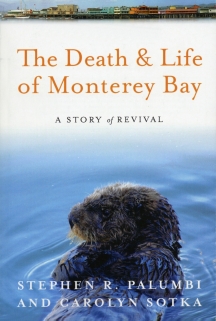
 A few weeks ago, Mark Powell at Blogfish posted “Where are conservation success stories?” in which he asks if we have a bias against good news in conservation. Late last year we presented a series of conservation success stories from the IUCN. Whether because we choose to focus only on the doom-and-gloom news stories or because the natural world really is in pretty bad shape, success stories in conservation are few and far between. That is why The Death and Life of Monterey Bay, a new book by Stephen Palumbi and Carolyn Sotka, is so important. Palumbi is a working scientist and director of the Hopkins Marine Station in Monterey Bay and his work has been cited on this blog before. Carolyn Sotka is the project coordinator for COMPASS, an organization that connects scientist to policy makers and journalists.
In The Death and Life of Monterey Bay, Palumbi and Sotka present the history of Monterey Bay, from discovery, to exploitation, to collapse, and ultimately to rebirth. They weave the narratives of many important players, exploring the legacy of a dedicated conservationist who existed before the term was coined, the hunters, fishers, and canneries who found fortune and destruction, the writers and scientists who made Monterey Bay a literary icon, and the Bay itself, which survived by equal parts luck, tenacity, and foresight. The events in the book span hundreds of years, but we can still glean lessons from both the collapse and rebirth of Monterey Bay.
Read More “Lessons from the Death and Life of Monterey Bay” »