
Ever stop to think what divides the first from the third world? Why don’t we ever hear about the second and why don’t countries move between categories as they develop? Well, because the categories are historical – the second world is reserved for post-soviet countries attempting to rebuild governance. The first world is reserved for those who shone through as leaders at the end of World War 2. The third world – everybody else. But what does that mean for development research? And what about those places within our own country without running water and electricity?
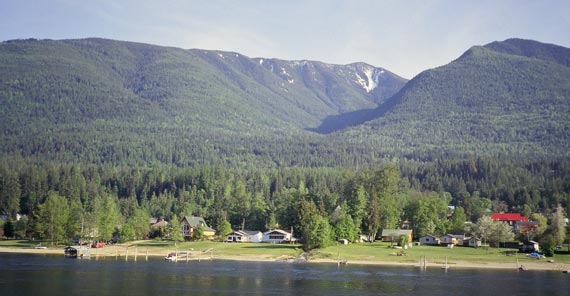
 Looking inward to the researcher’s own countries means questioning the benefit of some institutions that are part of the dominant narrative of success in those countries. Before any differences are made explicit between investigation of the First and Third World, there is the question of outsider/insider position that must be attended to. Identifying and challenging assumptions as an insider may prove much more difficult than analysis of a foreign society as an outsider (Perin 1977). For example, community forestry in Canada was assumed to not exist because Canada is fully embedded in a capitalist economy, but was discovered to be successfully functioning in British Columbia, largely due to a regional difference in values diverging from capitalism (McCarthy 2006).
 Perin (1977) suggests analyzing controversies to identify such assumptions that may also inherently be part of the inside researcher’s worldview. First World political ecologists have focused on controversies, largely looking at land use or resource management controversies. In the process, they have identified different processes at work in the First World than the Third World. These differences add a few key concepts to the political ecology toolbox: a need to explicitly recognize heterogeneity in a seemingly unified nation (St. Martin 2001), the role of a strong central state (Walker 2003), the role of larger capitalist economy and culture (Escobar 2004), and the process of rural gentrification (Schroeder 2005).
Read More “State of the Field: First World or Third World?” »