Andrew is a post-doctoral researcher in North Carolina focused on population and conservation genetics in hydrothermal vent communities.


David is a graduate student in Florida. He studies the ecology and conservation of sharks.


Amy is a graduate student in North Carolina studying local ecological knowledge within small scale fisheries.


Chuck is a graduate student in North Carolina focusing on apex predators and how they interact with fisheries.


Lyndell is a graduate student in North Carolina, studying the feeding ecology of cownose rays.


Iris is a graduate student in Washington studying habitat use and feeding habits of juvenile Pacific salmon and herring in Puget Sound.


Michael is a graduate student in Maryland investigating the visual systems of mantis shrimp.


Archives

10 Reasons why Great and Scalloped Hammerhead Sharks Deserve Endangered Species Act Protections

davesquare

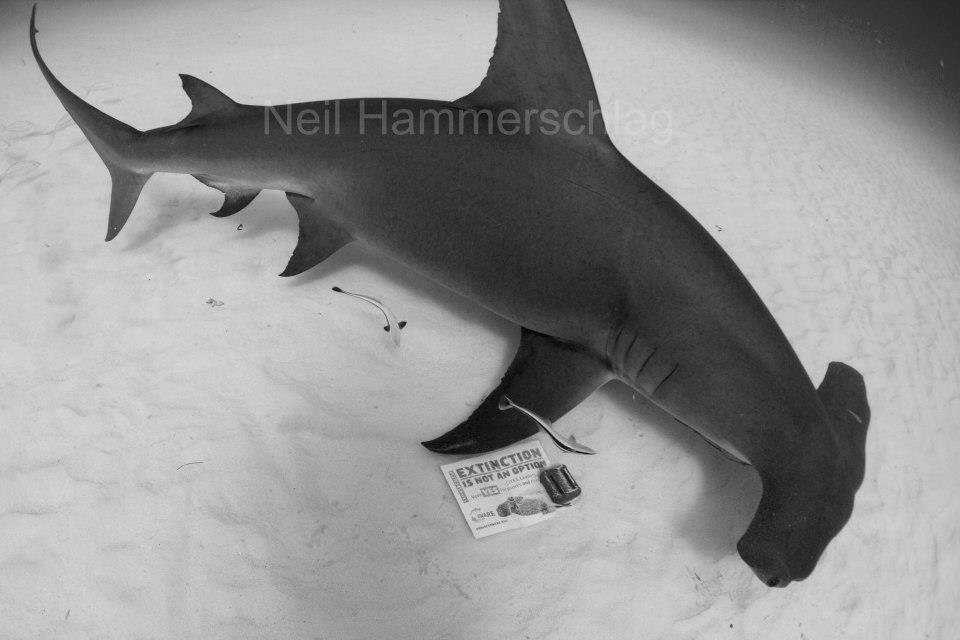
A great hammerhead shark swims by a Project AWARE "Extinction is NOT an Option" sign, Bimini, Bahamas. Photo credit: Neil Hammerschlag

A great hammerhead shark swims by a Project AWARE “Extinction is NOT an Option” sign, Bimini, Bahamas. Photo credit: Neil Hammerschlag

The Endangered Species Act is one of the strongest conservation laws on the planet, and to date, no shark has ever been given ESA protections. In recent weeks, however, the National Marine Fisheries Service has responded to a series of NGO petitions requesting ESA protections for two species of hammerhead sharks. NMFS proposes to list 2 “distinct” population segments”  (DPS) of scalloped hammerhead sharks as endangered and 2 as threatened, with 2 DPS’s listed as “not warranted”. The response to the great hammerhead petition is not as developed (the petition itself is more recent), but notes that “the petitioned action may be warranted”.

I strongly believe that both of these species of hammerhead sharks need and qualify for Endangered Species Act protections. If you agree, I encourage you to submit an official public comment in support of listing both under the ESA following the instructions below. Failure to follow all instructions to the letter will result in your comment not  being considered. Commenting on this blog post does not count as submitting a public comment, and neither does commenting on a Facebook post about this blog post. Online petitions will not be considered. This process is open to the public, but requires that we follow basic instructions.

To submit a public comment in support of great hammerhead ESA listings, click on the “comment now” button on this page and fill in the required information. To submit a public comment in support of scalloped hammerhead ESA listings, click on the “comment now” button on this page and fill in all the required information. You can also submit written comments via the mail to “Office of Protected Resources,NMFS, 1315 East-West Highway, Silver Spring, MD 20910 or by fax to 301-713-4060 attn: Maggie Miller. Please note that if you submit a comment by mail or fax, you need to include code NOAA-NMFS-2013-0046 for great hammerheads and code NOAA-NMFS-2011-0261 for scalloped hammerheads.

To help craft your public comment, I’ve written a list of 10 reasons why these sharks qualify for Endangered Species Act protections. Please do not just quote this post word-for-word, if you do then your comment will be considered a “form letter” and not an individual comment.

Continue reading 10 Reasons why Great and Scalloped Hammerhead Sharks Deserve Endangered Species Act Protections

The Endangered Species Act and Marine Animals: To List or Not To List?

ChuckprofilephotoEndangered species seem to be coming up around here more often than usual, mostly due to the potential state-level listing of great white sharks in California.  This move has been resisted from some surprising corners, including researchers who are generally pro-shark conservation.  The reasons why scientists might want to oppose an Endangered Species listing are laid out by Dr. Chris Lowe in an earlier post on this very blog, so I won’t reiterate all of them here.  Surprisingly, I have yet to see any comments accusing Dr. Lowe of being a shill for the drift gillnet fishery.

There seems to a be a real sense among some conservation-minded folks that Endangered Species listing is something of a “holy grail” for species protection and recovery, and some petitioners would have you believe that anything less is unacceptable (and probably the result of corruption).  However, the Endangered Species Act has a very specific process by which species receive protection, and a defined set of limitations.  A lot of well-meaning people seem to have limited knowledge of this process and limitations.  To do my little part to help fix this, this post will be a short primer on the Act and will show how a marine species has recently navigated the entire process for listing.  With any luck, maybe this will result in one or two fewer misguided online petitions.

Continue reading The Endangered Species Act and Marine Animals: To List or Not To List?

National Marine Fisheries Service rejects petition to list 4 skate species under Endangered Species Act

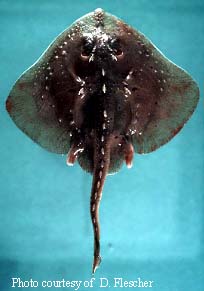
Image from nero.NOAA.gov

Last August, two petitions were sent to the National Marine Fisheries Service from three conservation organizations (the Animal Welfare InstituteWildEarth Guardians and Friends of Animals). The petitions (available in their entirety here) requested that four species of skate be listed as “threatened” or “endangered” under the Endangered Species Act, and requested that critical habitat for these species be designated and appropriately protected. These species are the thorny skate, barndoor skate, winter skate, and smooth skate.

Due to both a directed fishery (skate wings are used for lobster trap bait, and also for food for a primarily-overseas market that includes Europe) and bycatch in bottom fisheries , Northwest Atlantic populations of these species have experienced serious declines in recent years. While some skate species have rebounded (for reasons that are not entirely clear), The thorny skate remains particularly threatened- the IUCN Red List considers the subpopulation off the Northeastern U.S. coast to be Critically Endangered. It is illegal for U.S. fishermen to keep thorny skates they catch (and has been since 2004), but they are commonly taken as bycatch in fisheries for the other skates and groundfish.

Yesterday, the National Marine Fisheries Service formally responded to the petition (thorny skate and other skates), and the news isn’t good for skates:

“After reviewing the information contained in the petition and information readily available in our files, we conclude that the petition fails to present substantial scientific or commercial information indicating that the petitioned action concerning barndoor, smooth and/or winter skate may be warranted…We find that the petitions do not present substantial scientific information indicating the petitioned actions may be warranted. Accordingly, we will not initiate a review of the status of thorny skate at this time.”

The National Marine Fisheries Service listed several reasons why they believe these skates should not be listed under the Endangered Species Act.

Continue reading National Marine Fisheries Service rejects petition to list 4 skate species under Endangered Species Act