Andrew is a post-doctoral researcher in North Carolina focused on population and conservation genetics in hydrothermal vent communities.
David is a graduate student in Florida. He studies the ecology and conservation of sharks.
Amy is a graduate student in North Carolina studying local ecological knowledge within small scale fisheries.
Chuck is a graduate student in North Carolina focusing on apex predators and how they interact with fisheries.
Lyndell is a graduate student in North Carolina, studying the feeding ecology of cownose rays.
Iris is a graduate student in Washington studying habitat use and feeding habits of juvenile Pacific salmon and herring in Puget Sound.
Michael is a graduate student in Maryland investigating the visual systems of mantis shrimp.
|
By Andrew David Thaler, on July 18th, 2012
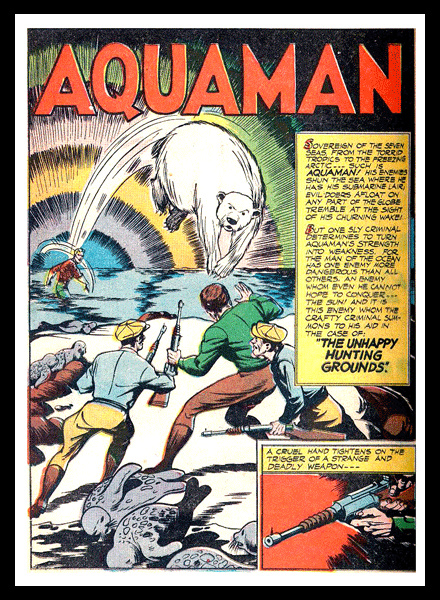
 Aquaman. DC Comics. A rational response to seal poaching is to lob a polar bear at the aggressors.
Aquaman may not be everybody’s favorite superhero, but since his creation in 1941, he has been among DC’s most enduring icons. During the Golden Age of comic books, he held his own against Superman, Batman, and Wonder Woman. Silver Age Aquaman was a founding member of the Justice League. His powers, tied to the ocean, forced writers to create a compelling, complex hero with explicit limitations. In the early days, when Superman’s strength was practically infinite, and Batman’s brilliance was unmatched, Aquaman had to become more than just a superhero, he had to be a person.
If Superman existed to show us how high the human spirit could fly, and Batman to show us the darkness within even our most noble, Aquaman is here to show us the world that triumphs in our absence. The ocean is not ours, and no matter how great our technology, we will never master it as we have mastered land, but Aquaman has. Through this lonely ocean wanderer, we can experience a world that we can never truly command. In many ways, Aquaman was stronger than the Man of Steel and darker than the Dark Knight. He knew loneliness that the orphan and the alien exile never could.
Roll on, thou deep and dark blue Ocean – roll!
Ten thousand fleets sweep over thee in vain;
Man marks the earth with ruin – his control
Stops with the shore; — upon the watery plain
The wrecks are all thy deed, not does remain
A shadow of man’s ravage, save his own,
When for a moment, like a drop of rain,
He sinks into thy depths with bubbling groan,
Without a grave, unknell’d, uncoffin’d, and unknown.
Byron
Even though Aquaman had to fight harder, endure the jokes of other, less limited heroes, and find relevance in an ecosystem hostile to the humans that had to empathize with him, Aquaman was never forced to confront the truly horrifying consequences of life in the ocean.
Continue reading The horrifying physiological and psychological consequences of being Aquaman
By Amy Freitag, on October 4th, 2011
 shinaji.wordpress.com
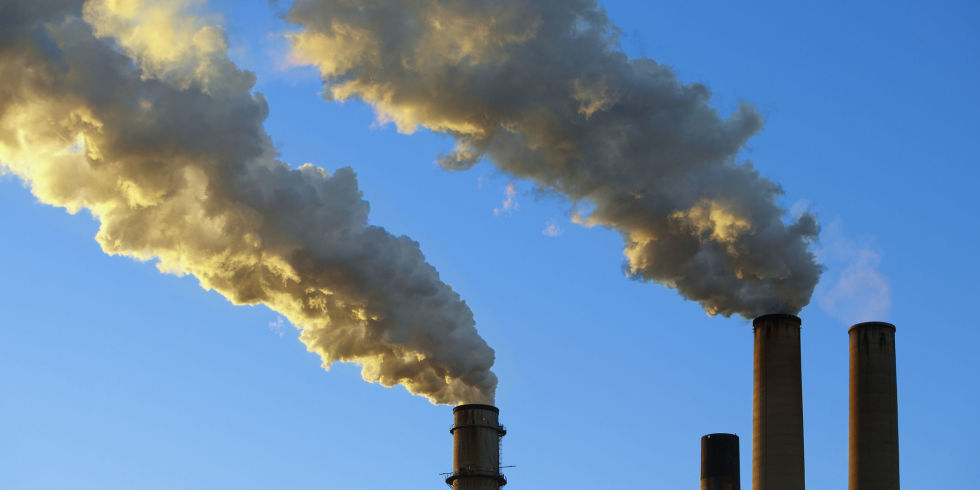
Why is it that every time someone proposes a wind turbine there is immediate opposition because of consequent bird mortality? And at the same time, when we build or expand a coal operation, the reaction isn’t to remember all the miners that have sacrificed their lives so that you and I can turn on the lights? Why is the reaction to dirty coal to promote clean coal? It might help keep the carbon emissions down, but it doesn’t cut down on the human toll of coal.
Recently there have been highly publicized stories of miners trapped in deep mines in Chile, West Virginia, Kentucky, New Zealand, and China - and those are just the ones I heard about through traditional news outlets. However, the hype over such accidents quickly fades and the families and communities touched by the tragedy are left with the cleanup. These miners represent the human face and sacrifice of coal-fired electricity. They should join the ranks of the polar bear in symbolizing the need for better energy choices. Continue reading It’s Not All About Carbon
By Andrew David Thaler, on April 8th, 2011
 The world is rapidly approaching 7 billion people and the challenges of food supply, security, and sustainability will, along with climate change, be the defining issues of the 21st century. While the issues of the wealthiest nations revolve around the quality of our food, the environmental impact or our farming practices, and the value we place on a perceived degree of “naturalness”, the rest of the world is simply concerned with having enough to eat. What we chose to value in our society affects the rest of the world, and perhaps the most visible, and most dramatic difference between the developing and developed world is the ways in which we treat our pets.
Continue reading Is it time for a sustainable pet movement?
|
|
Recent Comments