Transcript below.
Tag: extinction
Uncategorized
It’s a special Friday morning edition of Thursday Afternoon Dredging because I was traveling! Cuttings (short and sweet): Follow Nova the White Shark, a great white shark tagged in Canada by OCEARCH, on twitter! The day after Nova was tagged, I spent a day with the OCEARCH team- check out this Facebook live interview. … Read More “Angry Canadian Crabs and Extinct Australian Sea Stars: Thursday Afternoon Dredging, September 27(8)th 2018” »
Weekly Salvage
Fog Horn (A Call to Action)
- Stop. Breathe. Take a step back. This can all be incredibly overwhelming. Pick the fight that matters most to you and take a few days deciding what success looks like, what strategies will work, and what tactics are available to you. And then hoist your flag and get to work.
- And when you meet someone fighting a different fight, remember to support them. There are already enough fronts to advance without taking friendly fire from our flanks.
Flotsam (what we’re obsessed with right now)
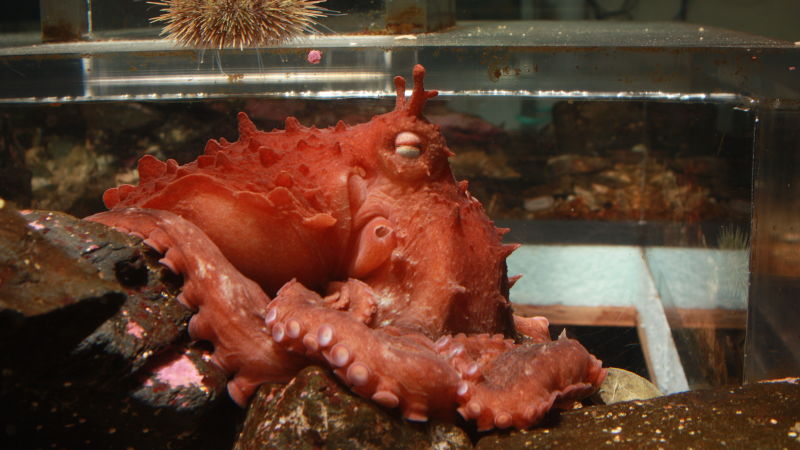
- Maybe it’s time to seriously consider just giving control of the world to the cephalopods. A New Species of Giant Octopus Has Been Hiding in Plain Sight.
- The most depressing annual run-down on the environmental science web: The Animals That Went Extinct in 2017.
Weekly Salvage
Fog Horn (A Call to Action)
- It’s Native American History Month. Southern Fried Science recognizes that our servers are housed on the occupied land of the Timpanogos people while the majority of our writers live on unceded Powhatan territory. This November, Try Something New: Decolonize Your Mind.
Flotsam (what we’re obsessed with right now)
- Boaters stumble on massive Caribbean “gyre” of plastic garbage. “Gyre is in quotes because I’m almost certain that this is debris from the 2017 Atlantic Hurricane season, rather than an accumulation of decades of plastic is a circulating ocean current. It’s still shocking to see.
https://www.youtube.com/watch?v=GSMGKwZBaWM
- The ARA San Juan, one or Argentina’s two diesel-electric submarines, is missing. Search and rescue is mobilizing and there’s hints that the sailors tried to send out a signal Saturday.
- Without a Treaty to Share the Arctic, Greedy Countries Will Destroy It. Cosign.
Weekly Salvage
Fog Horn (A Call to Action)
- Hakai Magazine want to hear from you! Dear Hakai Magazine Reader, Who Are You?
Flotsam (what we’re obsessed with right now)
- Everything Tangier is utterly fascinating right now: Angry messages to the Trump-supporting mayor of Tangier Island illustrate a need to listen, not to shout.
- I’m still just dumbfounded by this: Did a Glowing Sea Creature Help Push the U.S. Into the Vietnam War? In other words, Ocean Literacy could save us all from annihilation.
- I really hope you’re not sick of hagfish yet. Because Hagfish!

- Best headline, ever: Sea Spiders Pump Blood With Their Guts, Not Their Hearts.
Conservation, Popular Culture, Science

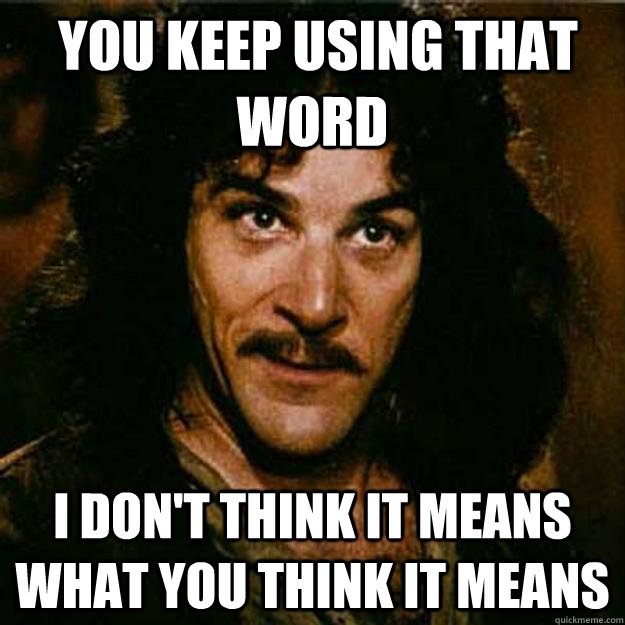 If interested citizens want to get involved in conservation and management policy, it’s absolutely vital to use proper terminology. The policy world can be full of confusing jargon, but there are few ways to discredit yourself in the eyes of decision makers as quickly as using a critical term incorrectly. In fact, it isn’t uncommon for a decision maker’s response to a petition or public comment to consist entirely of correcting inaccurate terminology, if a response is issued at all. There are well over 100 acronyms and terms that I’ve seen regularly used, but in the interest of brevity, I’ve selected what I believe to be the 15 most important terms that I’ve seen people repeatedly use incorrectly.
For each term, I’ve provided a definition from a scientific paper or technical report whenever possible. I have also provided some additional explanation in my own words, and some assistance from familiar memes. Whenever possible, I’ve linked to blog posts, articles, or websites that provide even more information. Most of these terms are broadly applicable to fisheries management policy, but some are specific to shark fisheries. It is not my intention with this post to strongly advocate for or against any specific policy (I do plenty of that with other posts), but to make sure everyone is speaking the same language.
Read More “15 important shark conservation and management terms explained with memes” »
Conservation, Science
 We are in the midst of a global extinction crisis. Biodiversity is in decline as species after species disappear. Some estimates predict that up to 50% of species will be committed to extinction by 2050. Other estimates claim the current rate of extinction may be 10,000 times the background rate. Many ecologists and conservationists have declared the current species decline the sixth great mass extinction.
A recent paper published in the journal Nature argues that our current estimates of species loss are based on a flawed model and tend to overestimate the magnitude of species decline. The paper has received plenty of attention, and has been heavily criticized by ecologists and conservation biologists. The paper is wrong, but it is wrong for the right reasons, and the criticisms it has garnered point to a gaping hole in our understanding of population dynamics.