Andrew is a post-doctoral researcher in North Carolina focused on population and conservation genetics in hydrothermal vent communities.


David is a graduate student in Florida. He studies the ecology and conservation of sharks.


Amy is a graduate student in North Carolina studying local ecological knowledge within small scale fisheries.


Chuck is a graduate student in North Carolina focusing on apex predators and how they interact with fisheries.


Lyndell is a graduate student in North Carolina, studying the feeding ecology of cownose rays.


Iris is a graduate student in Washington studying habitat use and feeding habits of juvenile Pacific salmon and herring in Puget Sound.


Michael is a graduate student in Maryland investigating the visual systems of mantis shrimp.


Archives

10 Reasons why Great and Scalloped Hammerhead Sharks Deserve Endangered Species Act Protections

davesquare

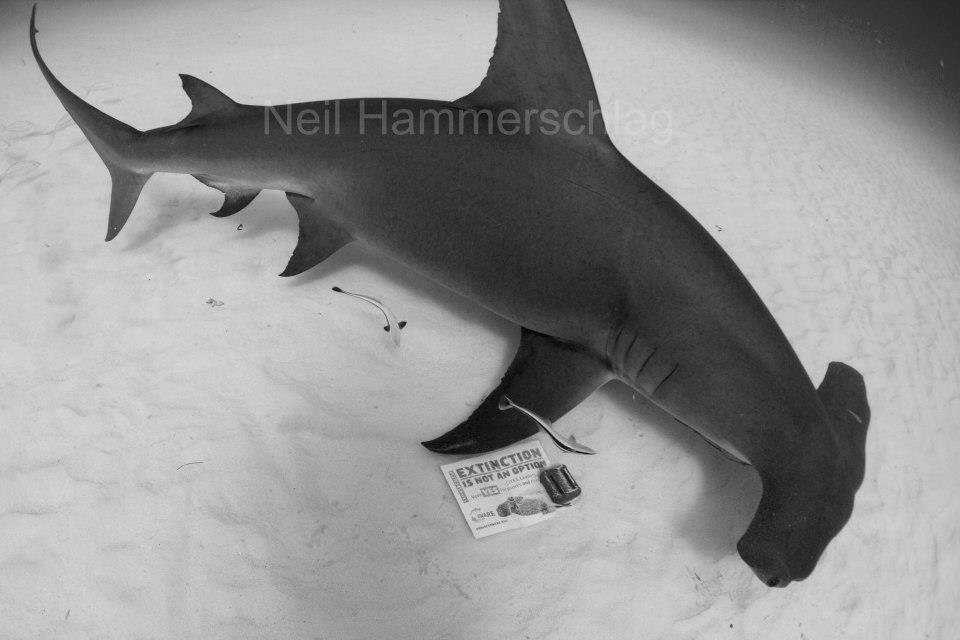
A great hammerhead shark swims by a Project AWARE "Extinction is NOT an Option" sign, Bimini, Bahamas. Photo credit: Neil Hammerschlag

A great hammerhead shark swims by a Project AWARE “Extinction is NOT an Option” sign, Bimini, Bahamas. Photo credit: Neil Hammerschlag

The Endangered Species Act is one of the strongest conservation laws on the planet, and to date, no shark has ever been given ESA protections. In recent weeks, however, the National Marine Fisheries Service has responded to a series of NGO petitions requesting ESA protections for two species of hammerhead sharks. NMFS proposes to list 2 “distinct” population segments”  (DPS) of scalloped hammerhead sharks as endangered and 2 as threatened, with 2 DPS’s listed as “not warranted”. The response to the great hammerhead petition is not as developed (the petition itself is more recent), but notes that “the petitioned action may be warranted”.

I strongly believe that both of these species of hammerhead sharks need and qualify for Endangered Species Act protections. If you agree, I encourage you to submit an official public comment in support of listing both under the ESA following the instructions below. Failure to follow all instructions to the letter will result in your comment not  being considered. Commenting on this blog post does not count as submitting a public comment, and neither does commenting on a Facebook post about this blog post. Online petitions will not be considered. This process is open to the public, but requires that we follow basic instructions.

To submit a public comment in support of great hammerhead ESA listings, click on the “comment now” button on this page and fill in the required information. To submit a public comment in support of scalloped hammerhead ESA listings, click on the “comment now” button on this page and fill in all the required information. You can also submit written comments via the mail to “Office of Protected Resources,NMFS, 1315 East-West Highway, Silver Spring, MD 20910 or by fax to 301-713-4060 attn: Maggie Miller. Please note that if you submit a comment by mail or fax, you need to include code NOAA-NMFS-2013-0046 for great hammerheads and code NOAA-NMFS-2011-0261 for scalloped hammerheads.

To help craft your public comment, I’ve written a list of 10 reasons why these sharks qualify for Endangered Species Act protections. Please do not just quote this post word-for-word, if you do then your comment will be considered a “form letter” and not an individual comment.

Continue reading 10 Reasons why Great and Scalloped Hammerhead Sharks Deserve Endangered Species Act Protections

Was CITES COP16 a game-changer for online outreach at wildlife management meetings?

davesquareCITES logo

As 16th Conference of the Parties of the Convention of International Trade in Endangered Species (CITES COP16, pronounced sight-eze) comes to a close, I’d like to reflect on something that made this meeting unlike almost any other wildlife conservation and management meeting in history. Yes, history was made as delegates voted to list commercially exploited shark species for the first time, and history was made when manta rays became the first shark or ray species  to be listed under CITES the first time they were proposed, and that’s all fantastic news. However, what I believe made CITES COP16 a game-changer for wildlife conservation and management was the large-scale inclusion of online outreach by both attendees and organizers. For the first time ever, interested members of the public from all over the world could follow along (and to some degree, participate) in real time.

Continue reading Was CITES COP16 a game-changer for online outreach at wildlife management meetings?

Shark shooter identified, but has he broken any laws?

Earlier this month, a video of fishermen shooting a rifle at sharks appeared on YouTube and caused quite a stir. The video has since been removed, but not before shark conservation activists  made copies (warning: the videos are extremely graphic and have inappropriate language). Apparently some computers can access the site with the videos and others can’t, if you can’t access the site and want a copy of the videos just let me know. All images in this post are screenshots from the video.

Continue reading Shark shooter identified, but has he broken any laws?