Andrew is a post-doctoral researcher in North Carolina focused on population and conservation genetics in hydrothermal vent communities.


David is a graduate student in Florida. He studies the ecology and conservation of sharks.


Amy is a graduate student in North Carolina studying local ecological knowledge within small scale fisheries.


Chuck is a graduate student in North Carolina focusing on apex predators and how they interact with fisheries.


Lyndell is a graduate student in North Carolina, studying the feeding ecology of cownose rays.


Iris is a graduate student in Washington studying habitat use and feeding habits of juvenile Pacific salmon and herring in Puget Sound.


Michael is a graduate student in Maryland investigating the visual systems of mantis shrimp.


Archives

Guest post: Why a California great white shark scientist opposes CA Endangered Species Act protections

csulb shark labChris Lowe -CSULBDr. Chris Lowe is a Professor of Marine Biology at California State University Long Beach, and is Director of the  CSULB Shark Lab. He has studied  California’s great white sharks for more than 10 years, and has written more than 75 peer-reviewed scientific publications. Dr. Lowe also serves on the Board of Directors for the American Elasmobranch Society, the world’s largest professional organization of shark scientists. The following guest post was also submitted as a public comment to the California Department of Fish and Wildlife.


Comments for consideration on the petition to list white shark as threatened or endangered species:

I am a Professor of Marine Biology and the Director of the CSULB Shark Lab at California State University Long Beach and have been conducting State and Federally permitted white shark research in California since 2002. In addition, as a professional and published shark scientist who has studied a variety of shark species around the world, including white sharks in California, I would like to take this opportunity to express my personal professional opinion in regards to the petition request and the science behind it.

Continue reading Guest post: Why a California great white shark scientist opposes CA Endangered Species Act protections

Are sharks ecologically important? Fact-checking another idiotic anti-shark rant from Paul Mulshine

The government of Western Australia recently announced a plan to kill great white sharks that come close to popular swimming beaches, resulting in justifiable outrage from the scientific and conservation communities. I’ve written before (here and here) about why this is a bad idea that will harm a species in need of  protection without making the ocean significantly safer for humans, and won’t rehash the details here. Instead, I want to focus on a claim recently made in support of this plan by Paul Mulshine, best known for taunting environmentalists by stating that shark fin dumplings would taste better if only more sharks were killed.

In a recent blog post on the subject, provocatively titled “Aussie’s common-sense approach to great white sharks has shark huggers’ jaws flapping” , Mulshine makes a lot of wildly inaccurate claims about great whites, shark attacks, and shark conservation.

Continue reading Are sharks ecologically important? Fact-checking another idiotic anti-shark rant from Paul Mulshine

Books reviews: read up on sharks and grouper before the AES/ASIH meeting

In just three weeks, the American Elasmobranch Society and the American Society of Ichthyologists and Herpetologists will hold their annual meeting. This year, it will take place in Vancouver, British Columbia as part of the World Herpetology Congress. I’ll be presenting, and I’m looking forward to seeing many of our readers there. Those of you who will be attending this conference, as well as anyone with an interest in sharks and other marine fishes, may be interested in these great new marine science books!

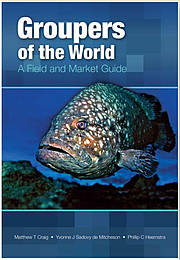
1. Groupers of the world: a field and market guide (by Matthew Craig, Yvonne Sadovy de Mitcheson, and Phillip Heemstra). Grouper are some of the most economically important fish in the ocean, and it’s important that scientists, managers, and eco-conscious consumers have access to the latest scientific and conservation information about these fish. As fisheries landings have increased greatly in recent years (the 300,000 tons landed in 2008 are 10 times the landings from the 1950′s), many species are rapidly declining in population. Recent research showed that 12% of known grouper species are Threatened (Vulnerable, Endangered, or Critically Endangered according to IUCN Red List standards) and another 13% are Near Threatened. Mating behaviors like spawning aggregations and the tendency to change sex further complicates management.

In addition to introducing readers to the field and summarizing the latest scientific discoveries, this book serves as a detailed reference guide to the 163 known species of grouper. The authors demonstrate how to identify each species using more than 300 beautiful color photographs and line drawings,  and detailed maps show where each can be found. The population status (including major threats and some proposed solutions), IUCN Red List conservation status, life history information and known feeding behavior is also reviewed for each species. $79.95, CRC Press.

Continue reading Books reviews: read up on sharks and grouper before the AES/ASIH meeting