 From hairy-chested yeti crabs to the deepest known fields, hydrothermal vents have been enjoying a bit of science celebrity in the last few weeks. Beneath the headlines, there has been an eruption of vent-related research published in the scientific literature and some exciting new expeditions just left port.
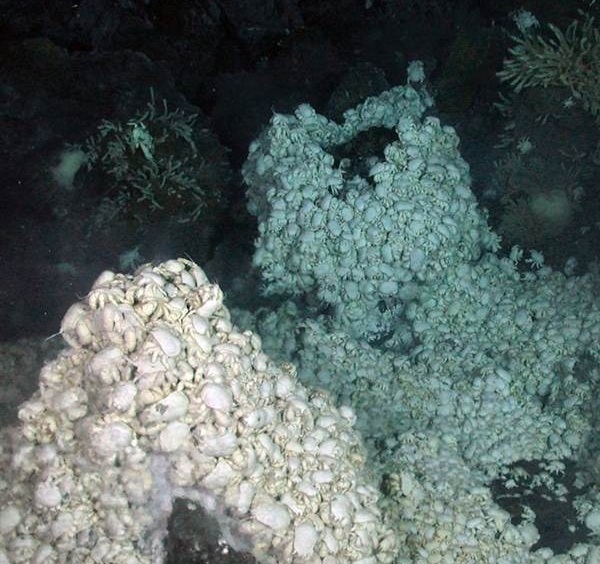
The exhaustive author list on this paper reads like a who’s who in hydrothermal vent biogeography. This is the paper that introduced “the Hoff” crab to the world, but the findings are far more significant. Hydrothermal vent systems are sorted into biogeographic provinces, with different regions supporting different communities. The iconic giant tube worms dominate the eastern Pacific, while the western Pacific (prominently featured in Deep Fried Sea) plays host to fist sized snails, and the Atlantic features shrimp as its dominant species. There are several missing gaps in our understanding of how these qualitatively different communities are connected – the Southern Ocean, the south Atlantic, the Indian Ocean, and the Cayman Trough, among others. Filling in these gaps in our knowledge can help us understand the history and evolution of hydrothermal vent ecosystems.
Read More “Updates from the Deep: New and Noteworthy in Hydrothermal Vent Research” »