
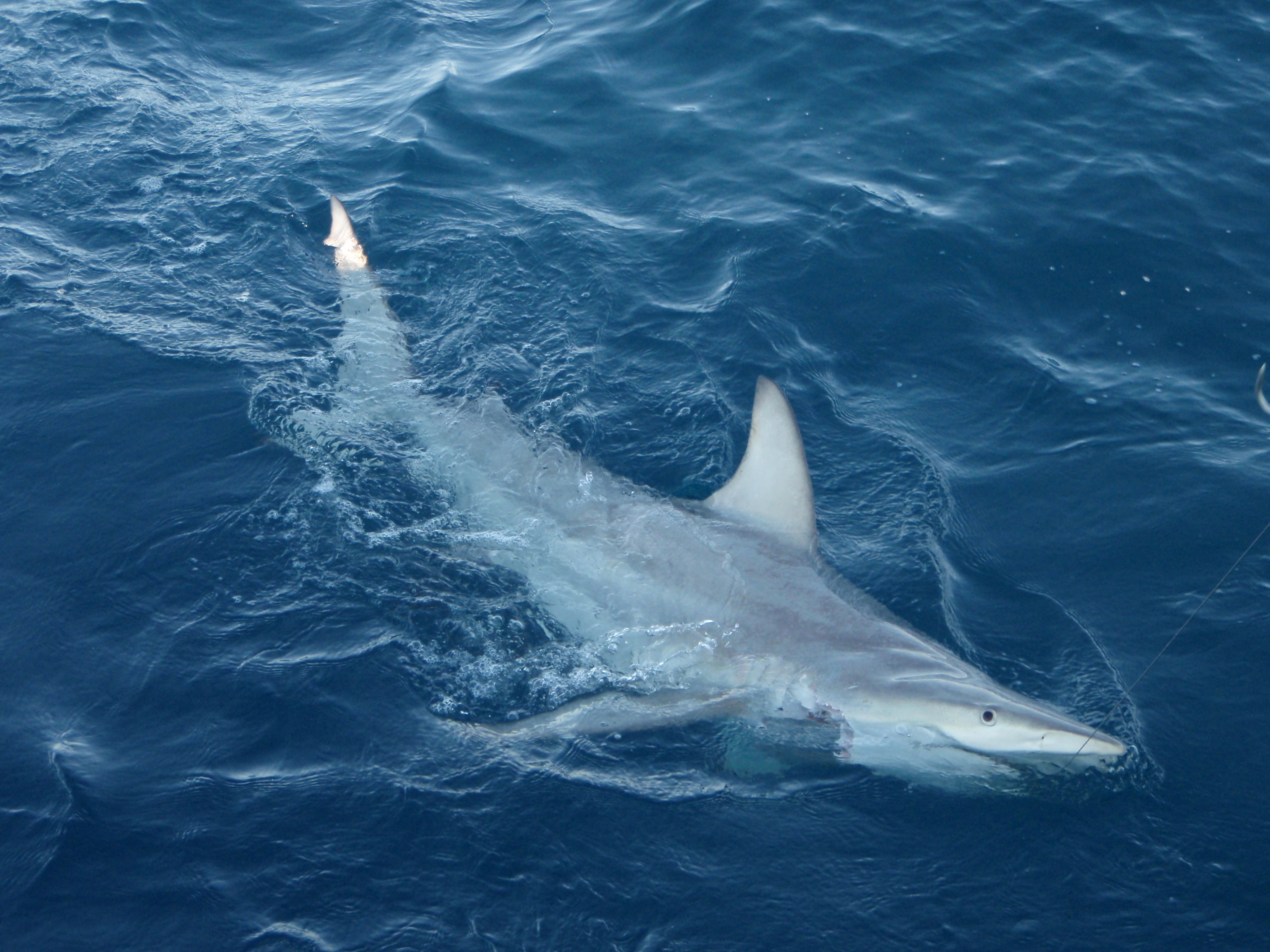
Last week, a team of 10 Australian scientists announced that they had found the world’s first “shark hybrids”, offspring of individuals from two different shark species which had interbred. During a routine survey of Australian marine life, 57 sharks were found that physically resembled one species of shark, but had genetic markers inconsistent with that species. Subsequent genetic investigation revealed that these 57 animals were hybrids between common blacktip sharks (Carcharhinus limbatus) and Australian blacktip sharks (C. tilstoni).
Some of these hybrids were “F1″, meaning that one parents was a common blacktip and one was an Australian blacktip. Others were “B+”(backcrossed), which means that one parent was a common blacktip/Australian blacktip hybrid, and the other was a “purebreed” of one of those two species. According to the study’s lead author, Dr. Jess Morgan of the University of Queensland, “our genetic marker tells us that these hybrids are ‘at least’ F1, and that these animals are reproductively viable and can produce an F2…the hybrids may be generations past F2 but the existing genetic markers can’t distinguish how many generations past the second cross have occurred.”