Andrew is a post-doctoral researcher in North Carolina focused on population and conservation genetics in hydrothermal vent communities.


David is a graduate student in Florida. He studies the ecology and conservation of sharks.


Amy is a graduate student in North Carolina studying local ecological knowledge within small scale fisheries.


Chuck is a graduate student in North Carolina focusing on apex predators and how they interact with fisheries.


Lyndell is a graduate student in North Carolina, studying the feeding ecology of cownose rays.


Iris is a graduate student in Washington studying habitat use and feeding habits of juvenile Pacific salmon and herring in Puget Sound.


Michael is a graduate student in Maryland investigating the visual systems of mantis shrimp.


Archives

Do richer nations pollute less? An evaluation of the Kuznets curve

We’ve often heard that “the solution to pollution is dilution”, but according to one theory, the best way to reduce pollution in the first place may be to encourage economic growth. This is best modeled by a simple theoretical figure called a “Kuznets Curve”. According to the Kuznets curve, extremely poor nations pollute relatively little, partially because they lack the technology and resources for large-scale industry. Moderately wealthy nations have the technology for large-scale industry, but not the resources for pollution-reduction measures. The wealthiest nations are able to create large-scale industry and can also afford to purchase pollution reduction technology for their industries (or alternative industries entirely).
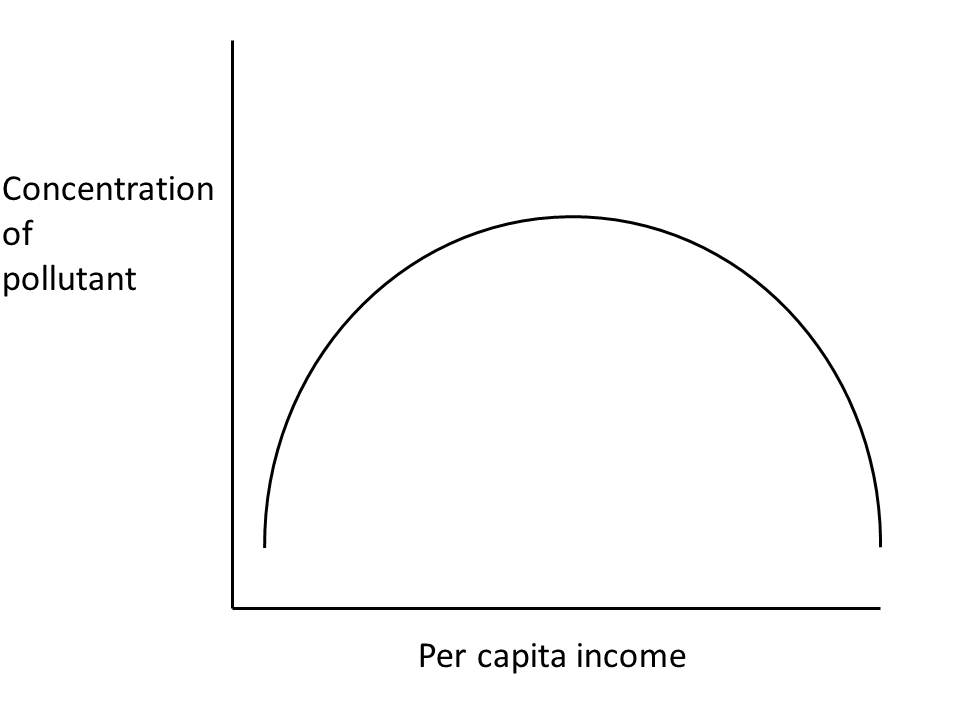
A simple Kuznets curve (credit: David Shiffman)

Continue reading Do richer nations pollute less? An evaluation of the Kuznets curve