Transcript available below.
Tag: ocean
Uncategorized
Cuttings (short and sweet): Follow everyone in this amazing thread of twitter wildlife biologists started by David Steen. Ancient Egyptians farmed fish thousands of years ago. By the New Arab. This is a neat story about a new archaeological study, which tells us about ancient humans’ relationship with the sea. Fun fish festivals around the … Read More “Ancient fish farming and popular invasive species: Thursday Afternoon Dredging, October 18th 2018” »
Weekly Salvage
Foghorn (A Call to Action!)
- Sign up for Make for the Planet Borneo and help push forward the next generation of conservation technology!
- Announcing the Con X Tech Prize for Hacking Extinction! Apply for funding to create a working hardware prototype and win up to $20,000 in awards.
Flotsam (what we’re obsessed with right now)
- This is a totally ordinary, not at all alarming, call for government bidders on a contract to build “new systems that employ natural or engineered marine organisms as sensor elements to amplify signals related to the presence, movement, and classification of manned or unmanned underwater vehicles.” They even adorably call these Persistent Aquatic Living Sensors PALS. Normal!
- Here’s a video of anglerfish mating, because anglerfish are beauty.
- This week in science and conservation slowly, awkwardly coming to terms with their racist history: For Decades, Our Coverage Was Racist. To Rise Above Our Past, We Must Acknowledge It and Environmentalism’s Racist History.
- Scientists in Survival Mode: After a disastrous hurricane season, scientists in the storms’ pathways struggle to return to work.
The Levee (A featured project that emerged from Oceandotcomm)
Weekly Salvage
Fog Horn (A Call to Action)
- Stop. Breathe. Take a step back. This can all be incredibly overwhelming. Pick the fight that matters most to you and take a few days deciding what success looks like, what strategies will work, and what tactics are available to you. And then hoist your flag and get to work.
- And when you meet someone fighting a different fight, remember to support them. There are already enough fronts to advance without taking friendly fire from our flanks.
Flotsam (what we’re obsessed with right now)
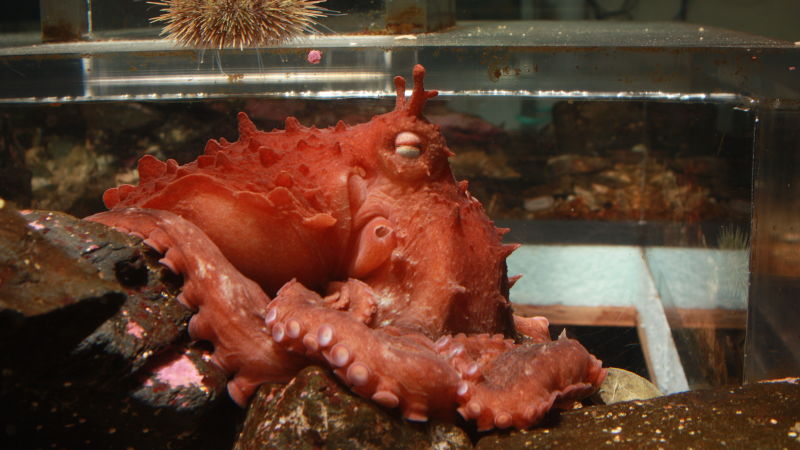
- Maybe it’s time to seriously consider just giving control of the world to the cephalopods. A New Species of Giant Octopus Has Been Hiding in Plain Sight.
- The most depressing annual run-down on the environmental science web: The Animals That Went Extinct in 2017.
Blogging
My middle school baseball team was bad. Really bad. Ball droppingly, bat throwingly, pitch ditchingly bad. It was a good inning if four of our batters made it to the plate. A great inning if the other team didn’t rotate through it’s entire line-up, twice. Our MVP was the kid who caught a ball. And if you think this is going to be one of those articles about how one tough player (me?) turned a bunch of scrappy underdogs into winners, it is not. I played right field, and not particularly well. We lost, often.
In peewee sports, at least in the US, there’s something called a “slaughter rule”. The slaughter rule ends the game if a team is losing by more than a certain number of points. In our case, it took something like a 20 run difference to trigger a slaughter. The slaughter rule exists so that outmatched teams don’t have to slog through 7 innings of a brutal losing streak, racking up demoralizing 112 to zero defeats. Once, we got slaughtered in the first inning.
Were it not for the slaughter rule, I would probably still be out somewhere in right field, wondering if maybe I should sign up for the Latin team next year.