Andrew is a post-doctoral researcher in North Carolina focused on population and conservation genetics in hydrothermal vent communities.


David is a graduate student in Florida. He studies the ecology and conservation of sharks.


Amy is a graduate student in North Carolina studying local ecological knowledge within small scale fisheries.


Chuck is a graduate student in North Carolina focusing on apex predators and how they interact with fisheries.


Lyndell is a graduate student in North Carolina, studying the feeding ecology of cownose rays.


Iris is a graduate student in Washington studying habitat use and feeding habits of juvenile Pacific salmon and herring in Puget Sound.


Michael is a graduate student in Maryland investigating the visual systems of mantis shrimp.


Archives

A slimehead by any other name should never be on your plate

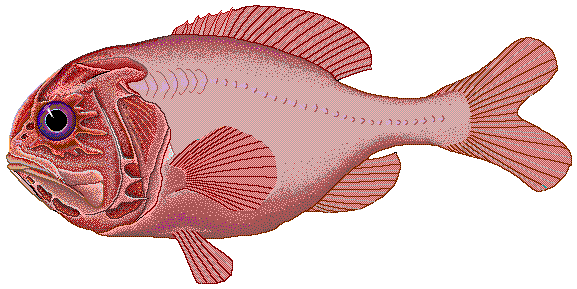
Orange Roughy - image by FishBase artist Robbie Cada

Orange Roughy - image by FishBase artist Robbie Cada

Slimehead is not a word you would expect to find on the menu of a fancy restaurant. Like dolphin*, toothfish*, goosefish*, mudbug*, hog*, and gizzard fish*, slimeheads have undergone a bit re-branding over the last few decades to make their name as palatable as their fillets. Enter the Orange Roughy, a dull, uninspired name that captures nothing of the grandeur of Hoplostethus atlanticus and ignores the defining characteristic of these deep-sea fishes.

What does Orange Roughy mean to you? Well, it’s probably orange, and I guess roughy means it might be rough, or something. The name is pretty uninformative. But slimehead! Slimehead tells you quite a bit about this creature, and leads to some interesting ecological questions. Why is it’s head covered in slime? What does the slime do? How is the slime contained in its head?

Continue reading A slimehead by any other name should never be on your plate

Pseudoscience Redux: Greenwashing – Is there really a sustainable Orange Roughy fishery?

This post was originally published on September 6, 2010 as a part of our first Week of Ocean Pseudoscience. Enjoy!


Wandering through the grocery store the other day, I noticed something strange in the fish bin. Now, in general I’m pretty conscious of where my fish comes from, how it was caught, whether the fishery as a whole or the specific population is sustainable. I pay attention to those details and I can usually tell when a company’s branding is legitimate and when it’s just greenwashing.

Imagine my shock when I found a packet of Orange Roughy, sold by the Full Circle brand, and marketed as sustainable.

Continue reading Pseudoscience Redux: Greenwashing — Is there really a sustainable Orange Roughy fishery?

Greenwashing - Is there really a sustainable Orange Roughy fishery?

Wandering through the grocery store the other day, I noticed something strange in the fish bin. Now, in general I’m pretty conscious of where my fish comes from, how it was caught, whether the fishery as a whole or the specific population is sustainable. I pay attention to those details and I can usually tell when a company’s branding is legitimate and when it’s just greenwashing.

Imagine my shock when I found a packet of Orange Roughy, sold by the Full Circle brand, and marketed as sustainable.

Continue reading Greenwashing — Is there really a sustainable Orange Roughy fishery?