Andrew is a post-doctoral researcher in North Carolina focused on population and conservation genetics in hydrothermal vent communities.


David is a graduate student in Florida. He studies the ecology and conservation of sharks.


Amy is a graduate student in North Carolina studying local ecological knowledge within small scale fisheries.


Chuck is a graduate student in North Carolina focusing on apex predators and how they interact with fisheries.


Lyndell is a graduate student in North Carolina, studying the feeding ecology of cownose rays.


Iris is a graduate student in Washington studying habitat use and feeding habits of juvenile Pacific salmon and herring in Puget Sound.


Michael is a graduate student in Maryland investigating the visual systems of mantis shrimp.


Archives

Tweets from the American Elasmobranch Society: Elasmobranch Conservation

The American Elasmobranch Society is a non-profit professional society focusing on the scientific study and conservation of sharks, skates, and rays. AES members meet each year in a different North American city, and this meeting is the world’s largest annual gathering of shark scientists. AES recently met in Vancouver, British Columbia for the 2012 meeting, and for the first time the event was live-tweeted by meeting attendees, including myself. I’ve organized the best conference tweets by session using Storify. If anyone has any questions or comments about the research presented below, please feel free to share it in the comments section of this blog post.

Here are selected tweets from the Elasmobranch Conservation sessions.

Continue reading Tweets from the American Elasmobranch Society: Elasmobranch Conservation

Tweets from the American Elasmobranch Society: Elasmobranch Behavior

The American Elasmobranch Society is a non-profit professional society focusing on the scientific study and conservation of sharks, skates, and rays. AES members meet each year in a different North American city, and this meeting is the world’s largest annual gathering of shark scientists. AES recently met in Vancouver, British Columbia for the 2012 meeting, and for the first time the event was live-tweeted by meeting attendees, including myself. I’ve organized the best conference tweets by session using Storify. If anyone has any questions or comments about the research presented below, please feel free to share it in the comments section of this blog post.

Here are selected tweets from the Elasmobranch Behavior sessions.

Continue reading Tweets from the American Elasmobranch Society: Elasmobranch Behavior

Largetooth sawfish to become second elasmobranch to receive Endangered Species Act protections

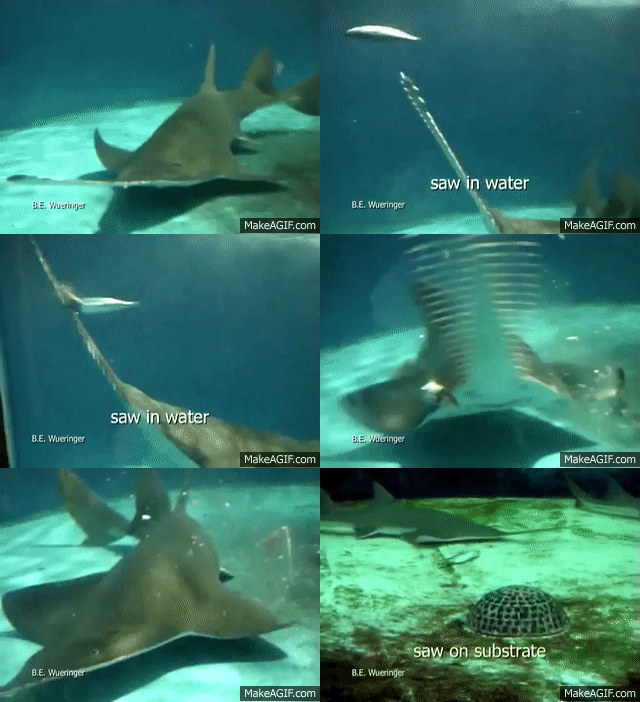
The Largetooth Sawfish (Pristis perotteti) is about to become the second elasmobranch protected by the Endangered Species Act, a welcome step in the conservation of these animals.  In addition to the slow growth, low number of offspring, and relatively late maturity which characterizes most elasmobranchs, another  biological feature contributes to sawfish being “among the most endangered fishes in the world,” according to Shark Advocates International President Sonja Fordham. It’s hard to imagine a biological structure that can get more thoroughly entangled in fishing nets than the “saw” on their rostrum, and bycatch is one of the leading causes of population decline in this group of animals. Additionally, the saw used to be a part of the souvenir trade.

Continue reading Largetooth sawfish to become second elasmobranch to receive Endangered Species Act protections