

The month of February 2016 just broke a global temperature record, previously held by… January…2016.
While the Trubama climate plans are being praised, the comments section of this Guardian article was still inundated with “Well, it’s cold where I am” posts. Perhaps we need to create more awareness about the difference between weather and climate…
I know, I’m not supposed to talk about this, but I love to sing. Every neighbor, flat mate, and unwilling car passenger knows this. In fact, the only thing I love as much as singing is teaching science, but the metaphorical light bulb didn’t come on until I attended a SciComm workshop in Portugal. Why not sing about science like many others? Maybe even weather and climate??
Adele songs were the obvious choice, both for singability and availability of karaoke versions on YouTube, so I began my research. I asked facebook if this would be a valuable addition to the internets, or best not to talk about it ever again, and the response was significantly positive. Thus, #SingingScience was born and with it a commitment to do more of these when I have free time.
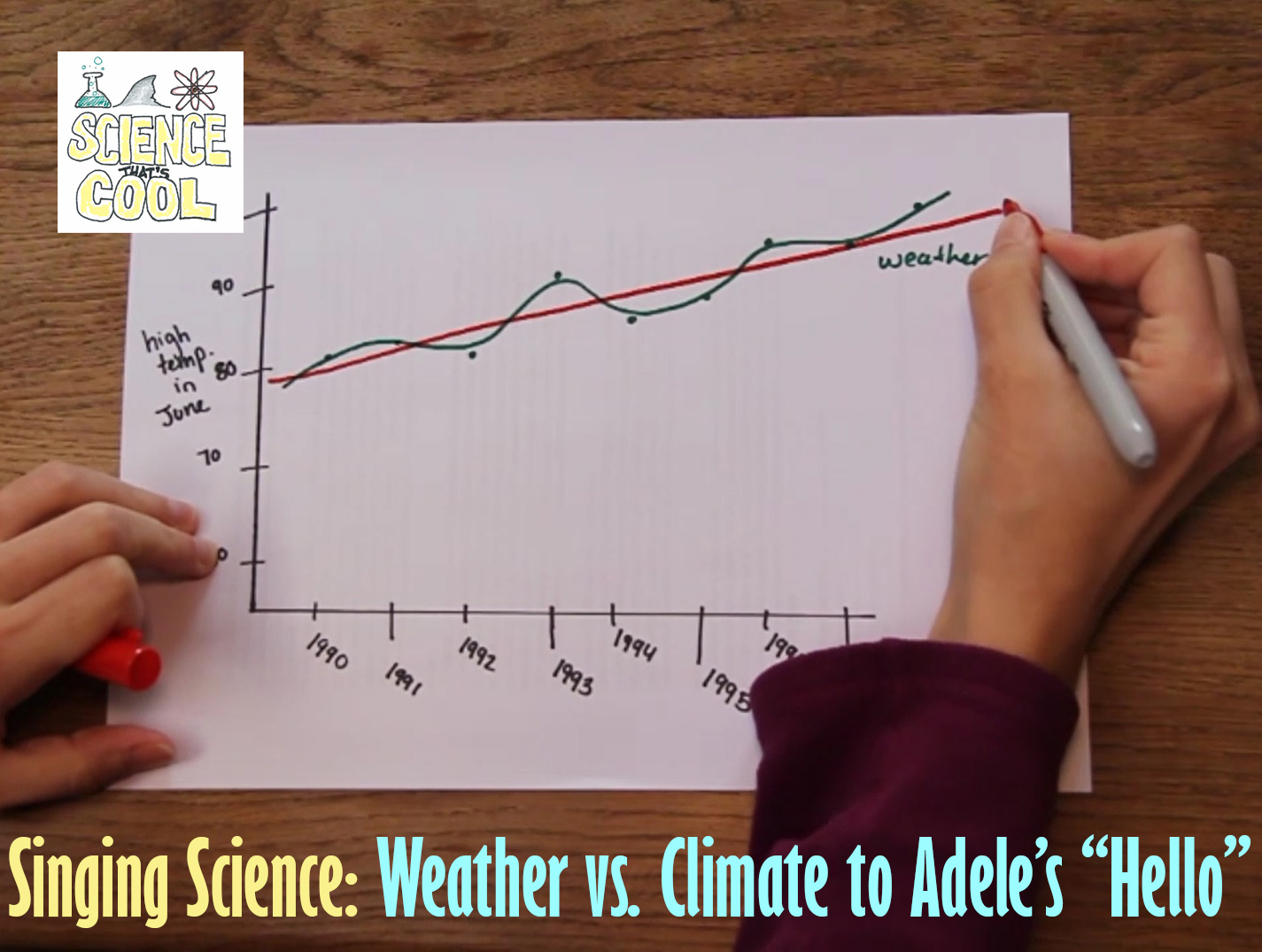
Enjoy, Weather vs. Climate set to Adele’s “Hello”
**Note (because evidently it’s not obvious): This is not real meteorological data.
Here are the lyrics for any science teachers who would like them:
Read More “Singing Science: Weather vs. Climate with lyrics for teachers” »
