Image courtesy Wikimedia Commons, via the National Marine Fisheries Service historic collection
A press release circulating on Twitter, which claims that a “deadly expansion” of a California fishery will negatively affect critically endangered leatherback sea turtles, has been making waves in the marine conservation and fisheries communities, inspiring a series of interesting discussions. Is it better to buy US-caught seafood with some bycatch than foreign-caught seafood from fleets with less strict environmental regulations? Is the current “Pacific leatherback conservation area”, a large region of the ocean where no fishing is allowed, too much of a restriction on U.S. fisheries? Can there be a balance between fisheries and conservation? I invited Jonathan Gonzalez, a California graphic designer with a strong interest in marine conservation issues, to write a guest post about the swordfish fishery in question. You can follow him on Twitter here, and he’s happy to answer your questions about this issue in the comments section of this post. In addition to his graphic design work, Jonathan has served as the assistant director of the Santa Barbara Marine Mammal center, and has worked with the California Shark Coalition to gather support from fishermen for the state’s recent ban on shark fins.
by Jonathan Gonzalez
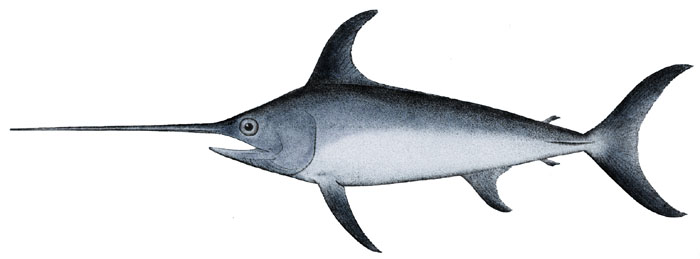
Fisheries are complicated and often misunderstood. We often see conflicting information about what fish we should or should not eat and we see general statements about certain gear types that over simplify an extremely complex issue. But don’t be discouraged, learning about fisheries can be very fun and can lead to eating seafood with confidence, free of any guilt or confusion. One particular fishery I want to talk about that is not only complicated, but in my opinion it is California’s most misunderstood fishery. I’m talking about the drift gillnet (DGN) fishery for swordfish and common thresher sharks (CTS). Swordfish, CTS and mako sharks caught in Hawaiian set longlines are also landed in California, but I am not going to talk about that here. I am going to focus on the DGN fishery because this fishery has been in the headlines a bit lately because of recent motions that were voted on at a Pacific Fisheries Management Council (PFMC) meeting. Here is a press release you may have seen that in my opinion is full of factual errors and a few downright slanderous statements. I’m not going to point them all out and I’m not going to try to tell you what to do. Instead I am going to give you some background about the fishery and provide you with information that will hopefully help you to make an informed decision for yourself. Continue reading Good intentions and negative transfer effects: A guest post about the California swordfish fishery
Earlier this week, several New York state beaches were closed due to shark sightings. Fox News’ Rick Leventhal, speaking as part of Bill Hemmer’s “America’s Newsroom” show, reported on this story, claiming that “some onlookers ID’ed them as thresher sharks, they’re estimated to be about 18 feet long”. A half-eaten seal also washed up on shore nearby.
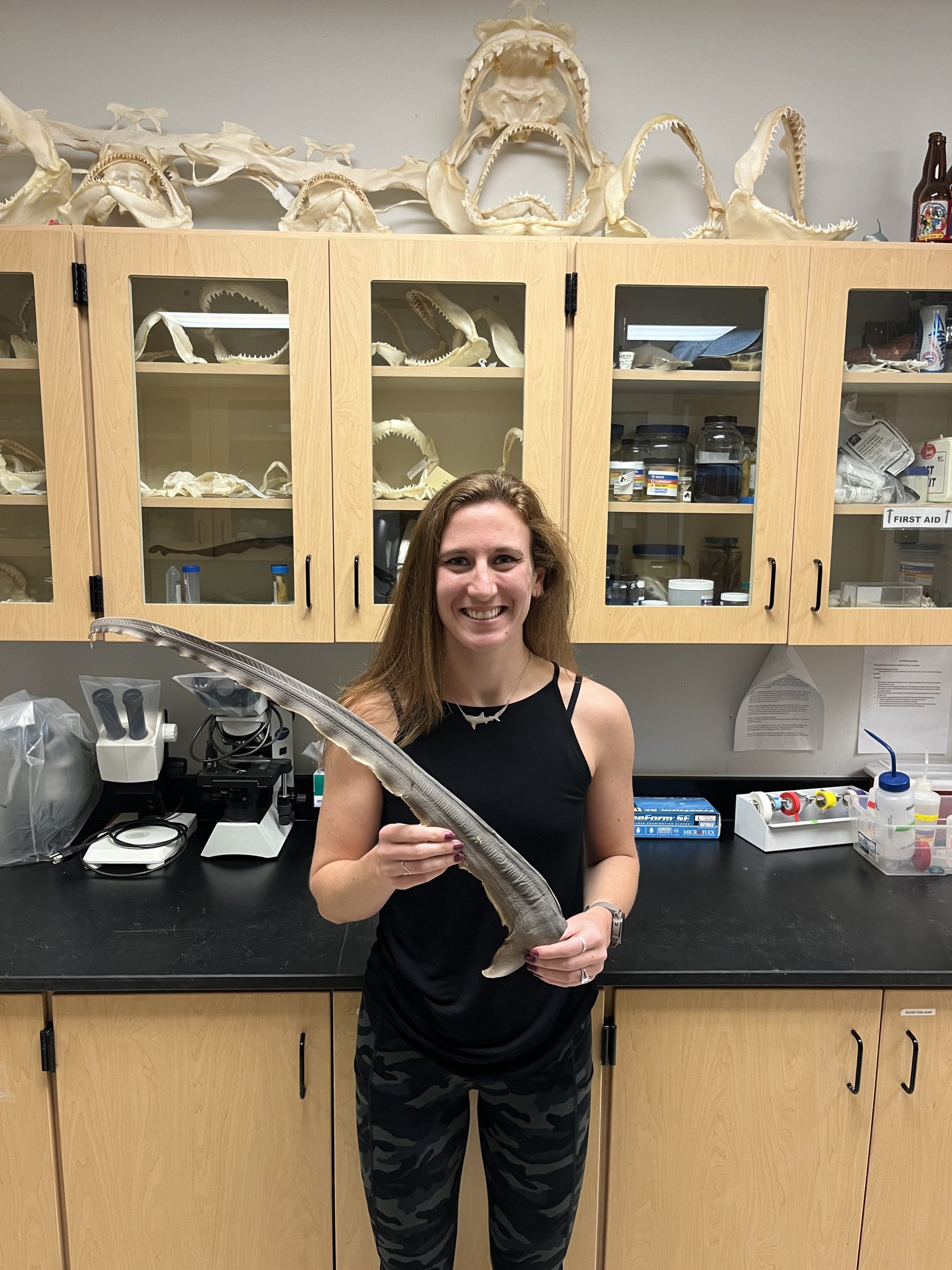
To his credit, Mr. Leventhal attempted to play down fears about these animals, saying that “Let’s not forget that sharks live in the ocean…as long as there’s food, they’re likely to keep hanging around”. However, I was immediately skeptical of the claim that a group of 18 foot long thresher sharks were swimming slowly just a few yards offshore. A cursory review of the known biology and ecology of thresher sharks will explain my skepticism.
It has been an exciting week for shark conservation! We can only hope that this provides some momentum for CITES, which begins tomorrow.
And now, for this week’s shark conservation news:
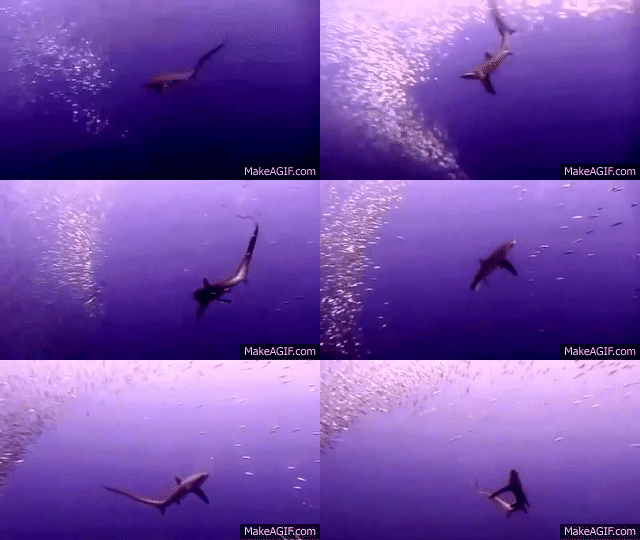
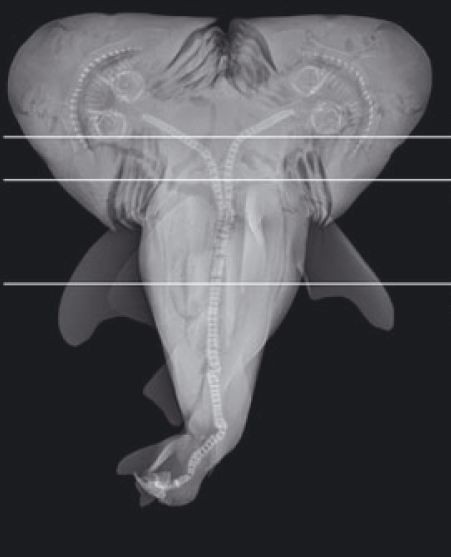
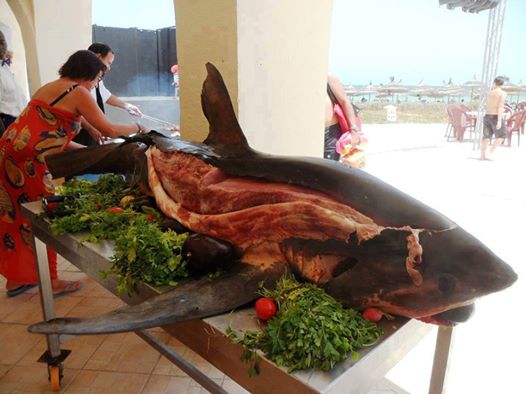
The Indian Ocean Tuna Commission declared a ban on commercial landings of all thresher sharks (each of the three thresher shark species is considered vulnerable globally by the IUCN).While threshers aren’t the most threatened sharks in the area, they are some of the most threatened sharks in the area with an active commercial fishery. Threshers also are common bycatch species, so I’m skeptical about the long-term effectiveness of this plan, but being killed as bycatch only is certainly better than being killed as bycatch and as a target species. H/T WWF Environmental News
Spiny dogfish is commonly sold in the United Kingdom as the fish in “fish and chips”. It has been illegal to harvest this species of shark in European waters for some time, so it is simply imported. However,they are one of the species up for CITES protection, which could end international trade of their meat. While I understand the cultural importance of fish and chips to the British, we probably don’t need to be using species that are long-lived and have few young for such a large-scale fishery. If I’ve learned anything from years living in the South, it’s that anything tastes good if you deep fry it. Let’s try to find a more sustainable fishery to use for fish and chips. H/T The Telegraph
Finally, the Maldives has made their territorial waters into a shark sanctuary. All shark fishing is banned within their nearly 100,000 square mile exclusive economic zone, and the buying and selling of shark fins within the Maldives is now illegal. Approximately 30 species of sharks are found in this area (though some only pass through as part of large migrations). H/T Oceanic Defense.
Recent Comments