Skip to content

Southern Fried Science

Over 15 years of ocean science and conservation online

  • Home
  • About SFS
  • Authors
  • Support SFS

Tag: marine conservation institute

New study: 22 out of 23 U.S. states aren’t doing enough to protect marine resources

Posted on May 29, 2013 By David Shiffman 12 Comments on New study: 22 out of 23 U.S. states aren’t doing enough to protect marine resources
Conservation

davesquare

mci-logoEarlier today, the Marine Conservation Institute and Mission Blue released SeaStates, the first ever national ranking of how well different U.S. states and territories protect their ocean resources. The full report is available online and is an important read, but can be summarized in 5 words: “Most states aren’t doing enough”.

The gold standard for the protection of marine resources is no-take marine reserves, areas of the ocean where no fishing or oil/gas extraction is permitted. Decades of research on marine reserves worldwide have shown that they usually have more fish, bigger fish, and more species of fish than environmentally similar areas (often adjacent to the reserve border) where fishing is allowed. In other words, when you don’t kill fish, more of them are alive.

Read More “New study: 22 out of 23 U.S. states aren’t doing enough to protect marine resources” »
More than 100 marine scientists call for protecting the deep sea from trawling. Will you join us?

Posted on January 28, 2013January 28, 2013 By David Shiffman 8 Comments on More than 100 marine scientists call for protecting the deep sea from trawling. Will you join us?
Conservation, Science

davesquare

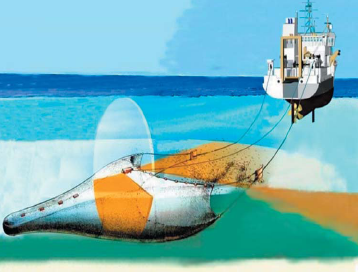
The least-impacted places in the ocean are mainly in the deep sea, but as fishing technology has improved, even seamounts, sponge gardens and deep-sea coral beds are no longer out of reach of our appetites for seafood. Bottom trawling, which involves dragging a heavy weighted net along the seabed, is so destructive to benthic habitats that it has been compared to clear-cutting a forest.  Bottom gillnetting catches almost anything that swims into them (and isn’t smaller than the mesh size), resulting in enormous levels of bycatch.

A (simplified) schematic of a bottom trawl. This one (on the NOAA vessel Henry Bigelow) is used for scientific sampling, not fishing, but it's the same principle on a smaller scale. Image via Wikimedia Commons
A (simplified) schematic of a bottom trawl. This one (on the NOAA vessel Henry Bigelow) is used for scientific sampling, not fishing, but it’s the same principle on a smaller scale.                  Image via Wikimedia Commons


The deep-sea fishing fleet of the European Union is one of the largest in the world, which is why it was so heartening to see the European Commission call for a phase-out of trawls and bottom gillnets recently. The Marine Conservation Institute, a longtime leader in marine protected areas, has obtained over 100 signatures (including mine) from marine scientists supporting a phase-out of bottom trawls and bottom gillnets by the EU fishing fleet. If you are a scientist who supports this measure, please consider adding your signature. This can be done by e-mailing DeepSeaTrawlPetition@Marine-Conservation.org and including your name, institutional affiliation, degree, title, and full mailing address. Please note that MCI is primarily interested in signatures from the scientific community, and that simply posting a comment on this blog post is not equivalent to signing the petition.However, feel free to post a comment letting us know that you contacted MCI!

mci-logo

The full text of the petition can be seen after the jump:

Read More “More than 100 marine scientists call for protecting the deep sea from trawling. Will you join us?” »

Popular Posts

Shark scientists want their research to help save threatened species, but don’t know how. Our new paper can help.Shark scientists want their research to help save threatened species, but don’t know how. Our new paper can help.December 1, 2025David Shiffman
Norway and Cook Islands put their deep-sea mining plans on pause.Norway and Cook Islands put their deep-sea mining plans on pause.December 3, 2025Andrew Thaler
What Ocean Ramsey does is not shark science or conservation: some brief thoughts on "the Shark Whisperer" documentaryWhat Ocean Ramsey does is not shark science or conservation: some brief thoughts on "the Shark Whisperer" documentaryJuly 2, 2025David Shiffman
What we know we don't know: impacts of deep-sea mining on whales, dolphins, sharks, turtles, and other migratory species.What we know we don't know: impacts of deep-sea mining on whales, dolphins, sharks, turtles, and other migratory species.November 20, 2025Andrew Thaler
2025: My year in writing, public speaking, and media interviews2025: My year in writing, public speaking, and media interviewsDecember 3, 2025David Shiffman
The Trouble with Teacup PigsThe Trouble with Teacup PigsOctober 14, 2012Andrew Thaler
Urea and Shark OsmoregulationUrea and Shark OsmoregulationNovember 15, 2010David Shiffman
How tiny satellites are tracking marine wildlifeDecember 1, 2025Andrew Thaler
Shark of Darkness: Wrath of Submarine is a fake documentaryShark of Darkness: Wrath of Submarine is a fake documentaryAugust 10, 2014Michelle Jewell
Quick Tips for Graduate Student Life - Write a Book ReviewJanuary 23, 2014Andrew Thaler
Subscribe to our RSS Feed for updates whenever new articles are published.

We recommend Feedly for RSS management. It's like Google Reader, except it still exists.

Southern Fried Science

  • Home
  • About SFS
  • Authors
  • Support SFS


If you enjoy Southern Fried Science, consider contributing to our Patreon campaign.

Copyright © 2025 Southern Fried Science.

Theme: Oceanly Premium by ScriptsTown