Skip to content

Southern Fried Science

Over 15 years of ocean science and conservation online

  • Home
  • About SFS
  • Authors
  • Support SFS

Tag: ocean acidification

These clams are starting to bake in Bad Gas Episode 3

Posted on June 23, 2014 By Andrew Thaler
Science

Welcome back. In our third installment of Bad Gas, we’re finally beginning to see visible deterioration of the shells. It’s a short one for you to enjoy. httpv://youtu.be/MjGY2XUD_UE

Bad Gas Supplemental

Posted on June 19, 2014 By Andrew Thaler
Blogging

In which I respond to some of the comments and questions raised by the first two videos in my ocean acidification project. httpv://www.youtube.com/watch?v=Q1xlE-P8EWs

Bad Gas Episode 2!

Posted on June 18, 2014June 18, 2014 By Andrew Thaler
Science

Watch it now! httpv://youtu.be/QXHV0c8juXQ

Bad Gas: a step-by-step guide to experimenting with Ocean Acidification in your kitchen

Posted on June 10, 2014June 10, 2014 By Andrew Thaler
Science

After over a month of planning, it’s finally time to unveil my new ocean acidification project: Bad Gas! Watch this video to learn how to turn a Soda Stream into a miniature ocean and explore the impact of ocean acidification.

httpv://youtu.be/KBJiUWcDGpM

As this experiment continues, it will develop into a series of lesson plans for science teachers to use in the classroom. If you’re following along or joining in with your own tiny ocean, leave a comment below and keep us updated on your progress.

Read More “Bad Gas: a step-by-step guide to experimenting with Ocean Acidification in your kitchen” »

Documenting Deep Sea Drama: Pursuing the Reality of Ocean Acidification

Posted on April 28, 2014April 28, 2014 By Guest Writer
Science

1Kaitlin Kovacs is a researcher for U.S. Geological Survey – Southeast Ecological Science Center. While she currently works in a deep-sea benthic ecology lab, her previous science adventures have led her to study artificial reefs in Florida, coral reef restoration in the Maldives, and coastal ecosystems in the U.S. Virgin islands. With her marine science background, Kaitlin is keen on using outreach and education to help engage local communities in marine conservation efforts.

The ideas expressed below do not represent U.S. Geological Survey.

In the cult Wes Anderson film, The Life Aquatic, there is a scene in which a documentary film maker asks the protagonist, Steve Zissou (clearly a spoof of Jacques Cousteau) what the scientific purpose of his mission to kill the endangered Jaguar shark would be. The eccentric Zissou (brilliantly portrayed by Bill Murray) answers simply, “Revenge.”

The humor here is that scientific missions are rarely so openly coupled with emotion. And yet, the quirky marine biologist does not bother to hide that he is consumed with emotion after his partner is eaten by a shark. His anger and sadness fuel his scientific objective.

Read More “Documenting Deep Sea Drama: Pursuing the Reality of Ocean Acidification” »

TGIF: 250+ videos from the deep sea for you to enjoy

Posted on October 4, 2013October 27, 2013 By Andrew Thaler

InDEEP and the Deep-Ocean Stewardship Initiative have compiled a massive database of more than 250 online videos featuring ecology, biology, oceanography, and conservation of the deep ocean: Deep-sea Online Videos. There’s a ton of videos in there to explore (especially if you find yourself with an abundance of shutdown related free time). Here’s just one … Read More “TGIF: 250+ videos from the deep sea for you to enjoy” »

An open letter to my newborn niece

Posted on September 29, 2012September 29, 2012 By Andrew Thaler 4 Comments on An open letter to my newborn niece
Science

Dear Tinsley,

Welcome to the world. I know it must feel like a very small world right now–just big enough to keep you safe and sheltered and loved–but trust me, as you keep growing, so will the world. Even after you stop growing, it will keep getting bigger. This big, old world that you have suddenly appeared in is huge and strange and beautiful and mysterious. There is more to discover in this world than all of us who have ever lived, working together, can ever know. Even before you can speak, you will think things and know things that no one has ever thought or known before. That is wonderful.

We are explorers. Not just your aunt and uncle, or your family, but all of us: this whole, gigantic group of people that call ourselves “humanity”. Today, there are over 7 billion of us and every last one, every person you will ever meet, can trace their heritage back, through thousands of millennia, to a small tribe of primates somewhere on the African savannah  We were explorers then, too. This tribe made its way across Europe and Asia. They sailed across the Pacific to Australia and a thousand tiny islands. They marched across the Bering Sea–land once connected Alaska to Russia–and traveled all the way down to the tip of South America. And, no matter how far they traveled, no matter how much they explored, the world just kept getting bigger.

We’re still exploring, today. We’ve built an enormous machine called the Large Hadron Collider–some say it’s the most complicated machine humanity has ever built—that allows us to explore the tiniest things in the universe: the sub-atomic particles that hold our world (and every world) together. We’ve even begun to explore beyond our own world. We have massive telescopes that allow us to explore distant galaxies. We’ve built probes that have left our own solar system. We have satellites orbiting Jupiter and Saturn. This summer, we landed a robot on Mars. It has already discovered that Mars was once more like our own world than we previously believed. We named that robot “Curiosity”.

Read More “An open letter to my newborn niece” »

The horrifying physiological and psychological consequences of being Aquaman

Posted on July 18, 2012December 27, 2012 By Andrew Thaler 20 Comments on The horrifying physiological and psychological consequences of being Aquaman
Popular Culture
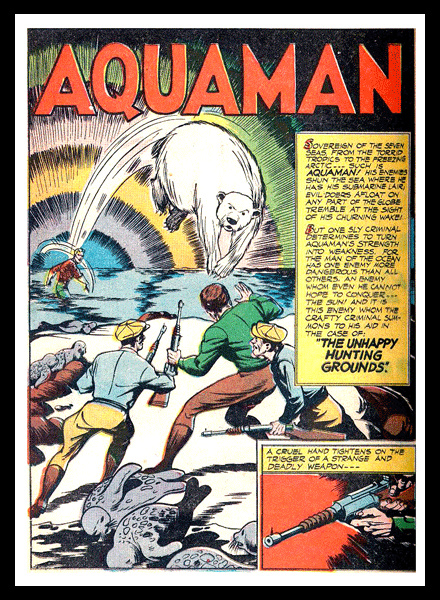
Aquaman. DC Comics.
Aquaman. DC Comics. A rational response to seal poaching is to lob a polar bear at the aggressors.

Aquaman may not be everybody’s favorite superhero, but since his creation in 1941, he has been among DC’s most enduring icons. During the Golden Age of comic books, he held his own against Superman, Batman, and Wonder Woman. Silver Age Aquaman was a founding member of the Justice League. His powers, tied to the ocean, forced writers to create a compelling, complex hero with explicit limitations. In the early days, when Superman’s strength was practically infinite, and Batman’s brilliance was unmatched, Aquaman had to become more than just a superhero, he had to be a person.

If Superman existed to show us how high the human spirit could fly, and Batman to show us the darkness within even our most noble, Aquaman is here to show us the world that triumphs in our absence. The ocean is not ours, and no matter how great our technology, we will never master it as we have mastered land, but Aquaman has. Through this lonely ocean wanderer, we can experience a world that we can never truly command. In many ways, Aquaman was stronger than the Man of Steel and darker than the Dark Knight. He knew loneliness that the orphan and the alien exile never could.

Roll on, thou deep and dark blue Ocean – roll!
Ten thousand fleets sweep over thee in vain;
Man marks the earth with ruin – his control
Stops with the shore; — upon the watery plain
The wrecks are all thy deed, not does remain
A shadow of man’s ravage, save his own,
When for a moment, like a drop of rain,
He sinks into thy depths with bubbling groan,
Without a grave, unknell’d, uncoffin’d, and unknown.

Byron

Even though Aquaman had to fight harder, endure the jokes of other, less limited heroes, and find relevance in an ecosystem hostile to the humans that had to empathize with him, Aquaman was never forced to confront the truly horrifying consequences of life in the ocean.

Read More “The horrifying physiological and psychological consequences of being Aquaman” »

A primer for climate change

Posted on July 24, 2011July 24, 2011 By Andrew Thaler 69 Comments on A primer for climate change
Conservation, Science

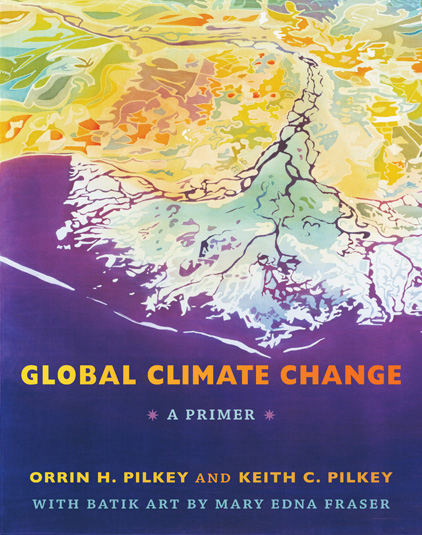
Sea level rise. Desertification. Ocean acidification. Climategate. Permafrost. Greenland ice sheet. Hockey stick. The language of global climate change can be overwhelming. Every year, as we learn more about the ways that human activity fundamentally alter global processes, the subject becomes even broader and more complicated. Fortunately, world renowned oceanographer Orrin Pilkey and his son, Keith Pilkey, have produced a comprehensive and readable primer on global climate change. The strength of Global Climate Change: A Primer can be broken into three sections – the content, the conflict, and the illustrations.

Read More “A primer for climate change” »

New Ocean Acidification PSA

Posted on May 17, 2011May 17, 2011 By David Shiffman
Conservation, Science

This morning, Plymouth Marine Laboratory launched a new public service announcement about ocean acidification entitled “Connecting science, industry, policy and public”. According to the Official MPA Blog:

Read More “New Ocean Acidification PSA” »

Posts pagination

Previous 1 2 3 Next

Popular Posts

Shark scientists want their research to help save threatened species, but don’t know how. Our new paper can help.Shark scientists want their research to help save threatened species, but don’t know how. Our new paper can help.December 1, 2025David Shiffman
Norway and Cook Islands put their deep-sea mining plans on pause.Norway and Cook Islands put their deep-sea mining plans on pause.December 3, 2025Andrew Thaler
What Ocean Ramsey does is not shark science or conservation: some brief thoughts on "the Shark Whisperer" documentaryWhat Ocean Ramsey does is not shark science or conservation: some brief thoughts on "the Shark Whisperer" documentaryJuly 2, 2025David Shiffman
What we know we don't know: impacts of deep-sea mining on whales, dolphins, sharks, turtles, and other migratory species.What we know we don't know: impacts of deep-sea mining on whales, dolphins, sharks, turtles, and other migratory species.November 20, 2025Andrew Thaler
2025: My year in writing, public speaking, and media interviews2025: My year in writing, public speaking, and media interviewsDecember 3, 2025David Shiffman
The Trouble with Teacup PigsThe Trouble with Teacup PigsOctober 14, 2012Andrew Thaler
Urea and Shark OsmoregulationUrea and Shark OsmoregulationNovember 15, 2010David Shiffman
How tiny satellites are tracking marine wildlifeDecember 1, 2025Andrew Thaler
Shark of Darkness: Wrath of Submarine is a fake documentaryShark of Darkness: Wrath of Submarine is a fake documentaryAugust 10, 2014Michelle Jewell
Quick Tips for Graduate Student Life - Write a Book ReviewJanuary 23, 2014Andrew Thaler
Subscribe to our RSS Feed for updates whenever new articles are published.

We recommend Feedly for RSS management. It's like Google Reader, except it still exists.

Southern Fried Science

  • Home
  • About SFS
  • Authors
  • Support SFS


If you enjoy Southern Fried Science, consider contributing to our Patreon campaign.

Copyright © 2025 Southern Fried Science.

Theme: Oceanly Premium by ScriptsTown