Skip to content

Southern Fried Science

Over 15 years of ocean science and conservation online

  • Home
  • About SFS
  • Authors
  • Support SFS

Tag: OpenROV

A selection of space nerdery from your favorite ocean blog.

Posted on March 25, 2016March 25, 2016 By Andrew Thaler
Blogging, Popular Culture

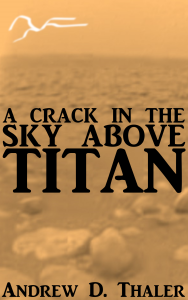
coverTitanThis Monday I launched A Crack in the Sky above Titan, a science fiction adventure framed around the seemingly simple question: What is it like to sail across the methane seas of Titan?

While Southern Fried Science is all about ocean science and conservation, we do make the occasional foray into space. From celestial navigation on Mars, do diving robots on Europa, to exploring other (fictional) worlds to learn something about our own, we haven’t shied away from the ‘other’ final frontier. So, in honor of A Crack in the Sky above Titan (available now on Amazon*) here is a selection of our favorite space nerdery from Southern Fried Science.

(Note: Some of these are from our month of ocean science fiction. While the framing for these pieces is fictional, the science itself is sound)

The Extraterrestrial Ocean: Could OpenROV Trident explore the seas of Europa?

Our planet is an ocean, and it is almost entirely unexplored. OpenROV, and their new Trident underwater drone is one of many tools that will help change that by democratizing exploration, conservation, and ocean science. We are poised atop the crest of a wave that may change how humans interact with the ocean as profoundly as the invention of the aqualung.

Earth is not the only body in our solar system that hosts an ocean. As we (slowly) venture out into the stars, could OpenROV Trident dive in extraterrestrial seas?

Read More “A selection of space nerdery from your favorite ocean blog.” »
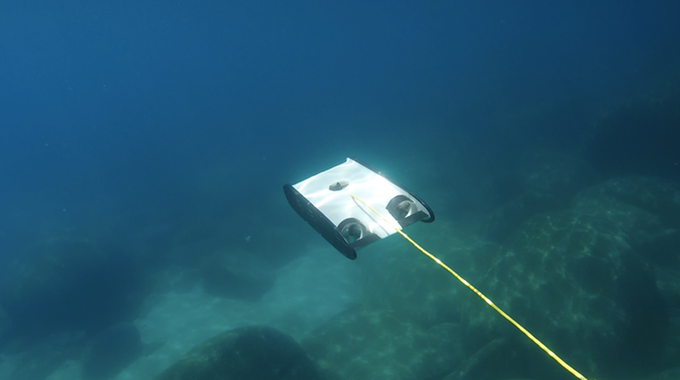
The Extraterrestrial Ocean: Could OpenROV Trident explore the seas of Europa?

Posted on October 26, 2015October 26, 2015 By Andrew Thaler
Science
OpenROV Trident
OpenROV Trident

Our planet is an ocean, and it is almost entirely unexplored. OpenROV, and their new Trident underwater drone is one of many tools that will help change that by democratizing exploration, conservation, and ocean science. We are poised atop the crest of a wave that may change how humans interact with the ocean as profoundly as the invention of the aqualung.

Earth is not the only body in our solar system that hosts an ocean. As we (slowly) venture out into the stars, could OpenROV Trident dive in extraterrestrial seas?

Read More “The Extraterrestrial Ocean: Could OpenROV Trident explore the seas of Europa?” »

Robots Versus Aliens – Anticipatory conservation in technology-drive initiatives

Posted on September 30, 2015September 29, 2015 By Andrew Thaler
Conservation, Science

This week, I and a team of marine ecologist, explorers, and ocean technologists published Robots as vectors for marine invasions: best practices for minimizing transmission of invasive species via observation-class ROVs. This paper, conceived and largely produced during the ROV2PNG Marine Science Short Course in Papua New Guinea, represent the current best practices for minimizing or eliminating the spread of invasive species via portable, low-cost underwater robots.

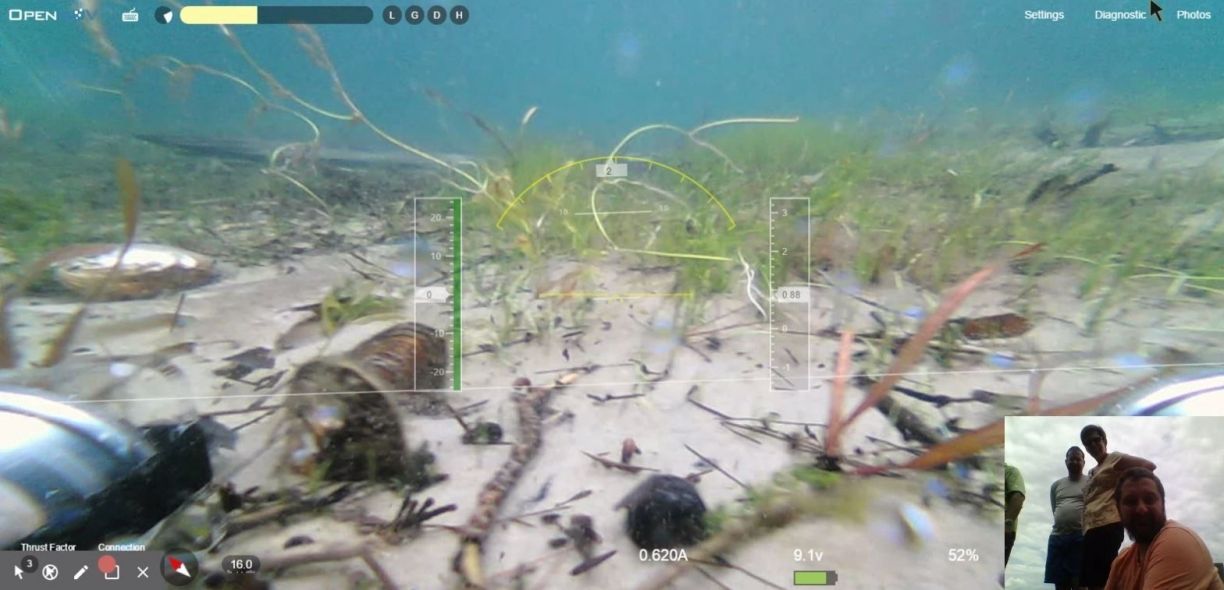
Zebra mussels observed via OpenROV. Photo by author.

Species invasion, particularly in the ocean, is a huge problem. Invasive species are ruthlessly good at out-competing native fauna. Without any natural predators, they can flourish, causing massive, irreparable damage to marine ecosystems. As scientists, explorers, and conservationist, we have to be proactive in ensuring that our actions don’t negatively impact the ecosystems we’re trying to save. Our guidelines are simple, but effective, and, most importantly, easy to follow.

  1. Educate yourself about species invasions generally and specifically about current issues in the area you’re working.
  2. Inspect your gear.
  3. Soak your gear in freshwater between dives.
  4. Soak your gear in weak bleach between expeditions.
  5. Avoid moving your equipment between geographic regions, when possible.

Technology can be a powerful tool in the aid of conservation. Around the world, people are using low-cost robotics to count elephants, detect poachers, protect tortoises, even seek-and-destroy invasive sea stars. As I discuss over at Motherboard, these robots are a transformative component of 21st century marine science and conservation, they fundamentally reshape the way we interact with the ocean. And with the explosive success of the latest OpenROV launch, there are about to be a lot more robots in the water. This is a good thing. The more eyes we have in the sea, the more people that actively contribute to ocean exploration, the more people with access to the tools necessary to explore, study, and understand our oceans and how they are changing, the better off we will all be.

Read More “Robots Versus Aliens – Anticipatory conservation in technology-drive initiatives” »

Keeping your robot invasions under control.

Posted on September 28, 2015 By Andrew Thaler
Conservation, Education, Science

It’s been a big week for papers here at Southern Fried Science. This morning, Amy, myself, William (of Bomai Cruz fame), and Dominik and Erika of OpenROV published our guidelines on minimizing the potential for microROVs to act as invasive species vectors in Tropical Conservation Science. The abstract: Remotely operated vehicles (ROVs) present a potential risk … Read More “Keeping your robot invasions under control.” »

Ocean Kickstarter of the Month: The OpenROV Trident

Posted on September 14, 2015October 6, 2015 By Andrew Thaler
Education, Science

The future of ocean exploration is here.

OpenROV Trident – An Underwater Drone for Everyone by OpenROV

I’ve been watching, exploring, and working with the folks at OpenROV since their last Kickstarter, way back in 2012. Today they announce the launch of Trident, the next generation underwater vehicle, and one of the most capable microROVs that I’ve ever seen. I had the rare pleasure to join them in Lake Tahoe this May to test fly one of the earliest prototypes, and it surpassed all of my expectations.

You don’t need to hear me sing the praises of one of the most important emergent technologies in marine science and conservation. The rise of affordable, capable, portable underwater robots will fundamentally change the way we think about exploring the ocean and monitoring ocean health.

Onward to the Ocean Kickstarter criteria!

1. Is it sound, reasonable, and informed by science? You bet. OpenROV have been building underwater vehicles for upwards of four years. I use their robots in my research and education programs. The first peer-reviewed publication using OpenROV as a research platform will be coming out at the end of the month. 

Read More “Ocean Kickstarter of the Month: The OpenROV Trident” »

A 3D-printable, drone and ROV-mountable, water sampler

Posted on August 10, 2015August 11, 2015 By Andrew Thaler 2 Comments on A 3D-printable, drone and ROV-mountable, water sampler
Education, Open Science, Science

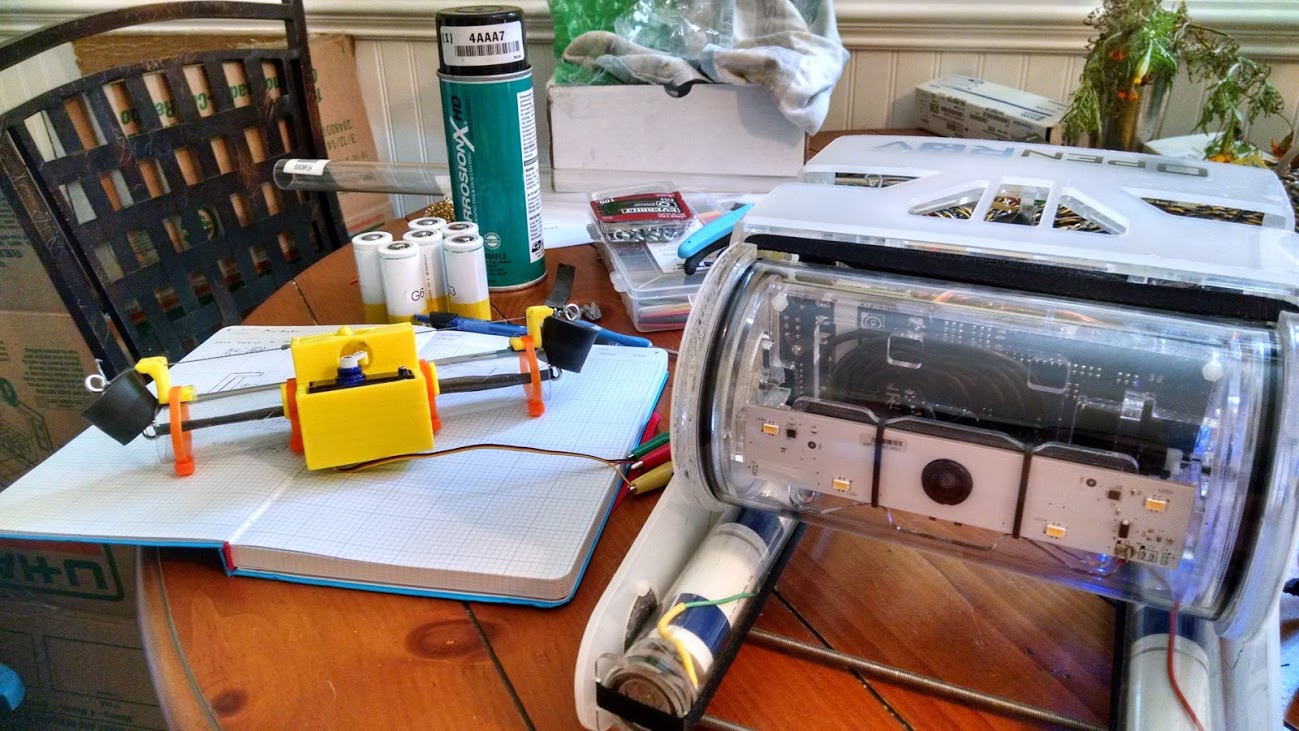
IMG_20150809_160734584_HDRThe Niskin bottle, a seemingly simple tube designed to take water samples at discrete depths, is one of the most important tools of oceanography. Coupled with a CTD, an array of Niskin bottles fit into the rosette, a Voltron-esque amalgamation of everything an oceanographer needs to profile the ocean. Niskin bottles are neither cheap nor particularly easy to use. A commercial rosette requires a decent-sized winch to launch and recover, which means you need a vessel and a crew to deploy. For Rogue Ecologist and citizen scientists, getting a high-quality, discrete water sample is a perpetual challenge. With tools like the OpenROV and the soon-to-be-completed EcoDrone, I wanted a Niskin bottle that was light weight and capable of being mounted on both underwater robots and quadcopters with ease.

Until now. 

After a few months of brainstorming and planning, I sat down this Friday and began building a 3D printable Niskin bottle that could be hand deployed or mounted on an OpenROV or drone. While this version is designed around a 1.25 inch acrylic tube, the trigger mechanism can be expanded to fit any size pipe. The trigger is driven by a waterproof servo developed by the good folks over at OpenROV. Everything else can either be purchased off-the-shelf or printed on you home 3D printer. Later this month, I’ll be taking my prototypes out on the RV Blue Heron for field testing in Lake Superior.

Bill of Materials

Read More “A 3D-printable, drone and ROV-mountable, water sampler” »

Up your underwater robot skills with OpenROV Dive Debriefs

Posted on July 10, 2015July 10, 2015 By Andrew Thaler
Uncategorized

Over the last few months, I’ve been putting together short tutorial videos on how to pilot an OpenROV or other MicroROV. The forth installment, Seagrass: Friend or Foe, just went up, so now ia a good time to take a look back at the playlists. Enjoy!

https://www.youtube.com/watch?v=6MSVjoqItXw

Read More “Up your underwater robot skills with OpenROV Dive Debriefs” »

We built a beer-delivering underwater robot and sent it out to sea. You can probably guess what happened next.

Posted on May 13, 2015 By Andrew Thaler
Uncategorized

From Sea and Sky: Hacking the Chesapeake with #BayBots

Posted on April 27, 2015April 29, 2015 By Andrew Thaler
Conservation, Science

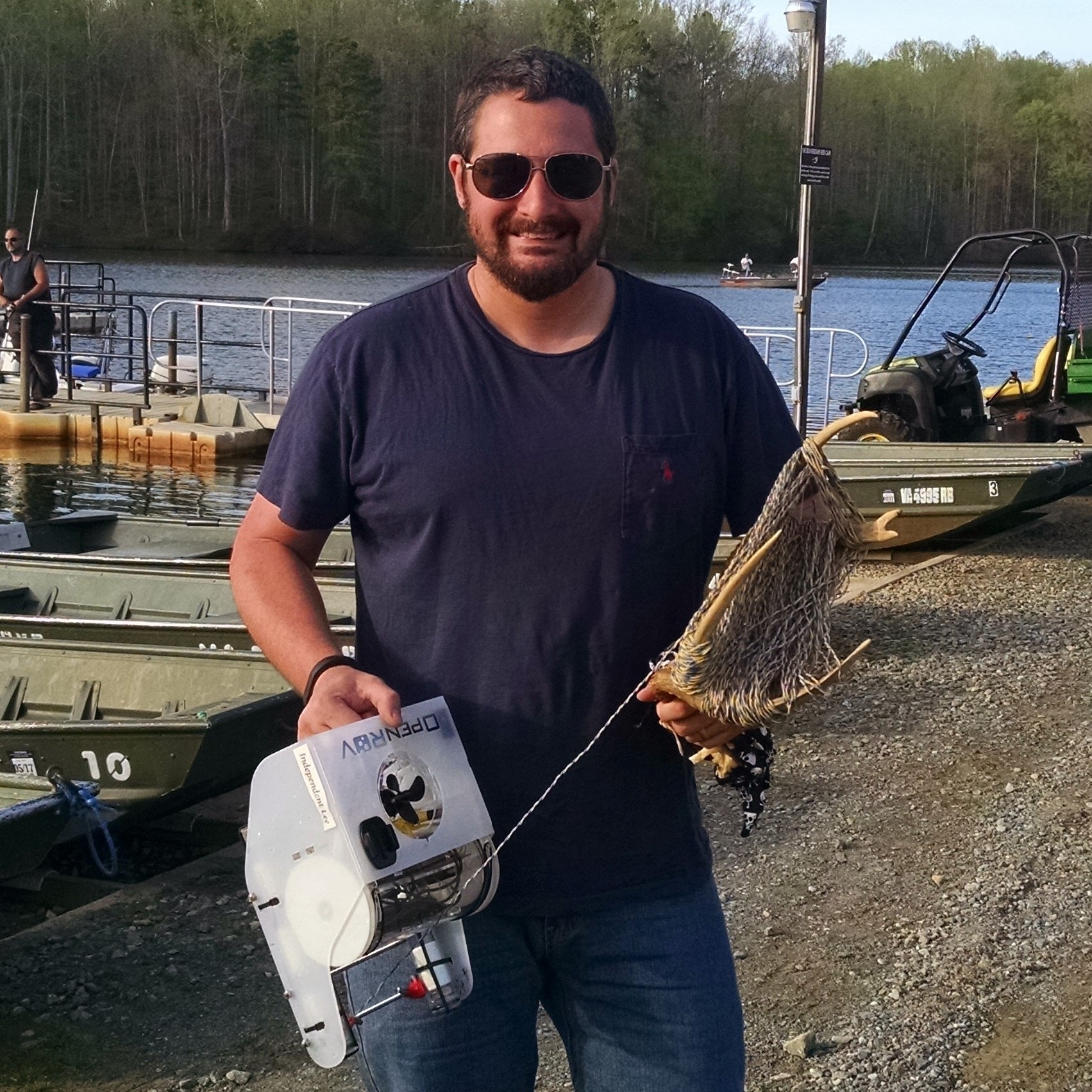
IMG_20150417_180905259 (2)Two years ago, I moved to San Francisco. It was… an experience. I had the opportunity to meet some incredible technologists, leaders in the emerging world of citizen exploration, and developers, coders, and makers using their skills and expertise to help save the environment. I met some amazing drone builders developing platforms and tools to measure the world. I also learned that West Coast living was not for me. The southern Atlantic coast called me back. But before I left, I led a small team across the Pacific to Papua New Guinea, where we taught undergraduates from the University of Papua New Guinea and the University of the South Pacific how to build and operate OpenROVs and incorporate them into marine ecology research.

The West Coast was good to me. It helped refine my vision for bringing low-cost, open-source technologies into the marine science and conservation world. Citizen science is becoming increasingly important, and the need for both democratizing and decolonizing science will drive much of the evolution of the scientific community in the 21st century. Tools that are effective, cheap, and open-source will play a major role in this transition. I returned east and began planning the next phase of this vision.

The Chesapeake Bay (San Franciscans take heed, you can keep your “Area” but “The Bay” will always be the Chesapeake) is the largest estuary in the United States, is economically important for shipping, fisheries, and tourism, and also happens to be the body of water that I grew up on. I learned to swim, fish, sail, and motor in one of the Bay’s many tributaries. It’s also home to more than a dozen research institutes, which work, sometimes in coordination and sometimes not, on studying and protecting the Bay.

Read More “From Sea and Sky: Hacking the Chesapeake with #BayBots” »

Ocean things we’re thankful for, West Coast Edition

Posted on November 26, 2014 By Andrew Thaler
Blogging

As some of you know (especially if you follow us on OpenExplorer), Amy and I have once again made the vast, continent-spanning migration from the Pacific to Atlantic coast, this time settling down in rural Virginia. While we enjoyed our time out in the weirdly foggy, impossibly dry San Francisco Bay Area, we also learn that the southeast US is our ecological niche. Even so, we met hundreds of new and interesting people, got to play with some tremendous tech, and had a great time. So here are the top five San Francisco Bay Area ocean things we are thankful for.

1. Vallejo

Of all the cities that comprise the “Bay Area”, Vallejo, the smallest and furthest from the heart of San Francisco, feels the most maritime, by far. With a downtown only blocks from the waterfront, an expansive city park right at the edge, and an active ferry terminal for commuters, people with a nautical cut to their jib will feel right at home. Though smaller and more suburban than most Bay Area cities, it’s also a whole lot cheaper, with 2 bedroom houses renting for the cost of hot swapping* a futon in San Francisco.

Read More “Ocean things we’re thankful for, West Coast Edition” »

Posts pagination

Previous 1 2 3 4 Next

Popular Posts

Shark scientists want their research to help save threatened species, but don’t know how. Our new paper can help.Shark scientists want their research to help save threatened species, but don’t know how. Our new paper can help.December 1, 2025David Shiffman
Norway and Cook Islands put their deep-sea mining plans on pause.Norway and Cook Islands put their deep-sea mining plans on pause.December 3, 2025Andrew Thaler
What Ocean Ramsey does is not shark science or conservation: some brief thoughts on "the Shark Whisperer" documentaryWhat Ocean Ramsey does is not shark science or conservation: some brief thoughts on "the Shark Whisperer" documentaryJuly 2, 2025David Shiffman
2025: My year in writing, public speaking, and media interviews2025: My year in writing, public speaking, and media interviewsDecember 3, 2025David Shiffman
What we know we don't know: impacts of deep-sea mining on whales, dolphins, sharks, turtles, and other migratory species.What we know we don't know: impacts of deep-sea mining on whales, dolphins, sharks, turtles, and other migratory species.November 20, 2025Andrew Thaler
What is a Sand Shark?What is a Sand Shark?November 12, 2017Chuck Bangley
Shark of Darkness: Wrath of Submarine is a fake documentaryShark of Darkness: Wrath of Submarine is a fake documentaryAugust 10, 2014Michelle Jewell
Build a dirt cheap, tough-as-nails field computer in a Pelican caseBuild a dirt cheap, tough-as-nails field computer in a Pelican caseJuly 21, 2015Andrew Thaler
Alberta, Canada is the proud owner of the largest man-made pyramid on the planetAlberta, Canada is the proud owner of the largest man-made pyramid on the planetOctober 16, 2012Andrew Thaler
Urea and Shark OsmoregulationUrea and Shark OsmoregulationNovember 15, 2010David Shiffman
Subscribe to our RSS Feed for updates whenever new articles are published.

We recommend Feedly for RSS management. It's like Google Reader, except it still exists.

Southern Fried Science

  • Home
  • About SFS
  • Authors
  • Support SFS


If you enjoy Southern Fried Science, consider contributing to our Patreon campaign.

Copyright © 2025 Southern Fried Science.

Theme: Oceanly Premium by ScriptsTown