Andrew is a post-doctoral researcher in North Carolina focused on population and conservation genetics in hydrothermal vent communities.


David is a graduate student in Florida. He studies the ecology and conservation of sharks.


Amy is a graduate student in North Carolina studying local ecological knowledge within small scale fisheries.


Chuck is a graduate student in North Carolina focusing on apex predators and how they interact with fisheries.


Lyndell is a graduate student in North Carolina, studying the feeding ecology of cownose rays.


Iris is a graduate student in Washington studying habitat use and feeding habits of juvenile Pacific salmon and herring in Puget Sound.


Michael is a graduate student in Maryland investigating the visual systems of mantis shrimp.


Archives

Better Conservation through Cloning: this cock doesn’t crow

Poor Vindaloo never learned to crow.

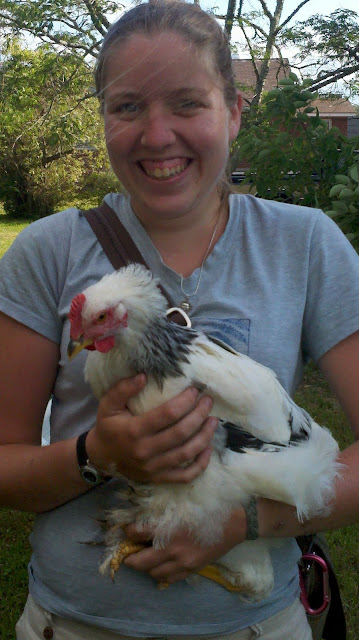
Poor Vindaloo never learned to crow. Photo by Andrew David Thaler.

I awoke one morning early last spring to a noise I has been dreading for weeks, the first crow of a chicken that was not supposed to be a rooster. It took me several minutes to fully register what I was hearing. Rather that the classic cock-a-doodle-do we often associate with the rooster’s crow, the sound emanating from my hen house was an awkward, unstable noise not unlike a turkey squawking through a vat of molasses while being vigorously shaken. Over the next several months, two more cocks arrived crowing, in my flock. All three roosters, different breeds from different parents, made noises resembling nothing like a rooster’s crow. There was no pattern; some mornings they would crow off-and-on for a few hours, other mornings they would, for lack of a better word, gargle for half-an-hour straight.

I raise my chickens from day-old hatchlings. Those three roosters, from my very first flock, had never met an adult chicken. They imprinted on Amy and me and looked to us for guidance. When we introduced them to new food, new water dispensers, even small changes to their habitat (like a particularly terrifying log), we had to teach them. Instinctively, they would scratch for food, and if left to their own devices, they would attempt to eat everything, but for the most part, we had to show them how to eat, how to drink, how to roost. But we could not teach them how to crow.

Which is why Casey B. Mulligan’s Economix article in the New York Times – Species Protection and Technology – which argues that cloning could be an effective tool to restore extinct species (a topic I’ve been thinking about quite a bit in terms of population dynamics), is fatally flawed.

Continue reading Better Conservation through Cloning: this cock doesn’t crow

Misunderstood Marine Life # 3 – Cryptics and Cryptids

In my mind, where I imagine people are so interested in what I do that they hang on every carefully chosen word I write, I imagine some unspecified mob of readers looking over my I *heart* cryptozoology post and going “Whoa now, pardner!” (yes, you all sound like cowboys in my mind) “You just said there was a difference between cryptozoology and real zoology, but you deal with cryptic species all the time! What’s up with that?”

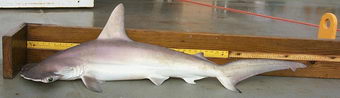
Cryptic hammerhead shark. Photo from http://www.physorg.com/news68994294.html

Continue reading Misunderstood Marine Life # 3 — Cryptics and Cryptids

A Brief Primer on Inbreeding Depression

There I was, proudly ambivalent about events happening across the pond. Some royal something or other getting civil union-ed with some wealthy something something. Apparently this happening also involves some high-falutin’ muckity-muck. I had managed to avoid just about everything about this event, until my shields were ultimately breached by an unlikely saboteur. The scientific journal Cell bizarrely decided to dedicate this weeks issue to the royal wedding by publishing this bit of ad nauseum:

Continue reading A Brief Primer on Inbreeding Depression

Biodiversity Wednesday: Meet the Super Cow

Why a DNA database is a very bad idea

Imagine this scenario: A murder case that went cold 20 years ago is reopened thanks to newly available DNA-based forensics. The state, lets say Arizona, has a large database of DNA. This isn’t the DNA deposited from newborns that David discussed a few weeks ago, but DNA from convicted criminals and really anyone who’s been brought up on charges in the last few years, whether or not they were eventually found innocent. DNA from a piece of evidence in that 20-tear-old case matches DNA in the database, the suspect is brought in a questioned. He has no alibi for what he was doing on day X 20 years ago. Charges are filed, a jury is called, and the suspect is convicted on the strength of a DNA match. Justice is served, right? Maybe, but maybe not.

So here’s the funny bit. The problem with this scenario has nothing to do with genetics, forensic science, or data storage and access. It’s really not even about crime and justice. It’s about your birthday.

Continue reading Why a DNA database is a very bad idea