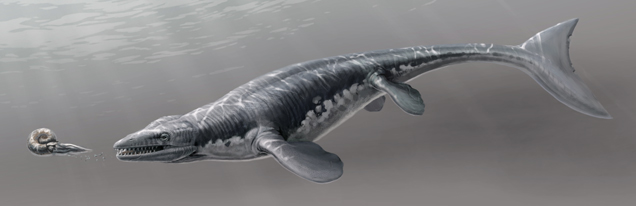
During the Cretaceous, the oceans were ruled not by sharks or aquatic mammals, but by large, predatory marine reptiles. Among these, the dominant ocean predator was the Mosasaur. Mosasaurs emerged in the Early Cretaceous from a lizard-like ancestral squamate. They thrived in warm, shallow seas. Some species could reach up to 17 meters in length. Like modern marine mammals, they breathed air yet had an entirely aquatic life history. Unlike sea turtles and other modern marine reptiles, they gave birth to live young in the water, instead of building nests on land.