If interested citizens want to get involved in conservation and management policy, it’s absolutely vital to use proper terminology. The policy world can be full of confusing jargon, but there are few ways to discredit yourself in the eyes of decision makers as quickly as using a critical term incorrectly. In fact, it isn’t uncommon for a decision maker’s response to a petition or public comment to consist entirely of correcting inaccurate terminology, if a response is issued at all. There are well over 100 acronyms and terms that I’ve seen regularly used, but in the interest of brevity, I’ve selected what I believe to be the 15 most important terms that I’ve seen people repeatedly use incorrectly.
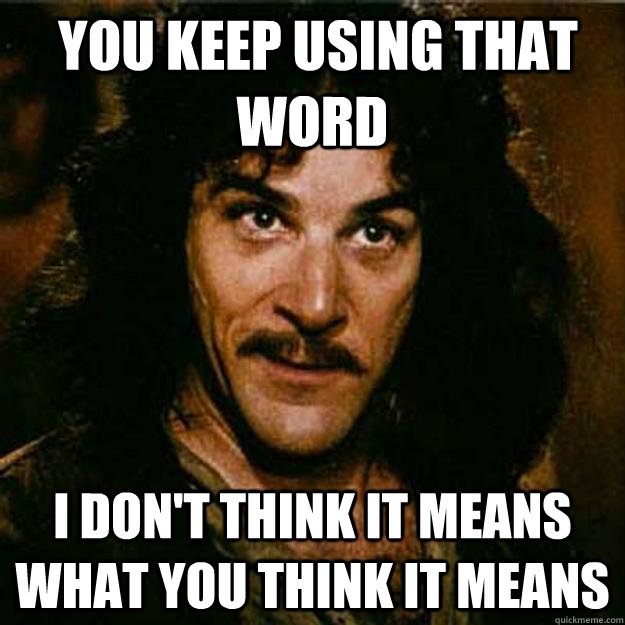
For each term, I’ve provided a definition from a scientific paper or technical report whenever possible. I have also provided some additional explanation in my own words, and some assistance from familiar memes. Whenever possible, I’ve linked to blog posts, articles, or websites that provide even more information. Most of these terms are broadly applicable to fisheries management policy, but some are specific to shark fisheries. It is not my intention with this post to strongly advocate for or against any specific policy (I do plenty of that with other posts), but to make sure everyone is speaking the same language.
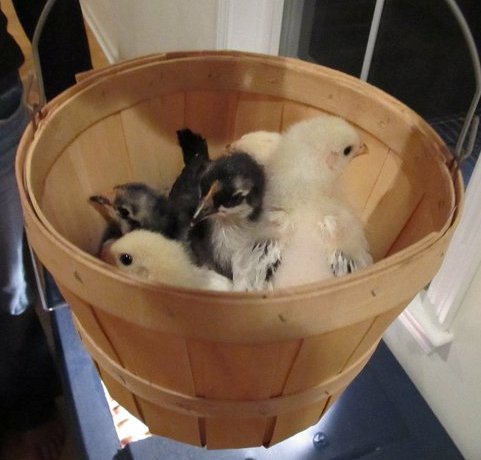
I have a basket of baby chickens. Your argument is invalid.
So you’ve decided to commit to a more sustainable lifestyle, you’ve built a Pico-farm and are ready to stock it with a flock of happy, egg-laying chickens. Congratulations, you’ve reached the fun part.
Before you go out and buy chickens, you need to ask yourself a few questions: do you want hens only, or do you want a rooster for breeding? Do you want to raise them from chicks or buy adults ready to lay? How big a flock do you want?
We are on an unsustainable course. While world populations and consumption grow, resources diminish and global warming threatens our way of life. In his blog The Green Grok, Dr. Bill Chameides, dean of the Nicholas School of the Environment at Duke University,elucidates causes of and potential remedies for environmental change and identifies pathways towards a more sustainable future. And he wants to know what YOU are doing to create a sustainable future.
Dr. Bill can’t be in all places, so he wants you to videotape his representative, The Flat Grok, on the scene of your sustainable adventure. Are you conserving water? Buying or growing local produce? Changing out all of your lightbulbs to compact fluorescents? Biking to work?
Recent Comments