Skip to content

Southern Fried Science

Over 15 years of ocean science and conservation online

  • Home
  • About SFS
  • Authors
  • Support SFS

Call for Abstracts: First Symposium on Extra-Terrestrial Marine Conservation

Posted on January 18, 2016January 12, 2016 By Chris Parsons
Uncategorized

cp2SETMC will be held from 1 July – 4 August 2042 at the Attenborough Centre for Conservation Glasgow University, Scotland.

We are now accepting abstracts for in person and virtual presentations, as well as proposals for neuro-linked discussion groups.

All abstracts must be submitted online or via neural-uplink by 5pm (GMT) on 1 March 2042. Decisions will be made by the end of March 2042. Complete instructions for submission are available at the meeting website. The selection process is highly competitive.

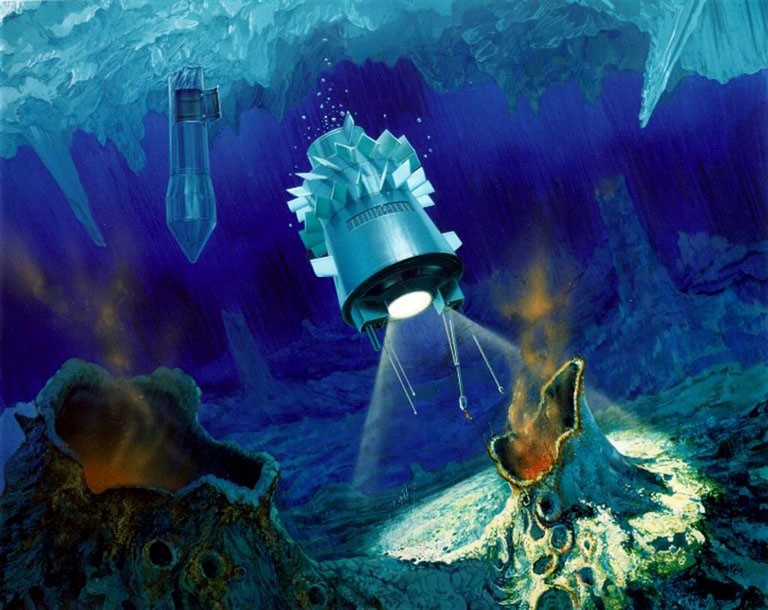
The main focus of the symposium is to discuss mitigation measures for the growing marine conservation threats in the sub-surface ocean of Europa, and precautionary strategies for to avoid similar problems for the upcoming Encaladus and Ganymede missions.

A special discussion will be held for the proposed extra solar system probe missions to Kepler-62e and 62f (popularly referred to in the media as Atlantis and R’lyeh, respectively) to minimize potential threats to these outside system water bearing planets.

The symposium is being organized by the Global office of the Society for Marine Conservation Science (SMCS) with funding from NASA, the European Space Agency and the Society for Astrobiology. The symposium particularly welcomes inter-disciplinary researchers and those from the fields of terrestrial and extra-terrestrial oceanography, palaeozoology, astrobiology, space engineering and astrotoxicology. The symposium welcomes presentations on the following topics. However, this list is not meant to be exhaustive, but merely a guide for proposers. Other topics of interest are welcome.

Symposium themes

  • • Controlling harmful microbial and viral extra-terrestrial marine blooms
  • • Disturbance reactions of extra-terrestrial marine species
  • • The toxicological impacts of radioactive and chemical extra-terrestrial marine contaminants
  • • Remote monitoring of deep extra-terrestrial sea species
  • • Using new neural technologies to improve data sharing
  • •  Advancing extra-terrestrial marine conservation through international treaties
  • • Effective extra-terrestrial marine conservation planning
  • • Conservation at the terrestrial/extra-terrestrial interface
cp2

Share this:

  • Share on Bluesky (Opens in new window) Bluesky
  • Share on Facebook (Opens in new window) Facebook
  • Share on Reddit (Opens in new window) Reddit
  • Share on Threads (Opens in new window) Threads
  • Share on WhatsApp (Opens in new window) WhatsApp
  • Share on Mastodon (Opens in new window) Mastodon

Related

Tags: astrobiology

Post navigation

❮ Previous Post: Ride the Digital Slipstream: Southern Fried Server Update #3
Next Post: Whatever happened to deep-sea mining? ❯

Popular Posts

You probably don't want to work for me: What you read on Southern Fried Science in AprilYou probably don't want to work for me: What you read on Southern Fried Science in AprilApril 30, 2024Andrew Thaler
What Ocean Ramsey does is not shark science or conservation: some brief thoughts on "the Shark Whisperer" documentaryWhat Ocean Ramsey does is not shark science or conservation: some brief thoughts on "the Shark Whisperer" documentaryJuly 2, 2025David Shiffman
What you read on Southern Fried Science in JanuaryWhat you read on Southern Fried Science in JanuaryJanuary 31, 2024Andrew Thaler
That's not a blobfish: Deep Sea Social Media is Flooded by AI SlopThat's not a blobfish: Deep Sea Social Media is Flooded by AI SlopDecember 19, 2025Andrew Thaler
What is a Sand Shark?What is a Sand Shark?November 12, 2017Chuck Bangley
Marine Biology Career AdviceMarine Biology Career AdviceMay 30, 2025David Shiffman
Shark of Darkness: Wrath of Submarine is a fake documentaryShark of Darkness: Wrath of Submarine is a fake documentaryAugust 10, 2014Michelle Jewell
Shark scientists want their research to help save threatened species, but don’t know how. Our new paper can help.Shark scientists want their research to help save threatened species, but don’t know how. Our new paper can help.December 1, 2025David Shiffman
Join Me at Upwell: A Wave of Ocean Justice — Our Fourth Year!Join Me at Upwell: A Wave of Ocean Justice — Our Fourth Year!March 24, 2026Angelo Villagomez
What can the funniest shark memes on the internetz teach us about ocean science and conservation?What can the funniest shark memes on the internetz teach us about ocean science and conservation?November 8, 2013David Shiffman
Subscribe to our RSS Feed for updates whenever new articles are published.

We recommend Feedly for RSS management. It's like Google Reader, except it still exists.

Southern Fried Science

  • Home
  • About SFS
  • Authors
  • Support SFS


If you enjoy Southern Fried Science, consider contributing to our Patreon campaign.

Copyright © 2026 Southern Fried Science.

Theme: Oceanly Premium by ScriptsTown