Skip to content

Southern Fried Science

Over 15 years of ocean science and conservation online

  • Home
  • About SFS
  • Authors
  • Support SFS

Bot meets Whale: making friends in the ocean; or how I learned to stop worrying and mitigate harmful interactions between recreational ROVs and marine mammals.

Posted on August 21, 2019August 21, 2019 By Andrew Thaler
Conservation, Science
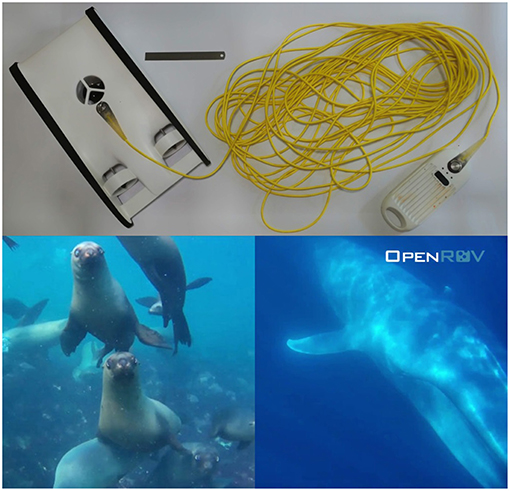
An example of a microROV system. From Thaler et al. (2019)

Today, there are more robots exploring the ocean than ever before. From autonomous ocean-crossing gliders to massive industrial remotely operated vehicles to new tools for science and exploration that open new windows into the abyss, underwater robots are giving people a change to experience the ocean like never before. The fastest growing sector of this new robotic frontier? Small, recreational, observation class ROVs.

Launched by the initial success of the OpenROV 2-series, the recreational ROV market, which produces small, affordable, capable underwater robots that anyone can pilot, has ballooned into an industry that now produces, by volume, more underwater robots than commercial and scientific manufacturers, combined. And though these tools are increasingly being adopted by commercial and scientific enterprises, recreational consumers drive demand.

That demand brings with it some challenges. New users often lack the expertise and training of commercial and scientific operators. Without consumer education and a strong sense of stewardship within the recreational ROV community, this dramatic increase in ROV has the potential to cause harm to the marine environment. One of the biggest concerns: what happens when an ROV operator comes in contact with a marine mammal and how can we avoid negative interactions while encouraging individuals to explore the ocean with these incredible machines.

With Sofar Ocean’s SEE initiative in full swing, donating hundreds of Trident microROVs to ocean lovers around the world, a sea change in how people interact with the ocean is taking place. Scientists, educators, and explorers are invited to submit expedition proposals to Open Explorer and apply to receive a Sofar Trident to support their projects.

In order to foster a strong sense of stewardship among recreational ROV operators, as well as commercial and scientific teams using these tools, we established a set of community-oriented guidelines for responsible conduct of ROVs when marine mammals are nearby. The guidelines are not rules or regulations, but a series of best practices, based on expert experience, to help users make informed decisions about how to proceed when operating near whales, dolphins, and other marine animals.

These guidelines include:

  • 1. Educate users about the potential negative consequences of microROV operation in the presence of marine mammals.
  • 2. Maintain situational awareness to avoid unintentional contact.
  • 3. Maintain safe distances and avoid intentional contact.
  • 4. Use microROVs as a tool to reduce the number of humans and large passenger vehicles in the water.
  • 5. Avoid deployment where marine mammals are already active in an area.

By following these guidelines, we hope that ocean lovers can experience the marine world through new and exciting tools of exploration while minimizing their impact on the fragile ocean world.

Read the full open-access paper, here:

Thaler and friends (2019) Bot Meets Whale: Best Practices for Mitigating Negative Interactions Between Marine Mammals and MicroROVs. DOI: 10.3389/fmars.2019.00506.

Share this:

  • Click to share on Bluesky (Opens in new window) Bluesky
  • Click to share on Facebook (Opens in new window) Facebook
  • Click to share on Reddit (Opens in new window) Reddit
  • Click to share on Threads (Opens in new window) Threads
  • Click to share on WhatsApp (Opens in new window) WhatsApp
  • Click to share on Mastodon (Opens in new window) Mastodon

Related

Tags: Blue Whale sea lion seal whale

Post navigation

❮ Previous Post: Best Practices for Mitigating Negative Interactions Between Marine Mammals and MicroROVs
Next Post: Egosystem management. Or how tantrums and unprofessional behavior are hindering conservation ❯

You may also like

Conservation
NOAA confirms North Atlantic Right Whale killed by commercial lobster gear
February 15, 2024
Uncategorized
Finding Melville’s Whale – Cetology (Chapter 32)
November 16, 2010
Uncategorized
Finding Melville’s Whale: The Mast Head (Chapter 35)
January 6, 2011
Weekly Salvage
Southern Fried Science year-in-review, Palau’s Giant, a new challenge for deep-sea mining, Porgs are Puffins, and more! Monday Morning Salvage: December 25, 2017.
December 25, 2017

Popular Posts

Shark scientists want their research to help save threatened species, but don’t know how. Our new paper can help.Shark scientists want their research to help save threatened species, but don’t know how. Our new paper can help.December 1, 2025David Shiffman
Norway and Cook Islands put their deep-sea mining plans on pause.Norway and Cook Islands put their deep-sea mining plans on pause.December 3, 2025Andrew Thaler
What Ocean Ramsey does is not shark science or conservation: some brief thoughts on "the Shark Whisperer" documentaryWhat Ocean Ramsey does is not shark science or conservation: some brief thoughts on "the Shark Whisperer" documentaryJuly 2, 2025David Shiffman
The Trouble with Teacup PigsThe Trouble with Teacup PigsOctober 14, 2012Andrew Thaler
What we know we don't know: impacts of deep-sea mining on whales, dolphins, sharks, turtles, and other migratory species.What we know we don't know: impacts of deep-sea mining on whales, dolphins, sharks, turtles, and other migratory species.November 20, 2025Andrew Thaler
2025: My year in writing, public speaking, and media interviews2025: My year in writing, public speaking, and media interviewsDecember 3, 2025David Shiffman
Urea and Shark OsmoregulationUrea and Shark OsmoregulationNovember 15, 2010David Shiffman
Shark of Darkness: Wrath of Submarine is a fake documentaryShark of Darkness: Wrath of Submarine is a fake documentaryAugust 10, 2014Michelle Jewell
How tiny satellites are tracking marine wildlifeDecember 1, 2025Andrew Thaler
Build a dirt cheap, tough-as-nails field computer in a Pelican caseBuild a dirt cheap, tough-as-nails field computer in a Pelican caseJuly 21, 2015Andrew Thaler
Subscribe to our RSS Feed for updates whenever new articles are published.

We recommend Feedly for RSS management. It's like Google Reader, except it still exists.

Southern Fried Science

  • Home
  • About SFS
  • Authors
  • Support SFS


If you enjoy Southern Fried Science, consider contributing to our Patreon campaign.

Copyright © 2025 Southern Fried Science.

Theme: Oceanly Premium by ScriptsTown