![]()

Menhaden were the most important fisheries throughout American history. When the first settlers learn to farm corn, it was with menhaden that they fertilized the seeds. When the whaling industry reached its height, it was outweighed by menhaden oil. Menhaden ruled the ocean from the middle of the food chain, they were the dominant prey of most large predatory fish. They swarmed the sea in schools several miles long and millions of fish deep. Their huge biomass supported by plankton, they regulated algal blooms, mediated the transfer of primary production up the food chain, filtered the ocean.
Category: Science
“Humans are just a fossil-fueled outbreak that will go away”, stated one of my professors yesterday.
In the world investigating the human dimensions of natural resource management there’s two schools of thought as to how humans fit in: a) as just another particularly troublesome species in the ecosystem or b) a special kind of species with the ability to predict and change the future. This latter formulation hinges on humans as a species with “motivation” and “intent”, according to C.S. Holling.
Otherwise, however, humans should be able to fit into the ecological definitions and models we all learned in intro biology. At an extreme case, it means we’re the next trilobite or dinosaur, living in our 15 minutes of fame now but soon to disappear. In the process, we will pave the way for a new species to become dominant.
Southern Fried Notice: Reny Tyson is a graduate student at the Duke University Marine Lab currently on location in Antarctica tracking Humpback Whales. The main expedition blog is Tagging Whales in the Antarctic Seas hosted at the Nicholas School of the Environment. Follow their adventure as they track Humpbacks through Antarctic Seas. Today we begin … Read More “MISHAP in Antarctica” »
The following photo was taken near the Yadkin River in Davie, North Carolina. According to observers, there were millions of them attached to the sides of trees and undersides of leaves throughout the region. In some places they were hanging so thick they looked like tiny bats. Does anyone know what they are? ~Southern Fried … Read More “What in the larval world is this?” »

Can social science save the sharks? A recent article in Progress in Oceanography by Peter Jacques seems to think so, calling for a “social oceanography”. In other circles, this could be known as the human dimensions of a marine ecosystem or the social side of a socioecological system. Either way, the field exists already. However, it’s small and generally not recognized outside of purely academic circles. It may be time for us to step outside of our comfort zone.
A few weeks ago, I asked readers to voice their support for a proposed anti-shark finning bill in Hawaii. Those of you who follow me on Twitter have seen numerous updates about this important issue. I am pleased to report that the bill passed both the House and Senate this morning, and it will soon go to the desk of the Governor of Hawaii. If signed (and everyone is pretty optimistic that it will be signed), it will be the strongest shark conservation law in North America- and one of the strongest in the world. Stefanie Brendl, President of Shark Allies and owner of Hawaii Shark Encounter worked harder than anyone on this issue, and she has agreed to answer a few questions about it for us.
There’s not much more to say other than blue marlin bill fish caught in oil rig blowout preventer. Several people have asked why we aren’t blogging about the oil spill. The simple answer is that the Deep Sea News crew has done such an awesome job there’s not much more for us to add. H/T … Read More “One way an oil rig’s blowout preventer can fail” »
The brilliantly funny Douglas Adams shares the adventures he had while writing Last Chance to See. Since he gave this talk, the Yangtze River Dolphin has been declared extinct and only 123 Kakapo remain. Komodo dragons are now listed as vulnerable, and although their population appears quite large, it was recently discovered that Komodo dragons … Read More “Douglas Adams on Evolution, Endangered Species, Conservation, and writing Last Chance to See” »

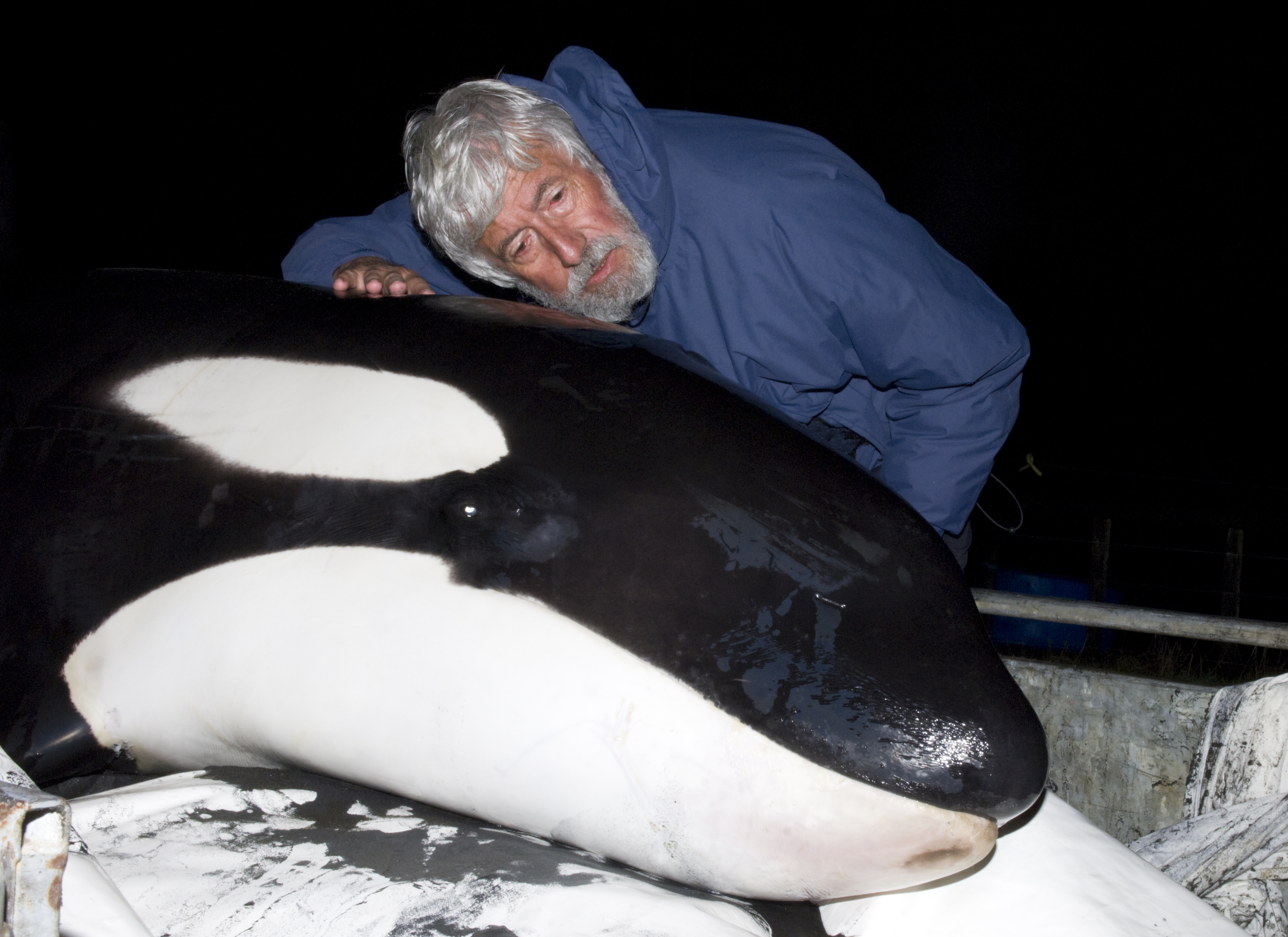
The death of Sea World trainer Dawn Branchaeu revived an old debate over whether it is appropriate to keep orca whales in captivity. Many people are calling for all captive orcas to be set free, but I continue to support aquariums because of the roles they serve as educators and conservationists. Although several readers have pointed out that the sea world incident itself would make for a solid ethical debate, I am instead going to take you back more than 15 years to a movie that started this whole movement: Free Willy.