Skip to content

Southern Fried Science

Over 15 years of ocean science and conservation online

  • Home
  • About SFS
  • Authors
  • Support SFS

Core Themes for 2012: The story behind the paper

Posted on January 23, 2012January 24, 2012 By Andrew Thaler
Uncategorized

There is a disconnect between those who conduct scientific research and those who consume it. The public has a vision of science that involves crisp lab coats and expensive equipment, lone students toiling at the bench waiting for an eureka moment or field researchers swinging, Indiana Jones-style through the jungle, Science is, unfortunately, not that neat.
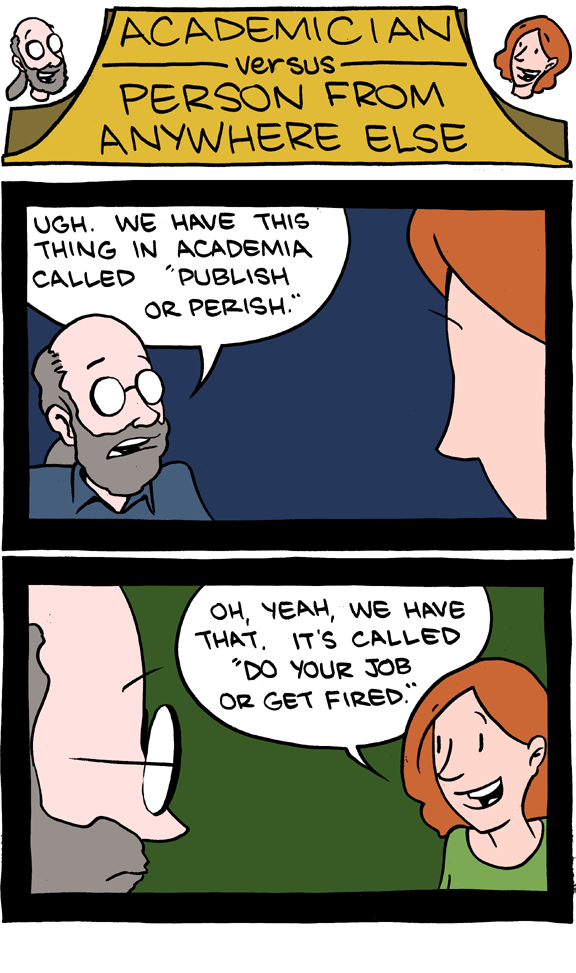
Saturday Morning Breakfast Cereal. Used with permission.

For better or worse, the currency of science is the publication. But science is a process, not a result, and beneath every scientific publication lies a story. These are stories of triumph, tragedy, struggles to overcome overwhelming opposition, moments of inspiration, or, more often, interesting insights into the work involved in conceiving, designing, and implementing an experiment. The paper at the end of this process is merely an epilogue.

In the course of reporting the new and noteworthy in marine science and conservation, Southern Fried Science will seek out the story beneath the story, focusing not only on the results, but the process that created those results. We want to hear from the lead authors, the graduate students, and the technicians that made those publications possible. We want to go beyond simply talking about the methods and learn how those methods were implemented, what it was like to work on those projects, what challenges needed to be overcome, and what fascinating bits of data didn’t make it into the final product. Science is messy, and projects rarely go according to plan. We want to know about those wrong turns, false starts, and final successes – precariously bound in duck tape.

The story behind the paper is important because it allows us to highlight how scientific discoveries come into being. It lets us see how, when we talk about things like climate change, we can trust those final observations. It shows us how seemingly disconnected publications are actually one, long, interconnected process. The story behind the paper lets you meet the people who put in the hours, did the benchwork, conceived the project. It allows us to see scientists as people, not just publications.


Share this:

  • Click to share on Bluesky (Opens in new window) Bluesky
  • Click to share on Facebook (Opens in new window) Facebook
  • Click to share on Reddit (Opens in new window) Reddit
  • Click to share on Threads (Opens in new window) Threads
  • Click to share on WhatsApp (Opens in new window) WhatsApp
  • Click to share on Mastodon (Opens in new window) Mastodon

Related

Tags: publication

Post navigation

❮ Previous Post: Southern Fried Science Core Themes for 2012
Next Post: Core Themes for 2012: Highlighting the Rural Voice ❯

Recent Popular Posts

What Ocean Ramsey does is not shark science or conservation: some brief thoughts on "the Shark Whisperer" documentaryWhat Ocean Ramsey does is not shark science or conservation: some brief thoughts on "the Shark Whisperer" documentaryJuly 2, 2025David Shiffman
Shark of Darkness: Wrath of Submarine is a fake documentaryShark of Darkness: Wrath of Submarine is a fake documentaryAugust 10, 2014Michelle Jewell
Your car has just been crushed by hagfish: Frequently Asked QuestionsYour car has just been crushed by hagfish: Frequently Asked QuestionsJuly 13, 2017Andrew Thaler
"Twitter sucks now and all the cool kids are moving to Bluesky:" Our new survey shows that scientists no longer find Twitter professionally useful or pleasant"Twitter sucks now and all the cool kids are moving to Bluesky:" Our new survey shows that scientists no longer find Twitter professionally useful or pleasantAugust 19, 2025David Shiffman
Mermaids: The New Evidence is a Fake DocumentaryMermaids: The New Evidence is a Fake DocumentaryMay 28, 2013Andrew Thaler
What can the funniest shark memes on the internetz teach us about ocean science and conservation?What can the funniest shark memes on the internetz teach us about ocean science and conservation?November 8, 2013David Shiffman
Your car has just been crushed by hagfish: Frequently Asked QuestionsYour car has just been crushed by hagfish: Frequently Asked QuestionsFebruary 27, 2024Andrew Thaler
What is a Sand Shark?What is a Sand Shark?November 12, 2017Chuck Bangley
How many nuclear weapons are at the bottom of the sea. An (almost certainly incomplete) census of broken arrows over water.How many nuclear weapons are at the bottom of the sea. An (almost certainly incomplete) census of broken arrows over water.July 26, 2018Andrew Thaler
Here's what I teach my students about finding jobs in marine biology and conservationHere's what I teach my students about finding jobs in marine biology and conservationApril 10, 2024David Shiffman
Subscribe to our RSS Feed for updates whenever new articles are published.

We recommend Feedly for RSS management. It's like Google Reader, except it still exists.

Southern Fried Science

  • Home
  • About SFS
  • Authors
  • Support SFS


If you enjoy Southern Fried Science, consider contributing to our Patreon campaign.

Copyright © 2025 Southern Fried Science.

Theme: Oceanly Premium by ScriptsTown