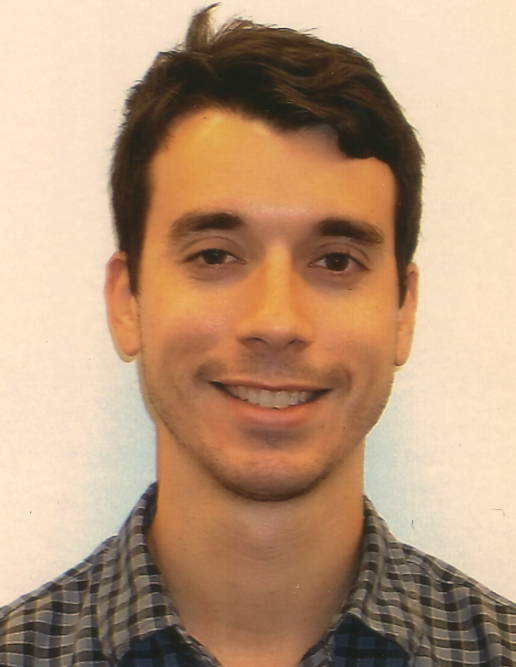
 Geoffrey Shideler is the Assistant Editor at Bulletin of Marine Science, an independent peer-reviewed journal at the Rosenstiel School of Marine & Atmospheric Science at the University of Miami.
 Studying the ocean at night can be difficult. Yet this is precisely the time when many fish are most active. Scientists have found that many important processes occur at night, such as spawning, larval settlement, migrations, feeding, and more. Many organisms rise toward the surface, creating massive pulses of biodiversity and biomass. In nearly every aquatic environment, from open waters to coral reefs, what one observes by day can be quite different from what is happening after the sun sets. At the same time, in polar seas and at great depths, “night” can span, months, years, and beyond. Fish and fishers in these dark systems have adopted tactics and strategies that take advantage of low-light conditions and their study may offer solutions to problems in warmer, shallower habitats.
Due to the difficulties of studying fish at night, there are large data gaps. The problem with this is that neglecting the night has led to an incomplete understanding of marine organism ecology, population/community dynamics, and ecosystem function. This can have severe consequences for conservation and management of fisheries resources that account for fish only during the day.
To provide a forum for improving our understanding of the patterns and processes operating in fish ecology and fisheries during darkness, the Bulletin of Marine Science is hosting an international symposium entitled “Fish at Night” that will take place 18–20, November 2015 in Miami, Florida. The purpose of the symposium is to stimulate the exchange of new knowledge, data, and ideas on behaviors, patterns, and processes operating underwater, in darkness. Topics will include nocturnal fish activities, technical aspects of night fishing/fisheries, differences in fish abundance/distribution between day and night, and strategies adopted by fish and fishers at extreme depths and/or latitudes (i.e., polar seas), where darkness often prevails.
The ultimate and most important goal of the symposium is to produce a peer-reviewed dedicated volume that will capture the present state-of-knowledge of fish studies in the dark, identifying critical information gaps, and charting a course for future research and collaboration. Ultimately, we want to advance the current understanding of fish at night studies in the systems they occupy. This symposium will catalyze exchange of ideas, data, approaches, and methods pertinent to the symposium’s overarching theme.
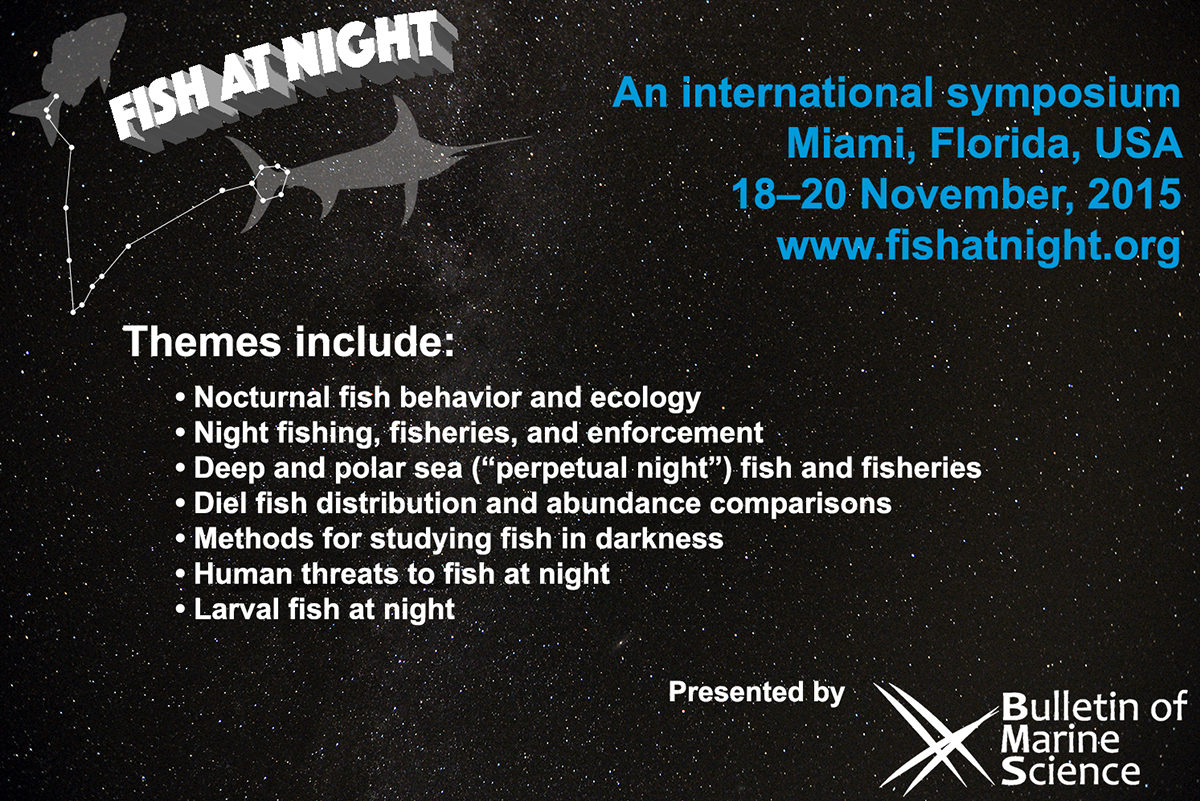
We invite you to join us in Miami this fall to shine a light on Fish at Night. To learn more about the symposium, please visit www.fishatnight.org. You can submit an abstract here and register here.