Almost four months ago, I sat down at my computer with a puzzle to solve: is there an easy way to model sea level rise without using expensive GIS programs. I found that solution in Google Earth and, after a few days of experimenting and tweeking, #DrownYourTown was born.
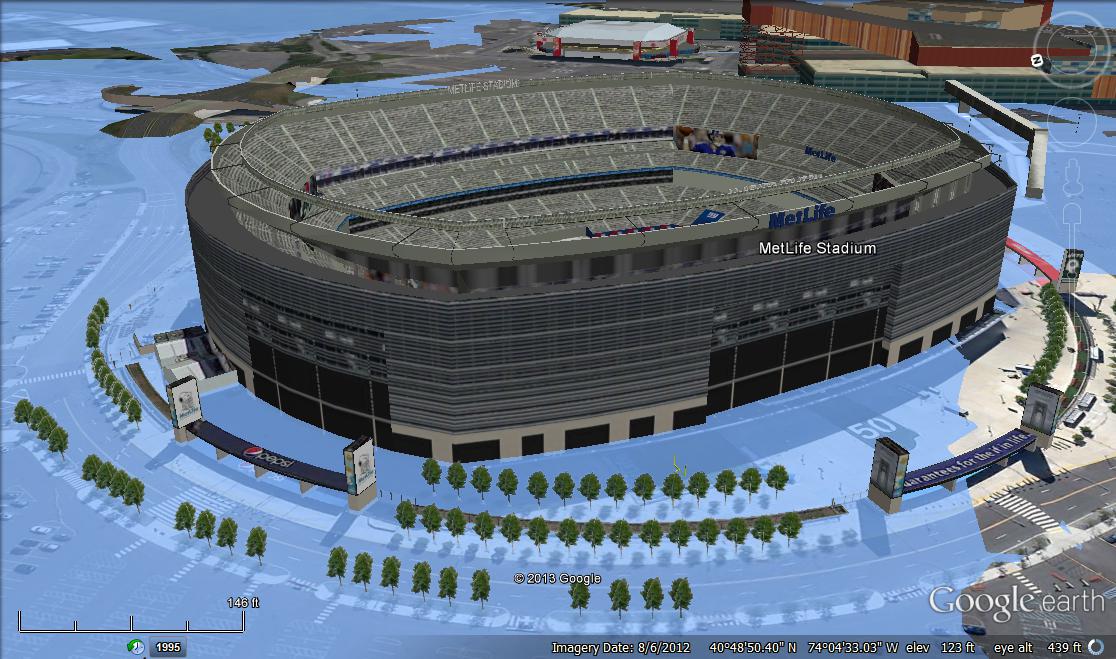
#DrownYourTown is a tool for exploring sea level rise through real-time, interactive, GIS modeling. Anyone can submit a request via twitter or tumblr and receive a custom, 3D model of sea level rise anywhere in the world. The system allows users to produce dramatic visuals of both plausible and implausible climate change scenarios. The project is ongoing, with user generated content, an active tumblog, and a vibrant twitter community centered around the hashtag. I am constantly exploring new ways to reach a broader audience. Currently, #DrownYourTown is on a virtual road trip, visiting a new coastal state each day, and cruising through towns after 5 meters of sea level rise.
#DrownYourTown has been an exciting and sometimes humbling journey. Here are four lessons about climate change outreach I learned from drowning your town.
1. Activate
One of the key factors that made #DrownYourTown successful was that the activation energy required to explore it was low. There is no app to download, no website to visit, no data to enter. #DrownYourTown went to places that people were already aggregating online. All anyone had to do was tweet their hometown to me and I sent them a custom simulation of their town under sea-level-rise conditions. Because of its simplicity, #DrownYourTown appealed to an audience that was curious, but not curious enough to take that extra step. It required the minimum possible activation energy necessary to engage with the project.
Participants didn’t necessarily even need to be interested in climate change or its consequences. #DrownYourTown bypassed the traditional “this is climate change” narrative and went straight to the potential consequences. More than a few participants were simply curious about what their home town would look like underwater or how much the sea would have to rise to flood their favorite monuments. Participants could choose to engage as much or as little with the climate change aspects of the project as they wanted. This allowed the project to spread far more effectively than if it were a straight climate change lecture. The wow-factor — the visual, visceral experience of seeing your home under water — was one step removed from the underlying message.
Remember, the goal of #DrownYourTown was not to provide an authoritative source about climate change — there are already plenty of those — it was to reach people who are otherwise apathetic about the issue.
2. Interact
The second key to the #DrownYourTown phenomenon was human interaction. Participants weren’t plugging their data into a website or uploading it into an app, they were asking another person to simulate sea level rise in their town. The conversations held during the initial #DrownYourTown marathon made it clear that participants knew and valued the fact that they were talking to a real person.
#DrownYourTown was personal on both ends. Participants were seeing their own homes under water and they were communicating with a real person creating the models. They could joke, ask questions, voice disapproval, and alter their requests on the fly. I had the opportunity to watch flow of interest and respond in kind. When people wanted more realistic models, they were provided. When people wanted background details, it was there. More than anything else, #DrownYourTown was and is an ongoing conversation and that’s something you can never recreate through an automated system.
3. Expand
#DrownYourTown is the bait. Climate change outreach is the hook. As any good fisherman knows, you can’t just drop a hook and hope something catches. You have to tease the bait, feel the motion of the line, react to nibbles, set the hook, and then reel it in. As the excitement around the hashtag grew, I began inserting information about climate change into the discussion. Here is the motivation behind the first 80 meter sea level rise images. Here is what the IPCC says about the likelihood for sea level rise in the next century. Here are the cities we expect to suffer the greatest economic and human losses. Expanding the discussion to include not just the apocalyptic images of cities underwater, but the science behind them is a delicate process that requires a light touch. The audience #DrownYourTown was designed to attract is generally unresponsive to generic climate change outreach. Any attempt at heavy-handed doom-and-gloom would lose them.
So we went on street-level tours of Miami, visited historic monuments, found the metropolises that faced not only the greatest threat, but also produced the most dramatic images. Above all, we had fun. #DrownYourTown is a lighthearted exploration of a very serious topic. Throughout the initiative, I made sure to inject levity into a necessarily dark concept. We flooded Washington, DC with sewage, rather than water. In San Francisco, the floor became lava. We even went to Mars and put the Curiosity Rover under water.
4. Empower
The final phase of the #DrownYourTown project was to empower users to produce their own images, to think about how climate change will affect their own home. In a detailed post, I revealed the secrets to produce a #DrownYourTown model with easy-to-follow direction. As soon as the instructions went live, participants began producing their own images and posting them to the website. I gave my monster a life of its own, so that #DrownYourTown could continue indefinitely. One person with a bit of commitment and limited free time could only take it so far. By empowering participants to become active producers of content, it guarantees that not only will the initiative continue but that it will continue to recruit new participants to join the conversation.
Never forget the message.
The lesson of #DrownYourTown is that climate change is personal. No matter where you live, climate change will ultimately affect your life. Sea level rise is the clearest, easiest way to visualize those impacts, but if we stick to only real world scenarios, we lose that visual for a large portion of the population. By taking an abstract concept and turning it into a powerful visual, #DrownYourTown makes the global personal.