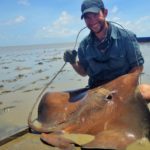
 Matt Kolmann is a PhD candidate whose research program is at the interface of evolution, comparative anatomy, and biomechanics. He completed his Master’s degree at Florida State University with Dr. Dean Grubbs on the feeding biomechanics and fisheries ecology of cownose rays, a purported pest on commercial shellfish. During this process he developed a love of field work, and since then has collected rays and other fishes on expeditions across South and Central America with the Royal Ontario Museum. His PhD research investigates the evolution of biodiversity using South American freshwater stingrays as a model system. The number of different feeding niches these stingrays occupy is astounding, and Matt is using gene-sequencing, comparative phylogenetic methods, and biomechanical modeling to characterize the evolutionary processes underlying this biodiversity. From June 8th through the end of Shark Week, he will be raising funds to delve more deeply into the evolution of feeding behavior in freshwater rays – specifically investigating whether freshwater rays ‘chew’ tough prey like insects in a manner comparable to mammals. Follow him on twitter!
What role does our food have in explaining where we live, what we look like, and how we behave? I study how properties of prey – material, structural, and ecological – shape the evolution of predators. Specifically, I am interested in how animals adapt to novel foods and diets that pose unique challenges: prey that are tough, stiff, hard, or just generally robust. I approach these questions at the macroevolutionary (how species are related) level; biodiversity lends insight into engineering and synthetic design based on an understanding of how animals evolve using similar organic principles.
Freshwater rays (Potamotrygonidae) are a great study system for investigating how biodiversity arises. From marine ancestors, freshwater rays ‘invaded’ South America during a time when a large inland lagoon dominated the middle of the continent. With the continued rise of the Andes in the west, the Amazon basin went from flowing northwards into the Caribbean to its modern westward drainage. This isolated ancient stingrays in waters which turned progressively less saline. Instead of extinction, these rays flourished in new habitats, with new diets, and against new competitors; they number close to 30 described species with many more thought to exist, as of yet undescribed by scientists.
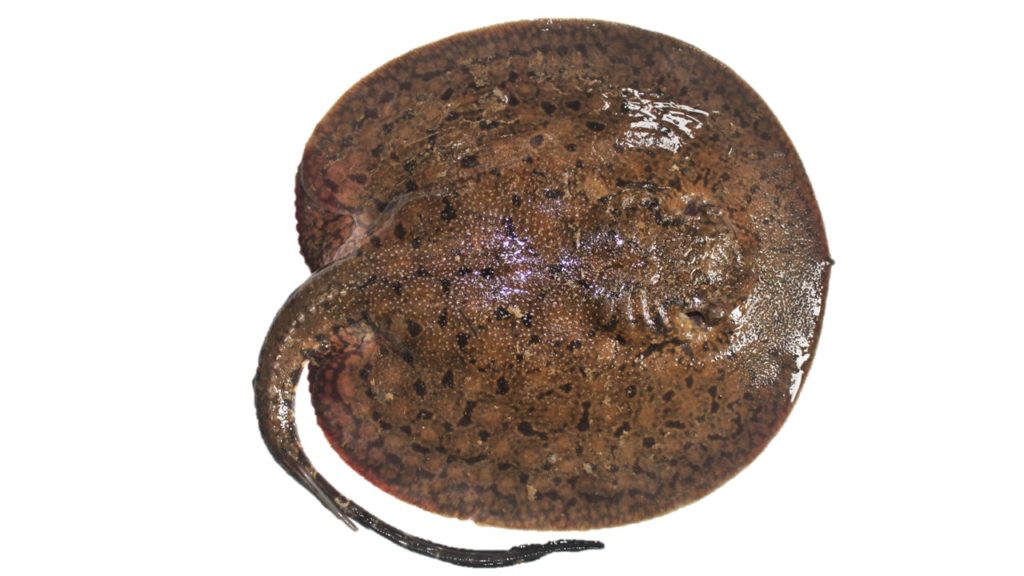
One of the immediate observations of these rays is that they have diets far more diverse than their marine relatives, with some freshwater ray species specializing on only insects, fish, snails, or crustaceans as their primary prey. This ecological specialization leads to corresponding specialization in their feeding anatomy: jaws, jaw muscles, teeth, and even feeding behavior. For part of my PhD work I documented how one species, Potamotrygon motoro, shears (grinds) its jaws against one another while feeding on insects – a behavior very similar to how mammals chew. These rays are only generalist insect-feeders, feeding only on insects when they are abundant or available, in addition to other prey. What can rays that specialize on eating insects do? For one, I found that a related, insect-eating specialist (a predator that consumes only one kind of prey) can reorient its teeth during feeding to make them ‘point-ier.’ Are specialists more effective than generalists at feeding on insects?
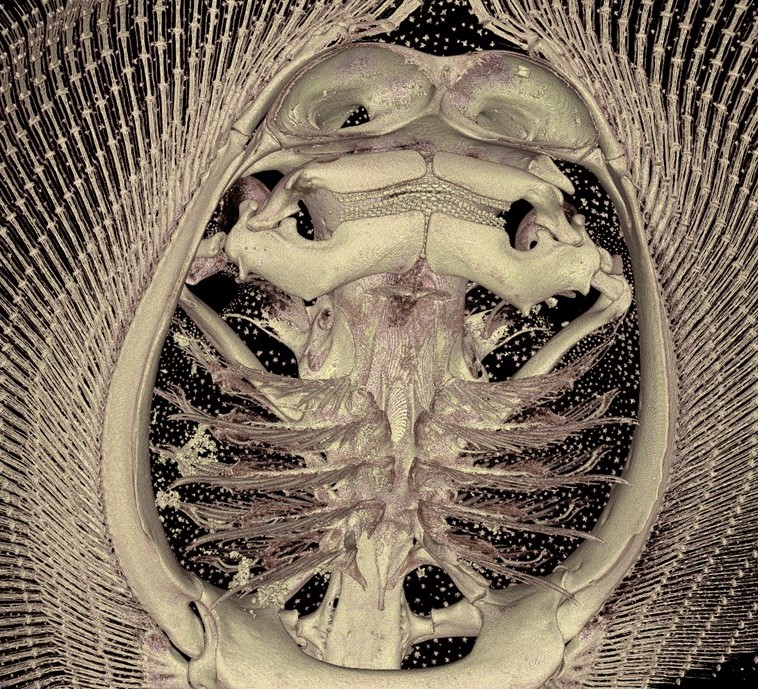
My Experiment.com project is characterizing feeding behaviors using high-speed videography to track the motions of stingray jaws as they feed on different prey (you can donate here!). This project allows me to expand my research to other freshwater ray species, both generalists and specialists, insect-eaters and fish-eaters, even freshwater rays that feed only on hard-shelled snails. I will determine what aspects of ray jaw anatomy are predictive of feeding on specific diets. Using a molecular phylogeny (a genetic hereditary tree) for the freshwater ray family that I developed during my PhD, I can trace the evolution of feeding specialization in the family – explaining how these rays stick out as such a particularly successful lineage. Not only are these rays shedding some light on how animals across the tree of life deal with the vagaries of stubborn food, or helping answer the question of why there are so many animals living in the tropics – these rays are serving as an example of how animals tackle problems in materials science. How do you break tough stuff? Hard stuff? Flexible stuff?
The answers are found in biodiversity; odds are Nature’s already solved your problem.