 Dr. Glenn R. Parsons is a 30 year veteran in the battle against University Administrators, bean-counting bureaucrats, and disinterested students (i.e. he is a Professor at Ole Miss). In his spare time he conducts research work on fish physiology and ecology and has published many papers on shark biology, primarily Gulf of Mexico species. He is author of the seminal book on sharks of the Gulf of Mexico entitled “Sharks, Skates and Rays of the Gulf of Mexico” and a popular novel entitled “Cherokee Summer” that could have been on the New York Times best seller list (if only it was better written and was backed by a high-powered agent like John Grisham’s). He received his PhD from the University of South Florida, School of Marine Science, MS from the University of South Alabama and BS from the University of Alabama. He was a DISL Marine Research Fellow, a Gulf Research Council Research Fellow, and a winner of a World Wildlife Fund, Smartgear Competition (for his bycatch research).
Folks, The world has witnessed an unparalleled decline in sharks that began about 30 years ago and has continued to the present. While the explanations for this decline are varied, scientists are in agreement that “bycatch” during fishing is one of the problems. Bycatch is the un-intended capture of non-target species during fishing. For example, commercial fishing for tuna and swordfish results in the capture of many sharks. The World Wildlife Fund estimates that 50,000,000 sharks are taken as bycatch during commercial fishing. Unfortunately, many of these sharks do not survive the stress of capture (a topic that my lab has researched for many years). Fishers do not want these sharks (they are dangerous to handle and they damage fishing gear) and they would welcome new developments that would reduce or eliminate shark capture.
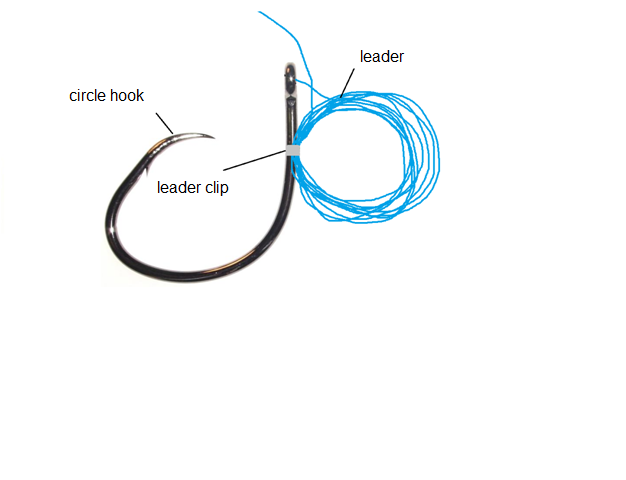
My graduate students and I have been researching bycatch issues for a number of years and one idea that I have developed is called the “entangling leader” (we affectionately refer to it as the “loopy leader” for reasons that will be obvious). Loops of line attached to the hook provide an opportunity for the blade-like teeth of the shark to cut the line and for the shark to escape capture. However, tuna and swordfish have very small teeth not designed for cutting (tuna), or no teeth at all (swordfish). When these target species take the bait, they do not entangle, do not cut the line, and they are captured. When adopted by fishers, this simple idea may result in saving the lives of many millions of sharks each year. We also hope that the idea could also be applied to recreational fishers as well.
One of the most vexing problems we have yet to over-come is how to attach the loops to the hook. We are at present designing a leader clip that will be 3-D printed. The clip will attach to the hook and provide a way of easily bundling the loops in place. Ahead of that we have used a small strip of duct tape which has worked surprisingly well (but is definitely not appropriate for the final solution). We are presently in the initial phases of testing the loopy leader. The tests involve using control leaders (the same leaders employed by tuna/swordfish fishers) as well as experimental leaders.
Some of the most interesting observations we have made have come from our “leader cams”. A GoPro camera hung just above a baited hook has allowed us to observe the behavior of sharks as they approach and then take the baited loopy leaders. On our last research trip out of Destin, Florida we observed a very large school of blacktip sharks with the leader cam, inspecting and sometimes taking the bait. In our next battery of tests we will set 24 hooks on a “set line”, half experimental and half control. The hope is that the loopy leaders will capture zero sharks but will, at the same time, capture target species at the same rate as controls. When the hooks are retrieved, we record the species captured (if any) and also observe where the loopy leader breaks (to ensure that the breaks are actually occurring within the loops).
These tests described above require us to spend long hours on-board a research vessel and your contributions will be used to support this project. Specifically, we need a new chart-plotter (the device that determines the research boats position). Any additional funds will go directly to support the graduate students (Lauren Fuller and Ehlana Stell) who are working on the project. Please visit our campaign page and make a large or small donation. Your assistance would be much appreciated. Feel free to contact me with any questions you might have!