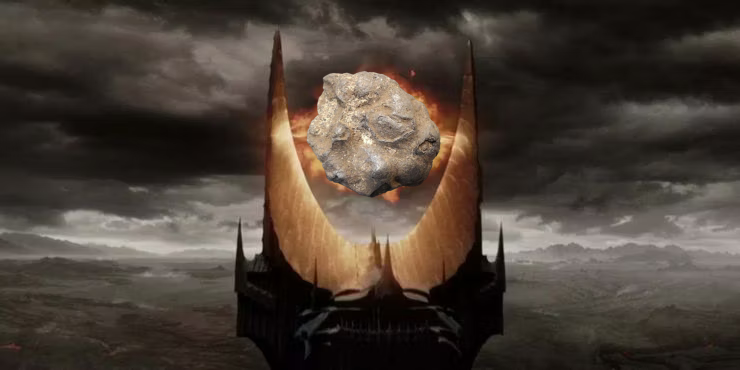
The International Seabed Authority is once again gathered in Kingston, Jamaica to continue negotiations on a set of rules and regulations to govern seafloor mining in the high seas, beyond any nation’s borders.
At stake is access to vast fields of polymetallic nodules spread across the abyssal plains. These nodules are rich in nickel and cobalt, essential elements in the current batteries needed to electrify the world’s automotive fleets. Deep-sea mining for polymetallic nodules is presented as a means of breaking the world free of fossil fuel production that has the potential to be less harmful to the environment than current terrestrial cobalt and nickel mines.
And that might be right. As I said in the last talk I gave on deep-sea mining:
“I remain undecided. I do believe that there is a version of polymetallic nodule mining that has the potential to produce the metals we need for the electrification of the world’s automotive fleet in a way that represents a responsible compromise between the direct impacts of nodule extraction and the existential threat of failing to get emissions under control before the worst predictions of the International Panel on Climate Change become inevitable. I think it’s very hard to argue that polymetallic nodule mining is worse for the world than strip mining Indonesia’s remaining rainforests for nickel or having the children of Congo dig for cobalt.”
Deep-Sea Mining: A whirlwind tour of the state of the industry and current policy regimes
Polymetallic nodule mining is not the only form of deep-sea mining. The ISA is tasked with governing mineral resources on the deep-seabed. This includes nodules, but also cobalt-rich ferromanganese crusts (seamounts containing cobalt ore) and seafloor massive sulphides (deep-sea hydrothermal vents). These three deposits are mined in wildly different ways and come with dramatically different environmental risks. I frequently argue that they comprise three entirely different industries.
For seamounts, the ore is hard substrate. Mining a cobalt-rich seamount means destroying the ecosystem growing on top of it. For vents, the same chemical process that fuels the rich, vibrant, and bizarre communities that draw their sustenance from hydrothermal fluid is the process that creates valuable metal deposits. The vent is the ore. Mining it is destroying it. Both seamounts and vents have far smaller footprints on the seafloor. While the abyssal plain may be the single largest ecosystem, by area, on the planet, seamounts and vents are small, discrete structures.
The mining companies pushing the Mining Code forward, today, want to access the nodule fields of the Clarion-Clipperton Zone, an area of the Pacific rich in polymetallic nodules. And they’ve made a pretty good case, to stakeholders, to the public, and to investors, that there is a way to mine nodule fields that is environmentally conscientious. There is still a lot of environmental work left to do, and that work may yet reveal that mining the seafloor is an unacceptable risk, but, for the moment, deep-sea mining has time to get it right.
There’s just one problem: The ISA is not negotiating the regulations for mining polymetallic nodules in the Area (in the vernacular of the ISA, The Area is the ocean beyond national jurisdiction). The ISA is negotiating One Mining Code to Rule Them All, a comprehensive mining code that covers polymetallic nodules, cobalt-rich seamounts, and hydrothermal vents.
In the mid-2000s, the International Seabed Authority rightly recognized that these three forms of deep-sea mining are different. Polymetallic nodules are distributed over vast areas of the seafloor, siting on the surface of the abyssal plain. Cobalt-rich seamounts are smaller, discrete formations, with the ore forming the substrate of a habitat that often supports commercially important fisheries. Hydrothermal vents are some of the strangest and rarest ecosystems on the planet–the total area of all know and suspected vent field is less than the area of Manhattan–with significant scientific and cultural value.
Three separate exploration codes were developed: Regulations on Prospecting and Exploration for Polymetallic Nodules in the Area, Regulations on Prospecting and Exploration for Polymetallic Sulphides in the Area, and Prospecting and Exploration for Cobalt-rich Ferromanganese Crusts in the Area. Exploration codes guide how mining companies identify potential mining sites, assess the value of the mineral deposits, and conduct initial environmental assessment.
Despite that precedent, the ISA is determined to move ahead with a unitary mining code for all seabed resources. Once that Code is approved, not only can mining contractors interested in exploiting polymetallic nodules submit mining applications, but so too can contractors who want to mine seamounts and hydrothermal vents in The Area. Those contractors are likely aware that a standalone code for hydrothermal vents (either active or inactive) or cobalt-rich seamounts is a much more challenging proposition. Nodule mining is far less politically charged than mining a hydrothermal vent, perhaps the most iconic ecosystem of the deep sea, or a seamount, many of which act as nursery grounds for commercially important fish species. And neither prospect has nearly as strong a connection to climate change mitigation as nodule mining. They know if they don’t get a unitary mining code, separate negotiations for vents and seamounts are much more likely to fail.
Despite this, the current negotiations are heavily weighted towards nodule mining. The financial regime is being negotiated base on economic projections from nodule mining, with little consideration for vents and seamounts. The environmental regulations are being codified with a view towards nodule mining operations, operations that look very different from proposed vent and seamount mining programs. I do genuinely believe that the mining negotiations are progressing, generally, in good faith, but even in good faith, those in favor of unlocking the deep-sea for commercial exploitation are looking at the best of all possible scenarios, while those opposed are worried about what happens when we move beyond those first pioneer companies.
So long as there is one Mining Code to rule them all, the deep-sea mining debate will be trapped in a perpetual loop, where progress on the least harmful forms of seabed mining will be shackled to development of more destructive mining processes. With a unitary mining code, the question isn’t “is there an environmentally responsible way to mine a polymetallic nodule field?”, it’s “should anyone be allowed to mine a hydrothermal vent?”
Southern Fried Science is free and ad-free. Southern Fried Science and the OpenCTD project are supported by funding from our Patreon Subscribers. If you value these resources, please consider contributing a few dollars to help keep the servers running and the coffee flowing. We have stickers.
