Skip to content

Southern Fried Science

Over 15 years of ocean science and conservation online

  • Home
  • About SFS
  • Authors
  • Support SFS

Tag: Iheya North

What happens when we punch a hole in the seafloor?

Posted on April 23, 2015April 24, 2015 By Andrew Thaler 1 Comment on What happens when we punch a hole in the seafloor?
Science
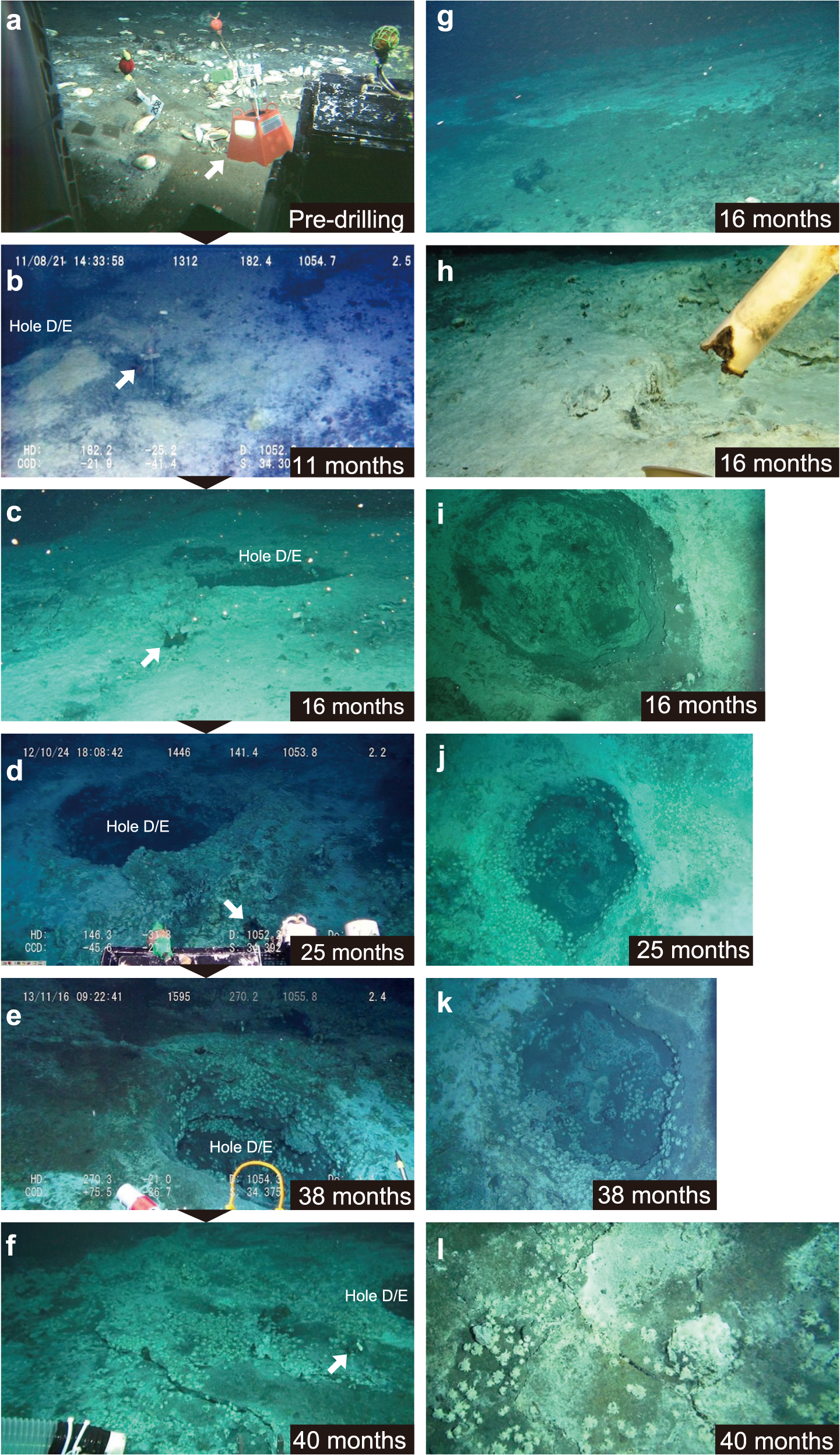
Fig 3. Temporal sequence of landscape at/around Hole D/E. From Nakajima et al. 2015.

A longtime submariner I know tells the story of a most unusual dive. On this particular plunge, they went down into the briny deep to place what can best be described as a giant manhole cover on the seafloor. There was a hole, and, by all accounts, the sea was draining in to it.

For more than half-a-century, we’ve been drilling holes in the bottom of the sea. Some reveal the buried history of the evolution of our oceans. Others uncover vast wells of crude oil. Science, exploration, and exploitation have all benefited from ocean drilling programs. But what happens to the seafloor when you punch a hole in the ocean? In my friend’s case, the drilling program opened a sub-sea cavern, resulting in changes to local current regimes, potentially disturbing the surrounding benthic community. The most practical solution was to simply plug the hole.

We’ve punched a lot of holes in the seafloor, but despite a few anecdotes and scant research, we know precious little about how these holes actually alter the marine environment. This is particularly worrying, as deep-sea mining at hydrothermal vents, manganese nodule fields, and oceanic crusts are slowly creeping out of the realm of science fiction and into our oceans. Ocean drilling in the deep sea is perhaps the closest analog to industrial-scale deep-sea mining. Understanding the potential impacts is critical to designing management and mitigation regimes that protect the delicate deep seafloor.

Read More “What happens when we punch a hole in the seafloor?” »

Popular Posts

I can serve on your graduate thesis committee. Here’s what you can expect of me, and what I expect in return.I can serve on your graduate thesis committee. Here’s what you can expect of me, and what I expect in return.October 16, 2025David Shiffman
Why the new Trump order to shoot wolves is both illegal and a dreadful precedent for endangered speciesWhy the new Trump order to shoot wolves is both illegal and a dreadful precedent for endangered speciesSeptember 5, 2026Ali Gaster
Shark of Darkness: Wrath of Submarine is a fake documentaryShark of Darkness: Wrath of Submarine is a fake documentaryAugust 10, 2014Michelle Jewell
Zombie ideas in conservation: trophy hunting and conservationZombie ideas in conservation: trophy hunting and conservationAugust 6, 2026Ali Gaster
What is a Sand Shark?What is a Sand Shark?November 12, 2017Chuck Bangley
What Ocean Ramsey does is not shark science or conservation: some brief thoughts on "the Shark Whisperer" documentaryWhat Ocean Ramsey does is not shark science or conservation: some brief thoughts on "the Shark Whisperer" documentaryJuly 2, 2025David Shiffman
Reflections on the Boundary of Science and PolicyJune 20, 2016Bluegrass Blue Crab
Your help needed: Oppose a weakened shark finning ban in MarylandYour help needed: Oppose a weakened shark finning ban in MarylandJanuary 26, 2014David Shiffman
Have we found the city of Atlantis?Have we found the city of Atlantis?September 1, 2026Chris Parsons
That's not a blobfish: Deep Sea Social Media is Flooded by AI SlopThat's not a blobfish: Deep Sea Social Media is Flooded by AI SlopDecember 19, 2025Andrew Thaler
Subscribe to our RSS Feed for updates whenever new articles are published.

We recommend Feedly for RSS management. It's like Google Reader, except it still exists.

Southern Fried Science

  • Home
  • About SFS
  • Authors
  • Support SFS


If you enjoy Southern Fried Science, consider contributing to our Patreon campaign.

Copyright © 2026 Southern Fried Science.

Theme: Oceanly Premium by ScriptsTown