I’d like to introduce you to a new series I’ve been working on called “Conservation Conversations”. Each discussion, which will take place first on twitter, will focus on a particular marine conservation issue. I will then Storify and share selected responses here on the blog, allowing the conversation to continue.
The first conservation conversation focused on sustainable seafood. A new paper showed that many fisheries scientists and conservationists believe that the Marine Stewardship Council’s “sustainable seafood” certification process is too lenient, a topic I’ve written about before. I wanted to know how my twitter followers decide what seafood is sustainable. I also asked whether they choose to avoid seafood entirely or focus on sustainable seafood.
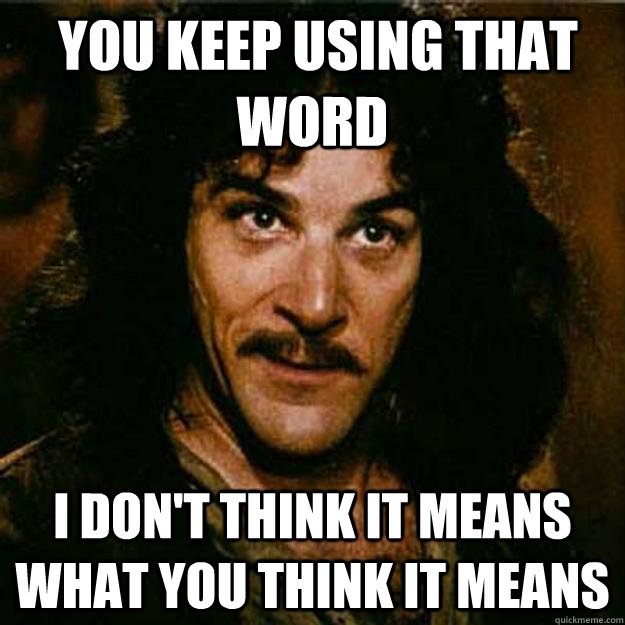
If interested citizens want to get involved in conservation and management policy, it’s absolutely vital to use proper terminology. The policy world can be full of confusing jargon, but there are few ways to discredit yourself in the eyes of decision makers as quickly as using a critical term incorrectly. In fact, it isn’t uncommon for a decision maker’s response to a petition or public comment to consist entirely of correcting inaccurate terminology, if a response is issued at all. There are well over 100 acronyms and terms that I’ve seen regularly used, but in the interest of brevity, I’ve selected what I believe to be the 15 most important terms that I’ve seen people repeatedly use incorrectly.
For each term, I’ve provided a definition from a scientific paper or technical report whenever possible. I have also provided some additional explanation in my own words, and some assistance from familiar memes. Whenever possible, I’ve linked to blog posts, articles, or websites that provide even more information. Most of these terms are broadly applicable to fisheries management policy, but some are specific to shark fisheries. It is not my intention with this post to strongly advocate for or against any specific policy (I do plenty of that with other posts), but to make sure everyone is speaking the same language.
Members of Walking Fish in NC pick up their share, photo by author
Fisheries had their ups and downs in the US in 2012. We’ve all heard the stories of overfishing, but there were also a few glimmers of hope as the New England cod fishery proposed to open previously closed areas, the Chesapeake oysters showed slight recovery, and MSC certification expanded and became more popular. News on the social side of the fishery – the fishermen and their families – is not as prevalent outside the small towns where they live. However, some of the most exciting developments happened on this front, starting with official community supported fisheries declaring themselves here to stay. They held a successful summit in New Hampshire this past July, placing them more in the public eye than ever before.
Jordan Nikoloyuk is the Sustainable Fisheries Coordinator of the Ecology Action Centre, a membership-based community environmental organization based in Nova Scotia, Canada. The Marine Issues Committee of the EAC was founded in 1995 after the collapse of the Atlantic Canadian groundfish stocks and works towards conserving and protecting marine ecosystems and maintaining sustainable fisheries and vibrant coastal communities.
As part of its sustainable seafood work and through its Friends of Hector campaign - www.friendsofhector.org - the EAC has participated in many Marine Stewardship Council assessments for Atlantic Canadian fisheries and encouraged retailers to support certified fisheries. Jordan has written this guest post to share his recent experiences with a certification that has left the EAC and other conservation organizations wondering whether seafood certification can contribute to sustainable fisheries management in the long term, or if the conflict between keeping an eco-label rigorous on the one hand and expanding its market appeal on the other is just too difficult to manage. What do you think?
The best way to buy seafood responsibly is to read a sustainable seafood guide and ask your retailer the two big questions: where is this from and how was it caught? When getting these answers is tough, many people turn to eco-certifications and labelling. Despite someincreasinglycontroversial certifications, the Marine Stewardship Council (MSC) is considered to be the most trusted and reliable label, but how many unsustainable fishery certifications will it take to ruin this credibility?
Last week, after lengthy and widespread opposition, the MSC approved certification of the Atlantic Canadian longline swordfish fishery, which catches 100,000 sharks and 1,400 endangered sea turtles every year. The Ecology Action Centre spent almost two years working to oppose this greenwashing. Now we are left asking: how can we promote sustainable fisheries with organizations the size of the MSC working against us? When a definition of sustainability is so weak that it lets the status quo continue, can this be seen as an effective ‘market-driven solution’?
While we can all celebrate the recent passage of California’s shark fin ban, sharks still need your help! The government of Western Australia is planning a “shark cull”, intentionally killing large numbers of threatened species to reduce the probability of shark attacks. The Marine Stewardship Council is considering granting “sustainable” status to a fishery with huge shark bycatch issues (an issue we originally covered last year). The European Union, one of the largest shark fishing entities in the world, still has large loopholes in their shark fishing policy. In the past few weeks, I’ve been contacted by conservation organizations working on these issues, and they need our help! Please consider signing the petitions listed below, and please consider telling interested friends and colleagues. As I’ve written many times before here on Southern Fried Science, I don’t support just any petition, but these are all from legitimate people and organizations and I have chosen to sign all three.
I am pleased to present the first in a new series of posts here at Southern Fried Science- reader mail. If a reader has a question for us, shoot us an e-mail with the subject “reader mail” and we may answer it for you on the blog. Our first questions are about my new shark conservation documentary:
Recent Comments