
President, Shark Advocates International
Sonja Fordham founded Shark Advocates International as a project of The Ocean Foundation in 2010 based on her two decades of shark conservation experience at Ocean Conservancy. She is Deputy Chair of the IUCN Shark Specialist Group and Conservation Committee Chair for the American Elasmobranch Society, has co-authored numerous publications on shark fisheries management, and serves on most of the U.S. federal and state government advisory panels relevant to sharks and rays. Her awards include the U.S. Department of Commerce Environmental Hero Award, the Peter Benchley Shark Conservation Award, and the IUCN Harry Messel Award for Conservation Leadership.
Most Americans by now must know it’s Shark Week, but did you know that the Discovery Channel headquarters are mere steps from the headquarters of the National Marine Fisheries Service (NMFS), and that right now — and rather often — fishery managers in that NMFS building are soliciting comments on US shark fishing rules?
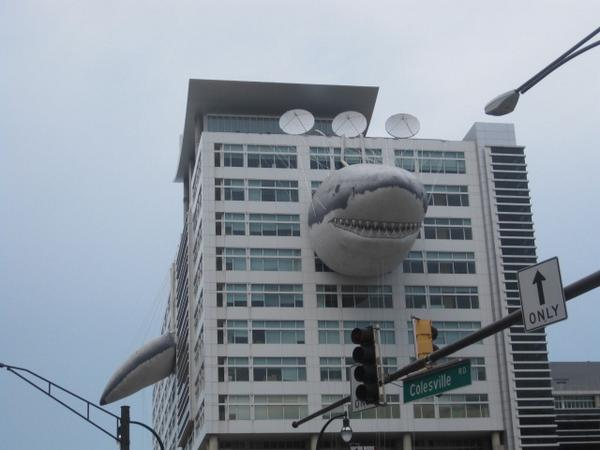
Shark Week is winding down just as several key opportunities to help US sharks are being announced. Aside from controversy over some programming, other shows, the associated press coverage, and the veritable social media frenzy have sparked a lot of concern for sharks, and sent many Americans on a hunt for things that they can do to help. I welcome that interest and am taking the opportunity to make a plea for some unique, hand-crafted comments and personalized testimony about timely policies for several particularly deserving Atlantic shark and ray species.
Taking these actions won’t be quite as easy as pushing a button on an automatic petition, but I believe – because of the relatively low profile of these species and the increased influence of original comments – that they can truly make a difference. If heeded, your advice can lead not only to better conservation of US shark and ray species, but also to better examples for other countries to follow. Here goes (see the hyperlinks for more information and contact details):
1) Help Ensure the Recovery of Sawfish: The Smalltooth Sawfish (Pristis pectinata), America’s most threatened elasmobranch, was listed under the Endangered Species Act (ESA) in 2003. The resulting protections, awareness, and research are yielding guardedly positive news, but Congressional appropriations for implementing the National Marine Fisheries Service (NMFS) Recovery Plan have been waning in recent years. This has led to cutbacks in programs aimed at educating fishermen about proper release of accidentally caught sawfish, which risks increased incidents of mishandling and injury. Other elements of the plan are also suffering due to insufficient funds.
* Action: Contact your Members of Congress and urge full funding of the Recovery Plan for Endangered Smalltooth Sawfish.
2) Speak Up for Better Dusky Shark Protections: Despite being a prohibited species in the US Atlantic since 2000, Dusky Sharks(Carcharhinus obscurus) are still being overfished and need an estimated 100 years to recover. NMFS is developing a suite of fishery management measures to reduce illegal landings and bycatch mortality, and — at the same time — is determining whether or not to list the species under the ESA, as requested by petition. The effects of an ESA listing on ongoing Dusky Shark bycatch reduction research and the current Amendment process are not yet clear. Because of this and other potentially lengthy processes triggered by an ESA listing, it’s actually not that easy to predict which route — at this stage – might lead more rapidly to recovery. Public support for additional Dusky Shark protections is key, however, no matter which option you favor. We’ll learn more about the options and how they mesh at next month’s meeting of the NMFS Highly Migratory Species (HMS) Advisory Panel (AP). Questions and comments from the public will be invited, in person and by webinar.
* Action: On September 10-11, participate in the HMS AP discussions; express your views and support for the prompt development of additional measures to protect Dusky Sharks.
3) Demand Equal Treatment for Smoothhounds: The Dusky Smoothhound (Mustelus canis) is the only U.S. shark fished in commercial volumes without fishing limits, and the only shark being excepted from Atlantic bans on at-sea fin removal. Such requirements to land sharks with fins still attached are widely recognized as best practice for enforcing bans on finning (slicing off a shark’s fins and discarding the body at sea). The exceptions, as well as delays in establishing quotas, are thanks to a Smoothhound-specific Savings Clause in the 2010 Shark Conservation Act. NMFS has just released for comment a range of alternatives for dealing with the Savings Clause and setting initial Smoothhound catch limits. The first Smoothhound population assessment, which should yield advice for sustainable catch levels, is underway.
* Action: By November 14, submit a letter to NMFS during the current public comment period (for HMS Amendment 9) in support a ban on at-sea removal of Smoothhound fins (Alternative A1) and for science-based catch limits (Alternative B4).
* Extra Credit: Contact your Member of Congress and ask them to delete the Smoothhound Savings Clause from the Shark Conservation Act.
4) Earn Spiny Dogfish Some Respect: Thanks to more than a decade of science-based fishing quotas, US Atlantic Spiny Dogfish (Squalus acanthias) are doing well. This species was not slated for exceptions to fins-attached requirements in the Shark Conservation Act, but several Atlantic states – including Massachusetts, Rhode Island, Maryland, and North Carolina – still allow Spiny Dogfish fins to be removed at sea, counter to federal regulations. The Atlantic State Marine Fisheries Commission (ASMFC) is taking public comment on a coast-wide rule that could fix this and grant Spiny Dogfish the same strong finning ban standards that are afforded almost all other US Atlantic sharks.
* Action: By September 30, submit a comment to the ASMFC in support of Option B (fins naturally attached) in Addendum V to the Spiny Dogfish Plan.
5) Defend New England’s Skates: Because of their depleted status, US Atlantic Thorny Skates (Amblyraja radiata) and Barndoor Skates(Dipturus laevis) were made prohibited species in 2003. Since then, Thorny Skates have declined, but fishery managers have been slow to investigate the problem and/or propose additional protections. Barndoor Skates have been on the rise, but are not yet rebuilt. Despite this and their inherent vulnerability, NMFS recently granted permits for an experimental Barndoor Skate fishery.
* Action: Write to the NMFS Regional Administrator and ask him to elevate the priority of Thorny Skate recovery, and suspend Barndoor Skate fishing, at least until the population is rebuilt.
Thank you for your help!