
I’m in the Dutch Caribbean this week with a team of international researchers for an expedition to the Saba Bank to study sharks. This endeavor has been pulled together under the leadership of the Dutch Elasmobranch Society, the Saba Conservation Foundation, and the Nature Foundation Sint Maarten. I’m only here for five days, but the entire research trip will span from July 15 to 25.
Those of you who know me, are probably thinking, “but wait, you’re not a shark scientist!” That is correct. I’ve joined this expedition as a research assistant, which means I’ve signed up to carry a lot of heavy things and sing Jimmy Buffet songs with my ukulele. My main role will be helping with communications. I hope to share with you what we’re doing this week on this blog, and you can also follow along on social media with the hashtag #SabaShark2019.
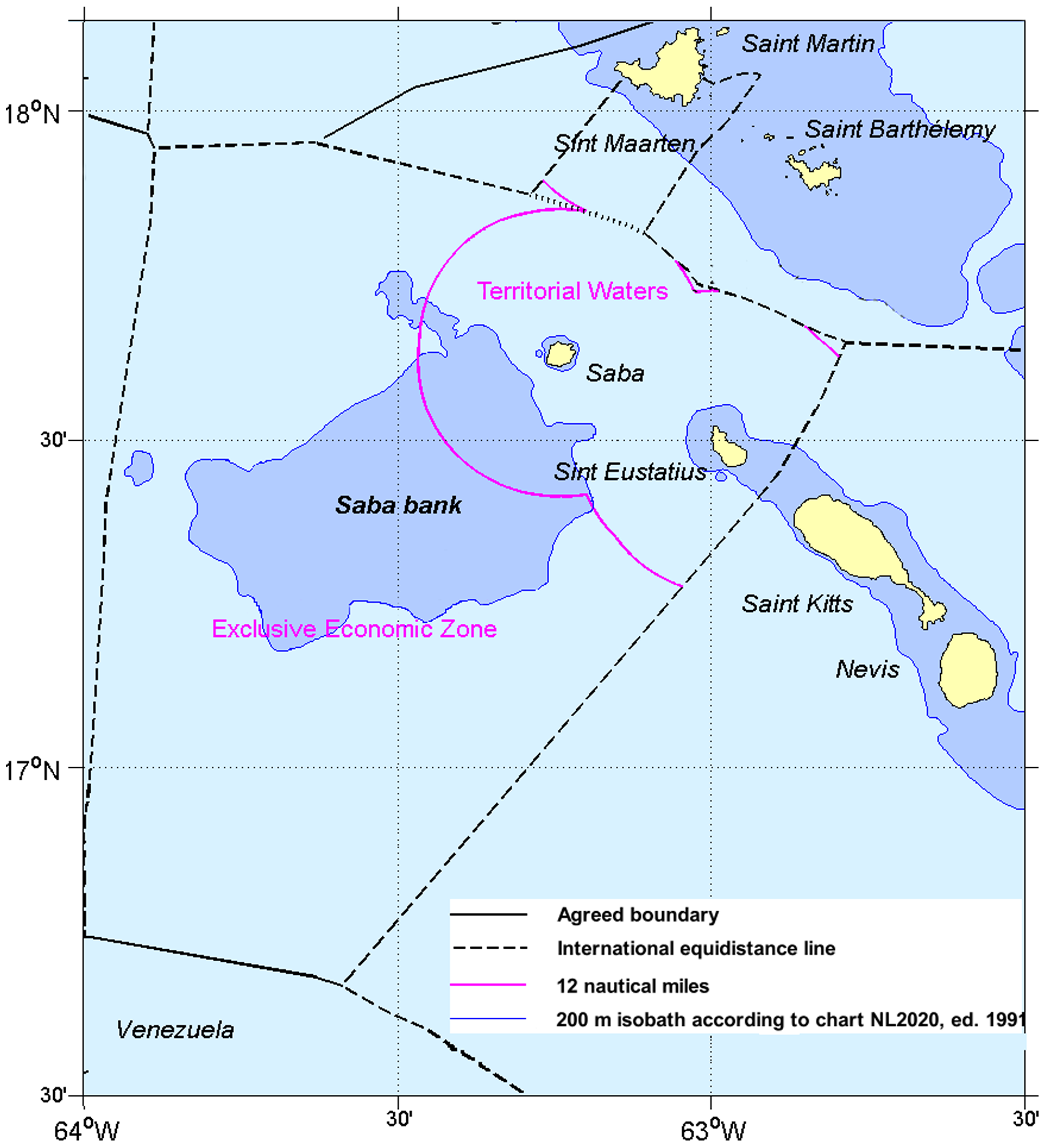
We are going to be spending most of our time out on the Saba Bank, a large submerged atoll just off the coast of the beautiful island of Saba. We’ll be within the borders of the Saba Bank National Park, which extends across 2,680 square kilometers of ocean, an area about the size of Rhode Island. The region is high in biodiversity, and home to sea turtles, migrating whales, and over 200 species of fish. Researchers also think it is incredibly important for Caribbean shark species.
The scientific projects carried out during this ten-day expedition will focus on a couple of different species, including tiger sharks (YES PLEASE!!), silky sharks (there are a lot of juveniles in this part of the Caribbean, a nursery perhaps???), nurse sharks, and Caribbean reef sharks. The overall goal of the research is to gain insight into the role that Saba Bank plays in the life cycle of the species that live here, knowledge that is essential to adequately protect sharks. Four projects that will be carried this week are:

Tracking tiger sharks from space. During the expedition, tiger sharks will be provided with tags equipped with a completely new satellite technology developed by the European Space Agency (ESA). The space organization has developed an advanced technology that allows the tags to communicate with satellites in space in an innovative way allowing the tags to last much longer and collect much more data than tags currently used. Stay tuned for a blog on these tags.
Preventing bycatch of nurse sharks. The Dutch Elasmobranch Society and the Saba Conservation Foundation have been working together with local fishermen to reduce the by-catch of nurse sharks in lobster traps. One essential element to achieve this is insight into the behaviour of sharks in and around the traps. Fishermen report that juvenile nurse sharks break into lobster traps to eat the trapped lobsters, but this is only anecdotal. Dr. Robert Nowicki of Mote Marine Lab has developed a camera system that can record the behavior of sharks in and near the traps, and this will be deployed this week.
Connectivity between habitats of Caribbean sharks. Between 2015 and 2018, a number of silky sharks, Caribbean reef sharks, and nurse sharks were equipped with acoustic tags to find out more about how these species utilize the area and the connectivity between different Caribbean habitats. Guido Leurs from the University of Groningen is building upon this research by collecting samples from Caribbean reef and nurse sharks to analyse diet and age of the sharks. Combined with the knowledge from the tagging program, this will offer government managers more insight into the role the Saba Bank plays in the life cycle of these sharks.
Stress levels of sharks in captivity. Blood samples will be taken from all sharks caught to determine the level of stress hormones in their systems. Based on this, researchers, can gain insight into how much stress the animals experience when they are examined for the different experiments. This information can be used to make the catch and research process as efficient as possible so that the animals are not adversely affected by the procedures.
There are also a couple of smaller projects the organizers aren’t promoting — but I’ll see if I can share an update or two about them. We’ll be out on the boat all day, and then back on land at night and I’m going to try to post an update each night. If you just can’t wait for the daily update, follow the expedition on social media using the hashtag #SabaShark2019, or by following the Save Our Sharks social media accounts on Facebook, Instagram and Twitter.