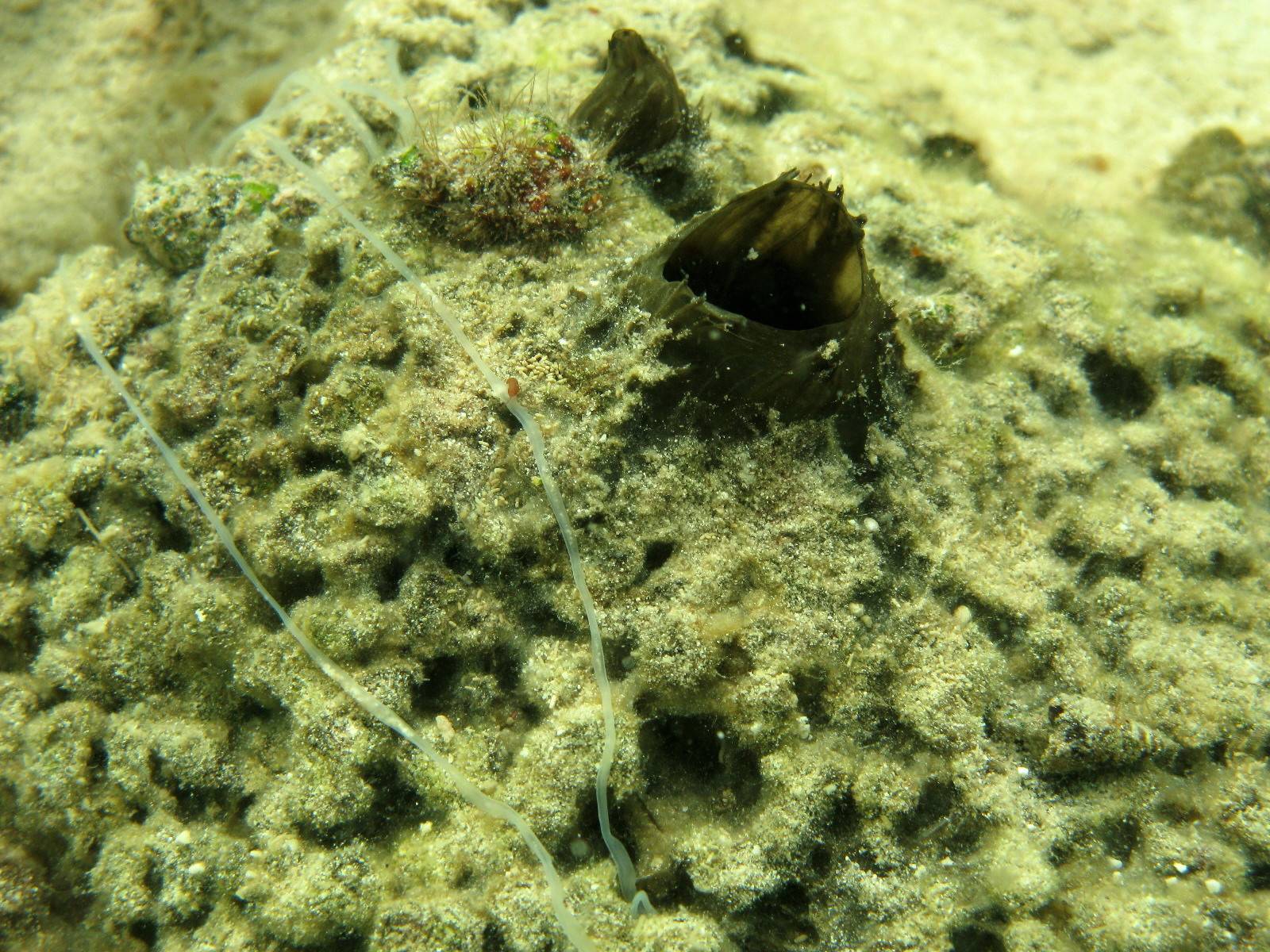
This article originally appeared in the June/July 2020 issue of the Deep-sea Mining Observer. It is reprinted here with permission. For the latest news and analysis about the development of the deep-sea mining industry, subscribe to DSM Observer here: http://dsmobserver.com/subscribe/
Bioprospecting, the discovery of new pharmaceutical compounds, industrial chemicals, and novel genes from natural systems, is frequently cited among the critical non-mineral commercial activities that yield value from the deep ocean. Isolating new chemicals or molecular processes from nature can provide substantial benefits to numerous industries. The value of products derived from marine genetic resources alone is valued at $50 billion while a single enzyme isolated from a deep-sea hydrothermal vent used in ethanol production has an annual economic impact of $150 million.
In contrast to other extractive processes, bioprospecting is driven by and dependent on biodiversity. The greater the diversity and novelty of an ecosystem, the greater the likelihood that new compounds exist within that community. Bioprospecting is also viewed as light extraction, compounds only need to be identified once–actual production happens synthetically in the lab–thus leaving ecosystems relatively undisturbed compared to more intensive industries.
Despite the promise and importance of bioprospecting, there is generally a relatively poor understanding of what the process of discovery entails. How do researchers go from sponges on the seafloor to new antiviral treatments?
A recent advance in the treatment of COVID-19 provides an excellent opportunity to examine a discrete case of marine bioprospecting and look beyond the headlines into just how ocean exploration facilitated the discovery and development of this new drug.
Remdesivir is an RNA-dependent RNA polymerase inhibitor, which means that it limits the ability of RNA-based viruses, like COVID-19, as well as other coronaviruses and Ebola, to replicate themselves in human cells. Initially developed in 2009, remdesivir has been shown to be effective against SARS and MERS and was recently approved for clinical use against COVID-19. Most notably for the deep-sea mining community, remdesivir was developed from a marine sponge, providing a recent, well-documented, high-profile case study in how marine bioprospecting is practically implemented in the development of novel pharmaceuticals.
Tectitethya crypta is a large, drab sponge found in shallow water across the Caribbean. From this unassuming animal, researchers in the 1950s isolated the first nucleoside analogue, a class of antivirals that cause gene replication to terminate. Nucleoside analogues are tiny molecular monkeywrenches. They look enough like a targeted section of RNA common in certain viruses that they interfere with the process of making new viruses in a host, slowing down viral spread. Because the targeted region is found in viruses, but not in human DNA, these compounds are generally safe for human use.
From these early isolates, dozens of nucleoside analogues have been developed to treat a host of viruses, including HIV, hepatitis, herpes, and, more recently, Ebola and coronaviruses. Remdesivir is one of many nucleoside analogues that owes its origin to Tectitethya crypta.
Remdesivir was not extracted directly from a sponge in the Caribbean. In the mid 2000s, researchers at Gilead Sciences developed a database of small, hypothetical molecules based around the known properties of those sponge-derived nucleoside analogues. They then screened hundreds of those molecules for efficacy and landed on a handful that were highly potent against a panel of RNA-viruses. One of those was GS-5734, which would ultimately be renamed as remdesivir.
During the Ebola outbreak of 2014, that same database was used to prioritize compounds to test against the infection. During those tests, remdesivir was shown to inhibit not just Ebola, but a host of other RNA-viruses, including SARS and MERS, both of which a part of the coronavirus family of viruses. As another coronavirus spread across the world, remdesivir was already high on the list of potential candidates, and, though it ended up not being particularly useful for treating Ebola, the fact that it had already passed several clinical trials made it an especially enticing candidate for early clinical trials.
So what can the development of remdesivir tell us about bioprospecting in the deep ocean? The first and most obvious lesson is that, far from the vision of bioprospecting as a field-heavy science, with researchers hiking through jungles or diving across reefs looking for new and novel species, bioprospecting is a heavily laboratory focused endeavor. New compounds are found through querying extensive genotype databases, looking for molecules that match areas of particular medical interest, and then testing modified synthetic versions of those particular molecules.
There’s a reason the same few examples (Taq polymerase, first isolated from terrestrial hot springs and then again at hydrothermal vents, for instance) are often cited to demonstrate the value of bioprospecting: hits are rare, but when they hit, they hit big. The discovery of nucleoside analogues in Tectitethya crypta launched an entire new field of medicine and led to advances in the treatment of dozens of very different viral infections.
And deep databasing is key. Building archives of genotypic data, not just the common marker genes used for estimating gene flow and genetic diversity, but entire genomes of new and novel species can allow researchers to non-destructively mine data for generations. Though often portrayed as in conflict with deep-sea mining, this discovery workflow for bioprospecting depends on aggressively cataloging and genotyping marine species, a process that complements the biological baseline requirements for effective environmental impact assessments. Maintaining extensive and accessible databases of whole-genome information produced during the conduct of exploration and environmental impact assessment could provide an invaluable and inexhaustible resource derived from the common heritage of humankind.
Featured Image: Tectitethya crypta by Dr. Sven Zea
Open-access papers referenced for this article include:
- Remdesivir: A Review of Its Discovery and Development Leading to Emergency Use Authorization for Treatment of COVID-19 – https://www.ncbi.nlm.nih.gov/pmc/articles/PMC7202249/
- Remdesivir for the Treatment of Covid-19 — Preliminary Report – https://www.nejm.org/doi/full/10.1056/NEJMoa2007764
- The evolution of nucleoside analogue antivirals: A review for chemists and non-chemists. Part 1: Early structural modifications to the nucleoside scaffold – https://www.ncbi.nlm.nih.gov/pmc/articles/PMC6396324/
Very interesting science Thanks for the post
Stay well and laugh when you can