This month, delegations from around the world agreed upon a treaty to protect biodiversity beyond national jurisdiction — ocean life beyond the limit of any country’s borders. The High Seas Treaty represents the culmination of over 2 decades of debate and negotiation. Once adopted, it establishes a framework for the protection and equitable sharing of marine genetic resources — animals and their DNA; promotes the implementation of marine protected areas in the high seas; and creates a scientific and technical body to review environmental impact assessments for ocean activities beyond borders.
While this treaty is a monumental achievement for protecting the common heritage of humankind, it still leaves several loopholes for ocean exploitation. Chief among them is the exemption of deep-sea mining from the final regulations.
Under the treaty text, activities which are already regulated by other governing bodies are exempt from having to submit an environmental impact assessment. The International Seabed Authority currently oversees activities related to exploration and exploitation of minerals in areas beyond national jurisdiction. The ISA is in the midst of negotiating the Mining Code, which would establish regulations for commercial deep-sea mining. They are also under intense scrutiny by NGOs, deep-sea mining experts, scientists, and other stakeholders for a perceived bias in favor of mining interests and an artificial urgency towards commercializing the industry.
At this week’s opening of the 28th session of the ISA, the Secretary-General announced that “pressure is now on the International Seabed Authority to deliver.” It was an odd statement for an administrator to make, considering that that pressure is entirely self-inflicted and a growing number of member states are coming out in favor of a precautionary pause in the development of the industry.
I’ve written about the ISA quite a lot.
But there is a twist. The International Seabed Authority was created under the 1994 Agreement on Implementation for Part 9 of the UN Convention on the Law of the Sea. Famously, following contentious negotiations on that implementation agreement, the United States chose not to ratify the treaty. Though several efforts have been made in the follow decades, the US remains the largest economy that has failed to agree to the Law of the Sea.
Functionally, this has been a non-issue. US laws regarding its own exclusive economic zone and how the government operates in the high seas have generally been kept in line with the provisions of UNCLOS. The US is a de facto participant in UNCLOS for all but one issue.
That issue, of course, is deep-sea mining.
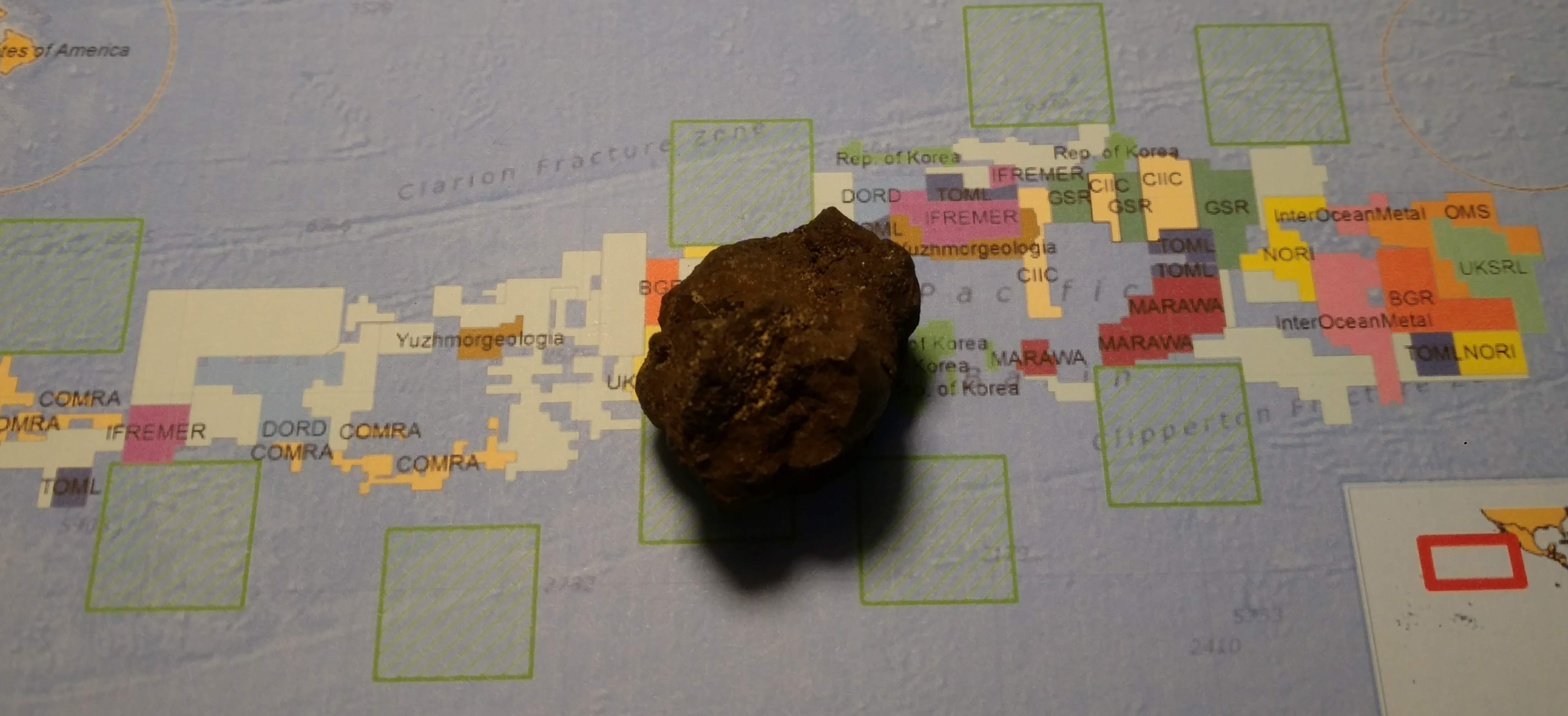
The United States has maintained its independence from the ISA, maintaining a 50-year-old claim over a portion of the Clarion-Clipperton Zone as well as establishing national policy that would allow it to mine the high seas, should it so choose. Even so, the US participates in the ISA negotiations as a non-voting observer and, since the creation of the Authority in 1994, has made no attempt to implement its own mining program in the high seas.
As of today, there is no indication that the United States won’t sign on to the Biodiversity Beyond National Jurisdiction Treaty. US delegates played a key role in reaching an agreement on the final text.
If the US, or any other nation which signs on to the High Seas Treaty but is not a member of UNCLOS — a list that includes the United Arab Emirates, Israel, Iran, North Korea, Columbia, Venezuela, Peru, Turkey, and the Holy See, among others — then they are not subject to oversight by the ISA.
That leads to a question that I’m not sure has an answer yet: Can a non-UNCLOS state who has adopted the High Seas Treaty submit an environmental impacts assessment for deep-sea mining to the Scientific and Technical Body, bypassing the ISA’s leasing, licensing, and regulatory process?
This is almost certainly more of a curiosity of process rather than an meaningful issue within the text of the treaty. It seems unlikely that, should it be determined that a non-ISA member state be allowed to submit a mining proposal to the STB, the requirements would somehow be less stringent than those of the International Seabed Authority. In such an improbable scenario, the STB would likely adopt the regulations, standards, and guidelines established by the ISA.
More interesting to me is the idea that we could finally undo a 3-decade long failure of international cooperation. Should the US ratify the High Seas Treaty, there will no longer be a strong argument against finally ratifying UNCLOS. Participation in deep-sea mining will require international consent either through the Law of the Sea or as a side effect of the High Seas Treaty. Failing to ratify UNCLOS would serve only to keep US ocean policy in limbo, where they must adhere to regulations established by the ISA without a front-row seat at the negotiating table.
The United States could make a powerful statement of ocean leadership by ratifying both treaties.
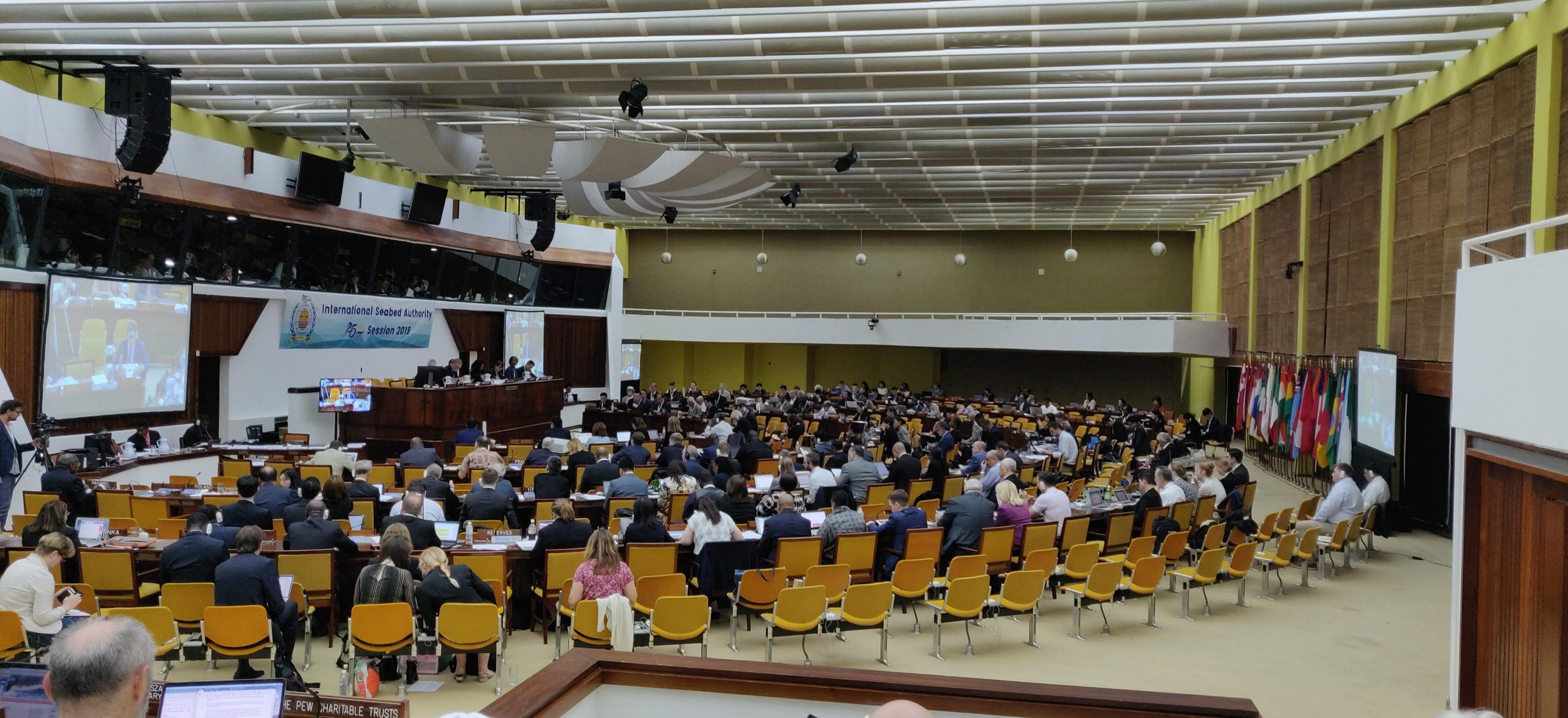
Featured Image: Delegates meet at the 25th session of the International Seabed Authority in 2019.