“Is there any technology the left is excited about?” This question was asked on social media this week by a supporter of AI who was frustrated by criticisms of that technology. It’s led to some interesting discussions on Bluesky, and I wanted to answer it from my perspective as an ocean conservation scientist and policy specialist.
Personally, I’m not super excited about a plagiarism machine that drives up electricity bills and makes it impossible for other tech industries to get needed parts, all while getting answers wrong. But are there some technologies that can help save the ocean, sure.
I wanted to preface this by saying that most ocean conservation solutions do not require new technology. In many, many, many cases, the problem is humans doing something harmful and unnecessary to the environment, and the answer is simply not doing that anymore enforced by law. Nature often recovers when left alone.
And far too many tech solutions are made by engineers with no understanding of the underlying social or ecological systems, which means they’re an expensive solution doomed to fail. Many are solutions in search of problems, things that no one who knows anything about the problem asked for.
But there are some new, emerging, and potential technologies that will help save the ocean and the wildlife that calls it home.
First and foremost in my mind is bycatch reduction technology. While I support calls for more and better marine protected areas, we can’t simply ban all fishing everywhere without putting a multi-billion dollar hole in coastal economies, and taking food off the table for hundreds of millions of people. But some fishing methods cause real harm to non-target species, and new ways of reducing bycatch while allowing target catch show real promise. Some of these are complex and controversial, like on demand ropeless lobster fishing gear that can reduce deaths of critically endangered North Atlantic right whales. These deaths and severe injuries are why Maine Lobster is on Seafood Watch’s Red/Avoid List. Some is cheap and easy, like lights that sea turtles can see but fish can’t which reduce sea turtle bycatch at night. The number one threat to marine biodiversity is unsustainable fishing practices, and modifications to fishing gear are one of the clearest ways for a new piece of technology to save ocean species.
There have also been amazing innovations in decarbonizing the ocean economy, including shipping and ports. Shipping is one of the leading greenhouse gas emitters, and new innovations to electrify shipping vessels, switch them to less harmful fuels, or improve fuel efficiency show real promise. Reducing noise pollution via new engine designs also reduces their environmental impact to animals like whales.
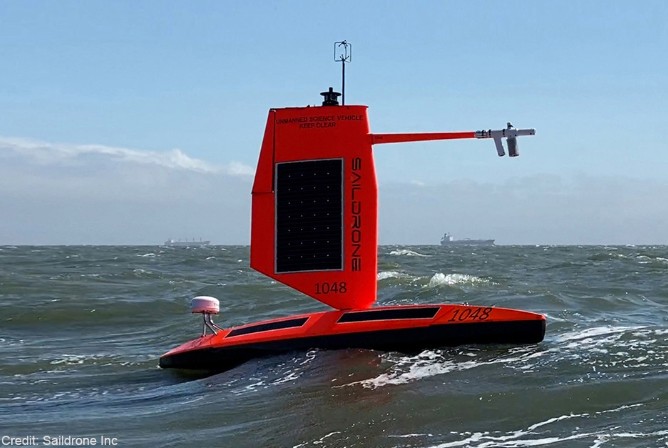
New tools make it cheaper to gather all kinds of oceanographic, environmental, and behavioral data from all kinds of ocean systems, data that can be used to help save threatened species and ecosystems. These include uncrewed solar-powered autonomous vessels that can be deployed for weeks or months at a time, like the NOAA SailDrone shown below. Others can follow tagged organisms, or get close enough to observe rare and skittish organisms in ways that large and loud boats cannot.
Similar tools are vital for enforcement of existing conservation regulations, and making it possible to create new ones, especially in areas beyond national jurisdiction. Organizations like Global Fishing Watch use satellite imagery and AIS data to track industrial-scale fishing far from land, and to identify and track illegal fishing behavior.
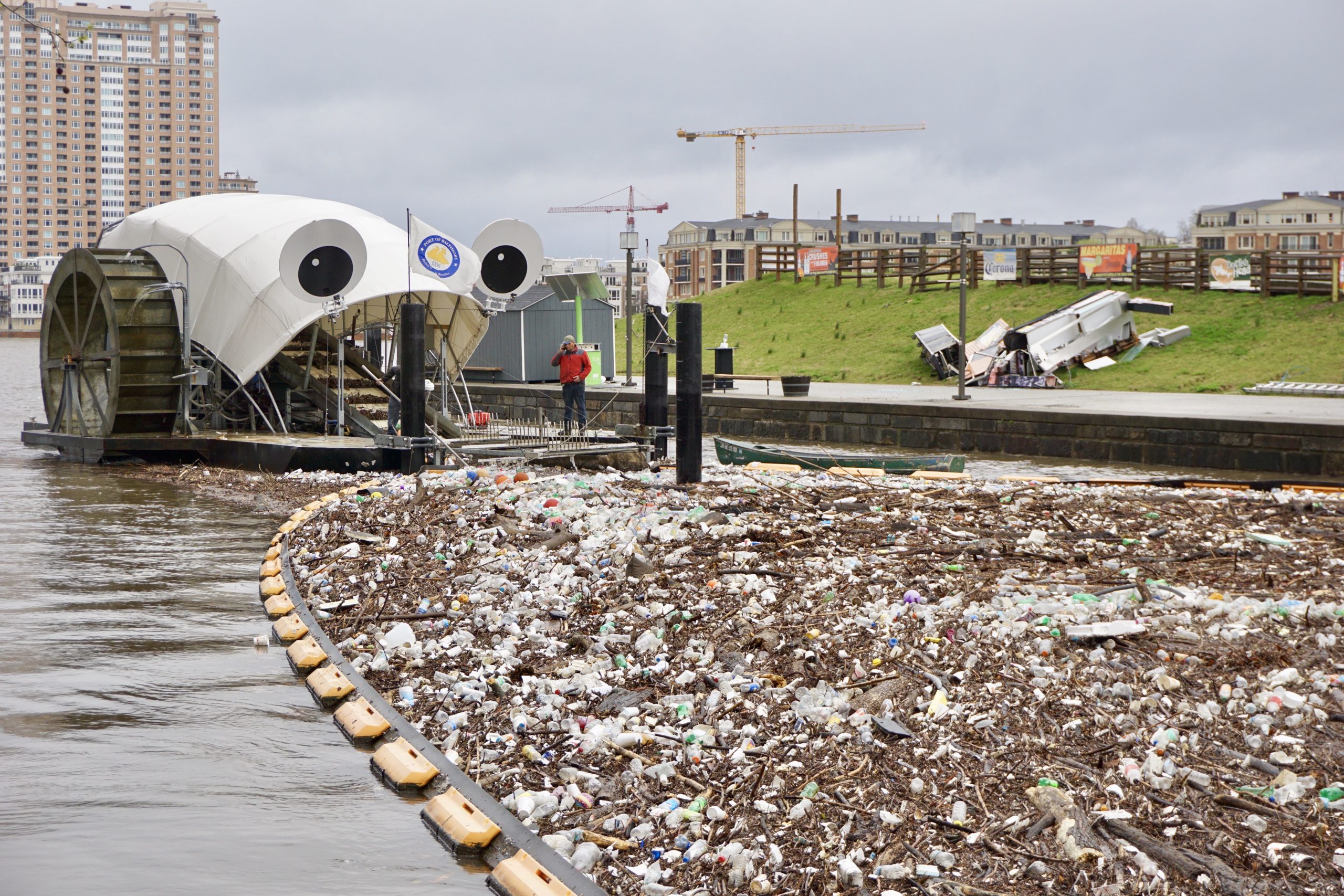
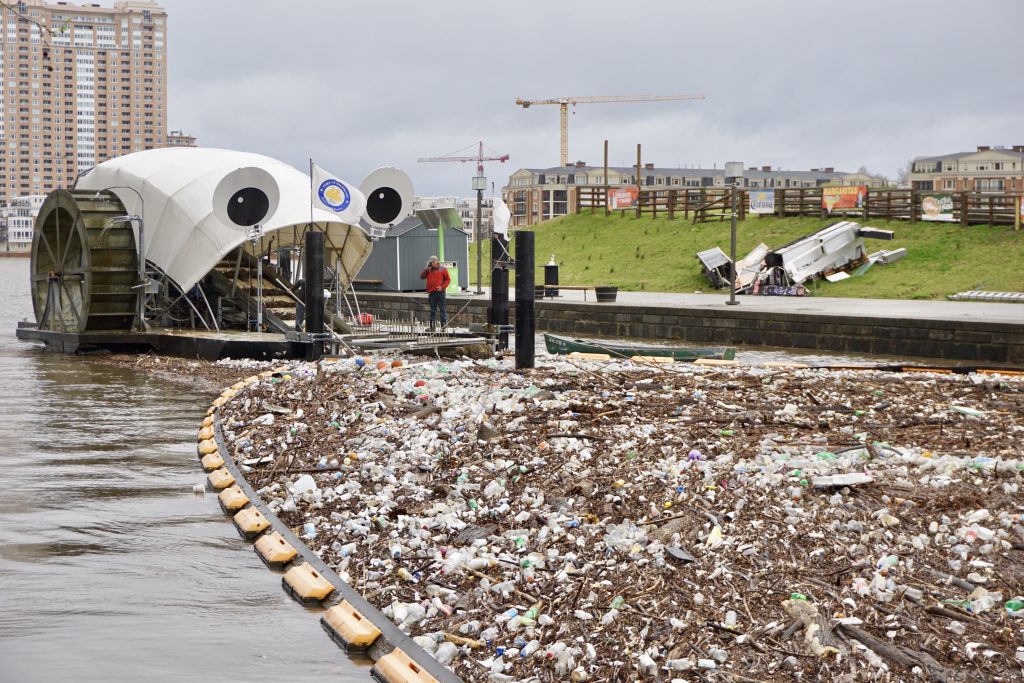
There are also new (ish, it just celebrated ten years in opperation) tools for reducing trash flow into the ocean, like Baltimore’s Mr. Trash Wheel, seen below. The way to protect the ocean from pollution is not by trying to scoop that trash out of the ocean, which is why I am absolutely not including nonsense like “the Ocean Cleanup” in my list of exciting ocean conservation technology. But preventing trash from entering the ocean, which is what Mr. Trash Wheel does (and what the Ocean Cleanup people seem to eventually be pivoting towards) can help.
There’s also some tech that can potentially show some promise in the future, even if I’m a little skeptical of their broad-scale implications. Captive breeding and wild release is a tool that works really well in some settings, but it’s much, much, much, much more expensive to do that for marine wildlife than terrestrial wildlife. I suppose developing these tools now for corals (and increasingly for sharks) is useful, and it’s always good to have another tool in the toolbox for the future, and who knows what new innovations will do to the costs here. However, right now, it’s far too expensive to deploy this kind of technology at any kind of ecologically meaningful scale-like, GDPs of whole countries expensive.
We won’t invent our way out of the overfishing crisis, the climate crisis, the habitat destruction crisis, or the pollution crisis, solving these problems requires laws that restrict harmful behavior. But new technologies can absolutely have a role to play.
What ocean conservation technologies, either already existing or emerging, excite you?