One of my first part-time positions as an ocean conservation policy consultant was working for the IUCN Species Survival Commission’s Tuna and Billfish Specialist Group. Our task was to update the IUCN Red List conservation assessments for all the different species of tuna and billfish on Earth.
This job, a perfect introduction to working at the science-policy interface that’s become my path since grad school, taught me a lot. Here are 5 things I learned.
1) The IUCN Red List assessment process is rigorous, replicable, data-driven, and as free from indvidual bias as possible, designed so that any two experts working with the same data would come to the same conclusions. That’s vital for the IUCN’s role as an independent respository of the best available conservation science used to inform processes like CITES and the Convention on Migratory Species. I knew this at an academic level before, but actually working through the process really helps convince you of this. Incidentally, you can get certified as an IUCN Red List assessor for free online, and with that skillset you can help convince yourself of this. I have my undergrads do it every year, you can do it too!
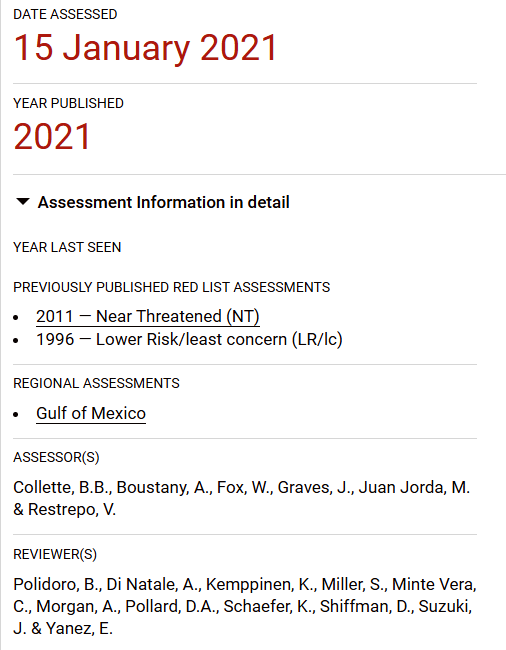
Look up any tuna or billfish species on the IUCN Red List online database and you’ll see my name!
2) The ocean has plenty of stories of doom and gloom, but you don’t need to look far to find success stories and good news. I’m a big believe in the Ocean Optimism movement, strategtically sharing stories of hope and success to inspire more success. If people think we’re doomed no matter what we do, why try to do anything? There have been lots of these success stories in the world of tuna and billfish. In fact, out of 61 species that we reassessed, 10 of them had an improved IUCN Red List status when compared with the last time they were assessed. Swordfish was once on the no-no list for eco-conscious seafood lovers but is now recommended as Green/Best Choice by Seafood Watch. That’s great news, not just for people who like to eat swordfish! It means that as a result of public concern and advocacy, regulations were changed that resulted in a healthier swordfish population and a fishery with reduced environmental impacts. What we did worked, and we should do more of that!
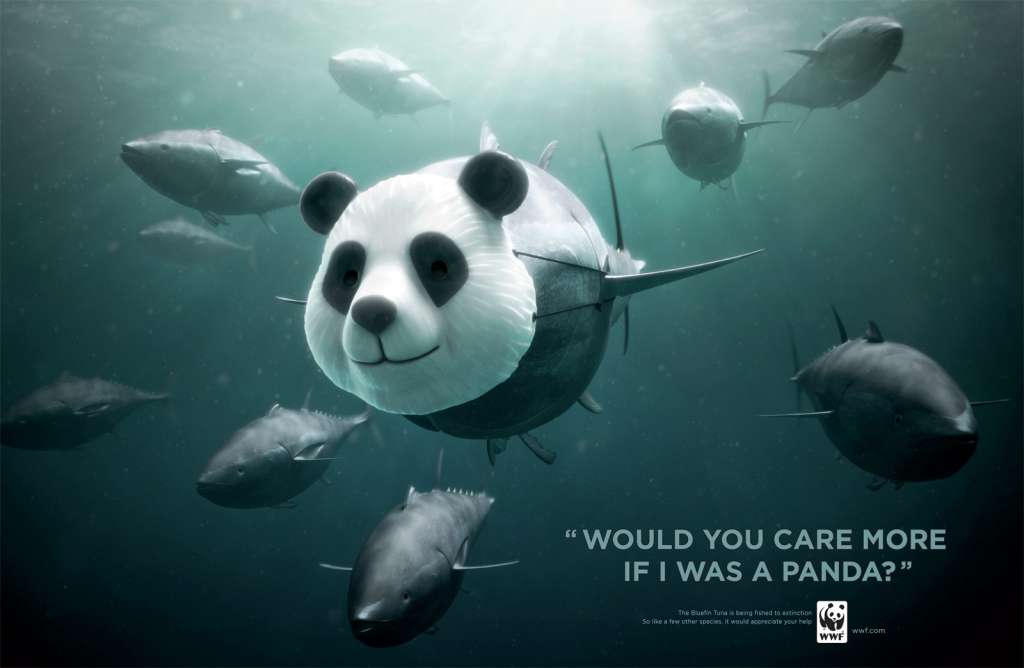
3) People aren’t great with nuance. When I recently shared a good news story about how once-overfished Atlantic bluefin tuna stocks had recovered enough to allow fisheries, some of my social media followers acted like I had just proposed choking pandas to death with my bare hands. Some shared this old WWF ad campaign that literally showed a tuna wearing a panda mask. Some shared a bizarre op-ed saying that bluefin tuna shouldn’t be eaten for…reasons? For one thing, it’s actually good news, not bad news, that a once-overfished population has recovered. But also, Southern bluefin tuna (T. maccoyii) are still assessed as Endangered, while Atlantic bluefin tuna, the ones being discussed here, are T. thynnus, a totally different species of tuna whose fins also happen to be blue. They’re not the same fish. Accuracy matters, and nuance matters!
4) Conservation and fisheries management are not as different as some of the loudest online voices would lead you to believe. Tunas and billfishes are heavily fished with fisheries worth billions of dollars, but fisheries management processes worked to recover once-overfished populations and to reduce bycatch impacts on other species. Unsustainable fishing practices are a major threat, but we don’t need a total ban on all tuna fishing everywhere to fix past damage or to ensure healthy oceans going forward. People from the ocean conservation community should learn more about the tools found in the world of sustainable fisheries management rather than just dismissing them, because those tools can accomplish a lot of ocean conservation goals while also providing food and jobs to people. (This is a major theme of my upcoming book “Why Sustainable Seafood Matters.”)
5) Tuna are some of the most-studied fish on the planet, and numerous national-level and international-level laws and regulations and treaties require detailed data-gathering and reporting about their fisheries. Even with this, it was hard to find enough data to assess the populations of several of these species, and seven species remain Data Deficient. It’s going to be essentially impossible to gathering enough data to be absolutely sure about the conservation status of other species of fishes that are less well-studied than tunas, which is to say most other species of fishes. This is why the precautionary approach, or not letting a lack of certainty delay important conservation actions that might be needed, is so vital. It’s also why new tools for inferring conservation status from imperfect datasets are important.
Learn more about how to buy sustainable tuna (and not buy unsustainable tuna) at the grocery store:
Learn more about the sustainability of tuna fisheries: