Skip to content

Southern Fried Science

Over 15 years of ocean science and conservation online

  • Home
  • About SFS
  • Authors
  • Support SFS

Turtle science at the Archie Carr National Wildlife refuge

Posted on February 23, 2011February 23, 2011 By David Shiffman
Conservation, Science

The high density of sea turtles at the Archie Carr National Wildlife Refuge provides a  wonderful opportunity for research, and a team from the University of Central Florida takes full advantage of it. They were kind enough to allow me to tag along.
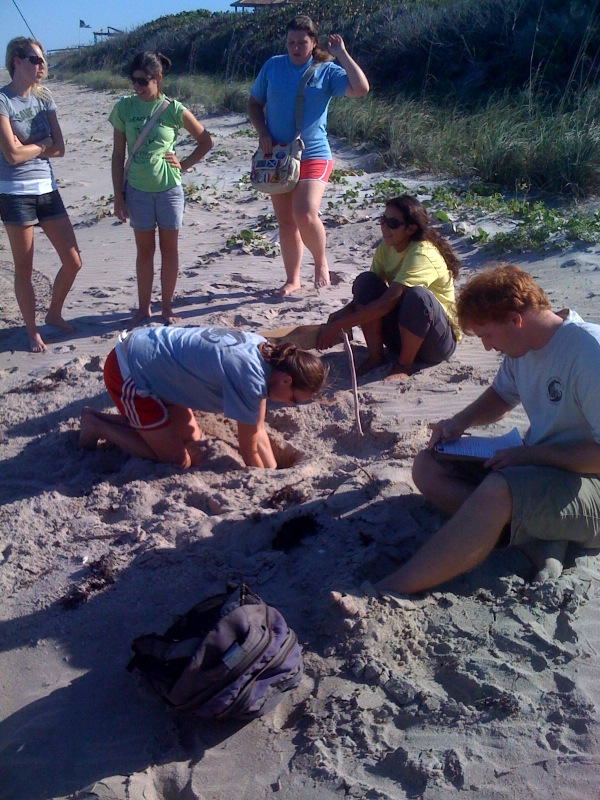
A UCF research team examines a green sea turtle nest. Photo credit: David Shiffman

Every night during nesting season, UCF researchers patrol the beach waiting for turtles to come ashore. While passively observing so as not to bother the turtles, they record the location of the nests and make sure that terrestrial predators (such as raccoons) leave them alone. The number of nests for each species (and whenever possible, the number of nests per individual turtle) are recorded. When the eggs hatch, the number of hatchlings is recorded. The morning after a hatching event, I followed the UCF team to a green sea turtle nest.
Unhatched green sea turtle eggs. Photo credit: David Shiffman
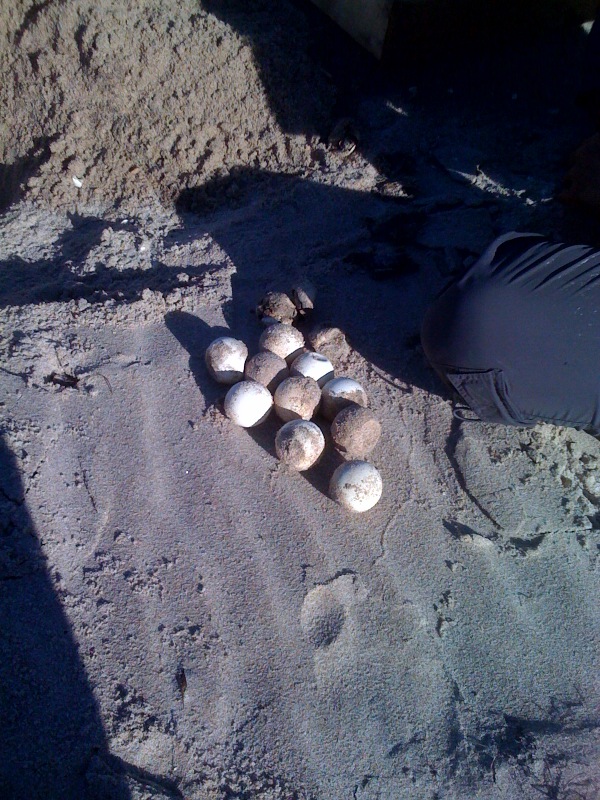
Sadly (though not surprisingly), several of the approximately 100 ping-pong-ball-sized eggs did not hatch. The number of unhatched eggs is carefully recorded, since changes in this pattern over time can indicate stress in the adult population. In addition to the unhatched eggs, we also find some green sea turtle hatchlings that were too weak to dig their way out of the nest.
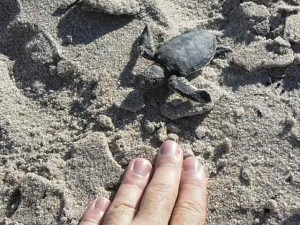
Baby green sea turtle with my hand for scale. Photo credit: David Shiffman
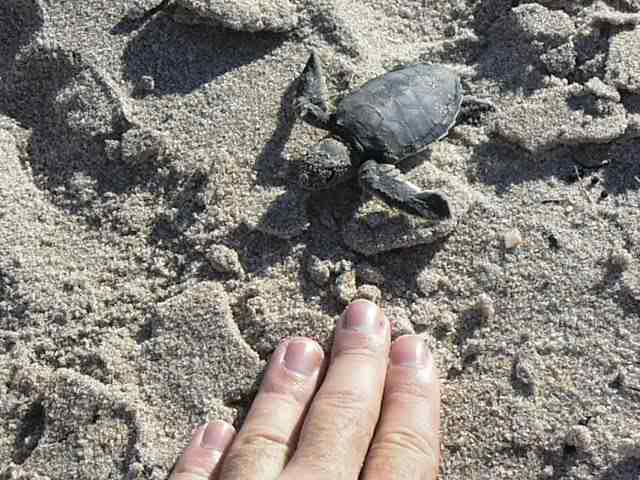
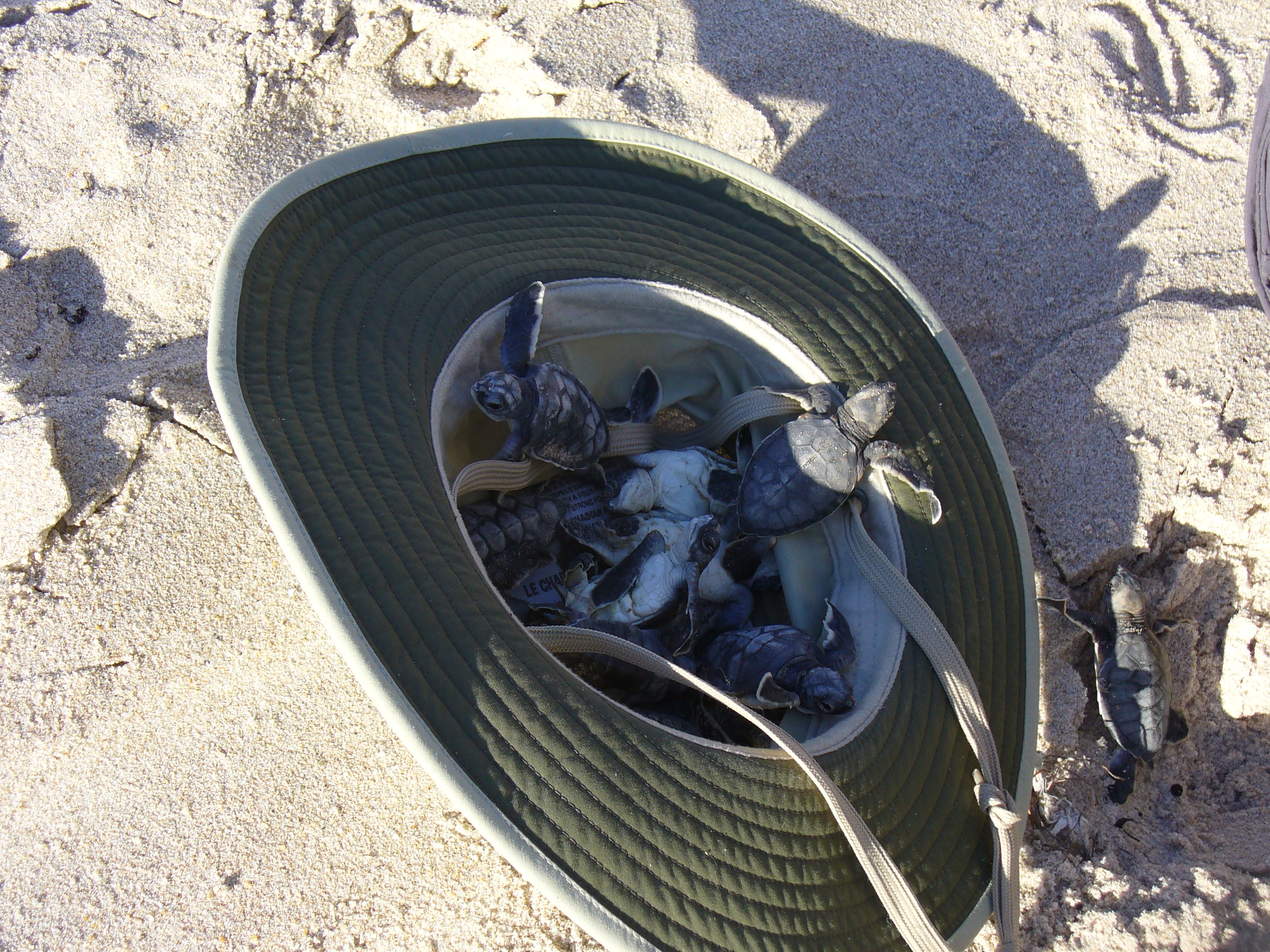
The first phase of a young sea turtle’s life involves a great deal of swimming, often nonstop swimming until they reach the offshore developmental habitat where they will spend the first few years of their life. In other words, if a hatchling lacks the strength to dig out of the nest, it’s not a good sign. Still, the UCF scientists rounded up the hatchlings for later release.
Figure 1- baby sea turtles in a hat. Photo credit: David Shiffman
Sea turtles have a remarkable natal homing ability- they return to the beach where they were born to lay eggs. If all goes well, the hatchlings that we released will come back to the beaches of Archie Carr in 30 years or so.

Share this:

  • Share on Bluesky (Opens in new window) Bluesky
  • Share on Facebook (Opens in new window) Facebook
  • Share on Reddit (Opens in new window) Reddit
  • Share on Threads (Opens in new window) Threads
  • Share on WhatsApp (Opens in new window) WhatsApp
  • Share on Mastodon (Opens in new window) Mastodon

Related

Tags: archie carr national wildlife refuge sea turtle hatchlings university of central florida

Post navigation

❮ Previous Post: Biodiversity Wednesday: Shortgrass Prairie
Next Post: Stem cell research, science policy, and President Bush’s book ❯

You may also like

Conservation
Biodiversity Wednesday – Archie Carr National Wildlife Refuge
January 19, 2011

Popular Posts

What Ocean Ramsey does is not shark science or conservation: some brief thoughts on "the Shark Whisperer" documentaryWhat Ocean Ramsey does is not shark science or conservation: some brief thoughts on "the Shark Whisperer" documentaryJuly 2, 2025David Shiffman
That's not a blobfish: Deep Sea Social Media is Flooded by AI SlopThat's not a blobfish: Deep Sea Social Media is Flooded by AI SlopDecember 19, 2025Andrew Thaler
Alberta, Canada is the proud owner of the largest man-made pyramid on the planetAlberta, Canada is the proud owner of the largest man-made pyramid on the planetOctober 16, 2012Andrew Thaler
Florida Senate fails basic biology, accidentally outlaws sex.Florida Senate fails basic biology, accidentally outlaws sex.May 11, 2011Andrew Thaler
Shark of Darkness: Wrath of Submarine is a fake documentaryShark of Darkness: Wrath of Submarine is a fake documentaryAugust 10, 2014Michelle Jewell
The story of the pride flag made from NASA imagery: Bluesky's most-liked imageThe story of the pride flag made from NASA imagery: Bluesky's most-liked imageSeptember 27, 2024David Shiffman
A quick and dirty guide to making custom feeds on BlueskyA quick and dirty guide to making custom feeds on BlueskyFebruary 7, 2024Andrew Thaler
Marine Biology Career AdviceMarine Biology Career AdviceMay 30, 2025David Shiffman
What can the funniest shark memes on the internetz teach us about ocean science and conservation?What can the funniest shark memes on the internetz teach us about ocean science and conservation?November 8, 2013David Shiffman
Here's what I teach my students about finding jobs in marine biology and conservationHere's what I teach my students about finding jobs in marine biology and conservationApril 10, 2024David Shiffman
Subscribe to our RSS Feed for updates whenever new articles are published.

We recommend Feedly for RSS management. It's like Google Reader, except it still exists.

Southern Fried Science

  • Home
  • About SFS
  • Authors
  • Support SFS


If you enjoy Southern Fried Science, consider contributing to our Patreon campaign.

Copyright © 2026 Southern Fried Science.

Theme: Oceanly Premium by ScriptsTown