Skip to content

Southern Fried Science

Over 15 years of ocean science and conservation online

  • Home
  • About SFS
  • Authors
  • Support SFS

Author: Chris Parsons

Dr. Chris Parsons has been involved in whale and dolphin research for over two decades and has been involved in projects on every continent. Dr. Parsons is an Associate Professor at George Mason University as well as the undergraduate coordinator for their environmental science program. He’s a member of the scientific committee of the International Whaling Commission (IWC), has been involved in organizing four of the International Marine Conservation Congresses (IMCC) (the world’s largest academic marine conservation conference) and two of the International Congresses for Conservation Biology. He was a Governor of the Society for Conservation Biology (SCB) for nearly a decade and also served two terms as the president of the SCB Marine Section. and he's currently on the Board of Directors of the American Cetacean Society, the Society for Marine Mammalogy and the SCB Conservation Marketing Working Group. In addition, Dr. Parsons has published over 140 scientific papers and book chapters and has written a textbook on marine mammal biology & conservation and co-edited a book on marine wildlife conflict resolution.

The Dark Side of Academia

Posted on August 7, 2014September 2, 2014 By Chris Parsons
Blogging, Science

ParsonsDr. Chris Parsons has been involved in whale and dolphin research for over two decades and has been involved in research projects in every continent except Antarctica. Dr. Parsons is an Associate Professor at George Mason University as well as the undergraduate coordinator for their environmental science program. He’s a member of the scientific committee of the International Whaling Commission (IWC), has been involved in organizing the International Marine Conservation Congress (IMCC) (the world’s  largest academic marine conservation conference) and is currently the Conference Chair and a Governor of the Society for Conservation Biology. In addition, Dr. Parsons has published over 100 scientific papers and book chapters and has written a textbook on marine mammal biology & conservation.

Listen, my Sith apprentice, strong in knowledge you are but there are those who are stronger and more intelligent than you, but to persevere and gain in status, strong in the dark side you must become. In these times funding is limited, tenured positions are few, and competition is great. Graduate students are many, and many of these have ideas for new research and new hypotheses that pose a threat to the current order. The hierarchy must be maintained with us at the apex, and no competition must be allowed.  Nurturing, cooperation, and egalitarianism -those are the characteristics of the light side and the light side is weak, and progress on the light side is slow. So my Sith apprentice, here is my advice to you to progress and succeed, especially when there are those around you who are more innovative, knowledgeable and intelligent than you.

Read More “The Dark Side of Academia” »

Distracted by abstracts: Tips for writing a good abstract for a scientific conference

Posted on April 7, 2014September 2, 2014 By Chris Parsons 4 Comments on Distracted by abstracts: Tips for writing a good abstract for a scientific conference
Blogging, Science

ParsonsDr. Chris Parsons has been involved in whale and dolphin research for over two decades and has been involved in research projects in every continent except Antarctica. Dr. Parsons is an Associate Professor at George Mason University as well as the undergraduate coordinator for their environmental science program. He’s a member of the scientific committee of the International Whaling Commission (IWC), has been involved in organizing the International Marine Conservation Congress (IMCC) (the world’s  largest academic marine conservation conference) and is currently the Conference Chair and a Governor of the Society for Conservation Biology. In addition, Dr. Parsons has published over 100 scientific papers and book chapters and has written a textbook on marine mammal biology & conservation.

I have just read and reviewed through close to 100 scientific abstracts for a conference, and my main conclusion is that ” ‘abstract’ – this does not mean what you think it means!”

An abstract is supposed to be a concise summary of your entire paper or study. Basically a written version of the 30 second “elevator pitch”. In these days of information overload there is so much emphasis on publishing, and so many journals willing to accommodate, the number of articles in scientific fields has increased rapidly. As a result, academics are increasingly reading no further than the abstract, and often only reading the title. To test this I looked at some of my papers where the website they were hosted by kindly provided statistics on abstract page views and actual download rates. The download rates were approximately only 10% that of the abstract views across the papers (and I am naively hopeful that at least some of a downloaded paper will be read). The figures were similar for other articles, so it wasn’t just my papers. So 90% of people who see your work probably won’t go beyond your abstract. This makes it vitally important that all the information you want to convey about your work is in the abstract.

However, in a frighteningly high proportion of abstracts the key results and conclusions of studies are not even mentioned. One of the abstracts I read in this latest batch noted that the methods, results  and the conclusions of the study “would be discussed”. As an abstract this is useless. Too frequently place holder abstracts are submitted to conferences, with the assumption that results will magically appear before the meeting. But if you don’t manage to get that analysis done, you’ll be giving a presentation that will be lacking, will embarrassing you and damage your career. Moreover, a lot more people will see your abstract than will actually get to your presentation, so professional opinions may be made on you by the quality of your abstract rather than the final presentation. Plus abstract books are physical entities, whether electronic or hard copy, and will be around a lot longer than your 10 minute presentation.   So for your professional image and also for the sake of communicating your study it is in your interests to produce a good abstract.

With that in mind, here are some suggestions on abstract structure.

Read More “Distracted by abstracts: Tips for writing a good abstract for a scientific conference” »

Don’t diss the dolphins

Posted on March 6, 2014September 2, 2014 By Chris Parsons 2 Comments on Don’t diss the dolphins
Blogging, Conservation

Parsons Dr. Chris Parsons has been involved in whale and dolphin research for over two decades and has been involved in research projects in every continent except Antarctica. Dr. Parsons is an Associate Professor at George Mason University as well as the undergraduate coordinator for their environmental science program. He’s a member of the scientific committee of the International Whaling Commission (IWC), has been involved in organizing the International Marine Conservation Congress (IMCC) (the world’s  largest academic marine conservation conference) and is currently the Conference Chair and a Governor of the Society for Conservation Biology. In addition, Dr. Parsons has published over 100 scientific papers and book chapters and has written a textbook on marine mammal biology & conservation.

At a recent conference of marine scientists I attended, one of the speakers announced, albeit tongue in cheek, that they “hated dolphins”. This prompted a round of applause and cheers from the largely marine biologist audience, much to the chagrin of the marine mammal researchers in the audience (there were several, and almost all of these were involved in marine mammal conservation).That sort of attitude unfortunately is common in the marine biology community. There seems to be a misapprehension that dolphin researchers get all the glamour, glory and funding, and to paraphrase Yoda, this leads to hate, and hate leads to suffering.

I’ve been studying dolphins (mostly in conservation-focused research) for over 20 years, and admittedly it has led to some rather nice trips on boats, sometimes in warm tropical locations. But it has also been 20 years with marine biologist colleagues constantly commenting that dolphin research is not “real marine biology” – even to the extent of having a reviewer say that, in response to a manuscript. Within the marine mammal science professional societies this has led to the rather unfortunate situation where: (a) marine mammalogists keep themselves to themselves with their own journals and conferences and not mixing with many other streams of marine biology; (b) there is such a fear of being seen as “not a real scientist” that within the marine mammal science community there is frequently a stigma against doing any applied, or interdisciplinary, or non-pure science research, including research that is conservation-oriented. This is at a time when such research is drastically needed, with so many cetacean species being endangered. In fact, a study on cetacean science literature  determined that about half of the studies could be important to conservation, but unfortunately much of the information lies locked within the ivory tower, and the relatively few ivory towers of marine mammalogists at that.

Read More “Don’t diss the dolphins” »

Blackfish: the Science Behind the Movie

Posted on September 18, 2013June 11, 2015 By Chris Parsons 13 Comments on Blackfish: the Science Behind the Movie
Conservation, Popular Culture, Science

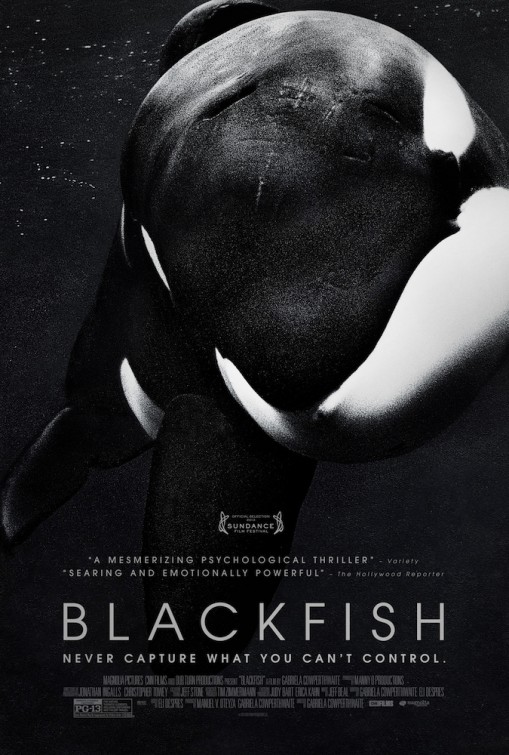
Blackfishn649728329_1260668_3283

The Oscar-winning documentary “The Cove” told the story of the dolphin hunt in the Japanese town of Taiji. Dolphins there are driven into a shallow cove and killed for meat and other products, with a select few set aside alive for sale to dolphinariums. Many are now saying that this year’s documentary on killer whales (Orcinus orca) in captivity, “Blackfish,” will be nominated for next year’s Oscar. Documentaries rarely get many viewers in movie theaters, but Blackfish, which cost only $76,000 to make and was initially released at only five movie theaters, has already grossed about $2 million nationwide and has been ranked among the 10 best performing nature documentaries, which include “March of the Penguins” and the much vaunted IMAX-friendly “Earth” and “Oceans” documentaries.

Blackfish focuses on the four people who have been killed by captive killer whales, bad corporate behavior by marine theme parks (especially SeaWorld) and the ethics of keeping killer whales in captivity. The film focuses particularly on the story of Tilikum, a 12,000lb male killer whale who was captured from Iceland in the early 1980s, has been living at SeaWorld of Florida since 1992, and to date has been involved in the deaths of three people. His last victim, his trainer of six years Dawn Brancheau, was brutally dismembered after he pulled her into the tank with him on February 24, 2010.

Read More “Blackfish: the Science Behind the Movie” »

Posts pagination

Previous 1 … 7 8

Popular Posts

What goes up must come down: the toxic hangover from the Freedom 250 fireworksWhat goes up must come down: the toxic hangover from the Freedom 250 fireworksJuly 6, 2026Chris Parsons
What Ocean Ramsey does is not shark science or conservation: some brief thoughts on "the Shark Whisperer" documentaryWhat Ocean Ramsey does is not shark science or conservation: some brief thoughts on "the Shark Whisperer" documentaryJuly 2, 2025David Shiffman
What is a Sand Shark?What is a Sand Shark?November 12, 2017Chuck Bangley
For when the madness ends: a 5-point plan for getting conservation back on track in the USFor when the madness ends: a 5-point plan for getting conservation back on track in the USJuly 9, 2026Southern Fried Science
Critically Endangered sawfish are spinning in circles until they die. What the heck is going on?Critically Endangered sawfish are spinning in circles until they die. What the heck is going on?May 29, 2024David Shiffman
Your help needed: Oppose a weakened shark finning ban in MarylandYour help needed: Oppose a weakened shark finning ban in MarylandJanuary 26, 2014David Shiffman
That's not a blobfish: Deep Sea Social Media is Flooded by AI SlopThat's not a blobfish: Deep Sea Social Media is Flooded by AI SlopDecember 19, 2025Andrew Thaler
The story of the pride flag made from NASA imagery: Bluesky's most-liked imageThe story of the pride flag made from NASA imagery: Bluesky's most-liked imageSeptember 27, 2024David Shiffman
Shark of Darkness: Wrath of Submarine is a fake documentaryShark of Darkness: Wrath of Submarine is a fake documentaryAugust 10, 2014Michelle Jewell
Oh Hell No: Ten Years of SharkNadoOh Hell No: Ten Years of SharkNadoAugust 16, 2023David Shiffman
Subscribe to our RSS Feed for updates whenever new articles are published.

We recommend Feedly for RSS management. It's like Google Reader, except it still exists.

Southern Fried Science

  • Home
  • About SFS
  • Authors
  • Support SFS


If you enjoy Southern Fried Science, consider contributing to our Patreon campaign.

Copyright © 2026 Southern Fried Science.

Theme: Oceanly Premium by ScriptsTown