Skip to content

Southern Fried Science

Over 15 years of ocean science and conservation online

  • Home
  • About SFS
  • Authors
  • Support SFS

Category: Popular Culture

Science in the Fleet: The Promise of Technology as a Panacea for Human Impacts

Posted on October 7, 2013October 27, 2013 By Andrew Thaler
Popular Culture, Science

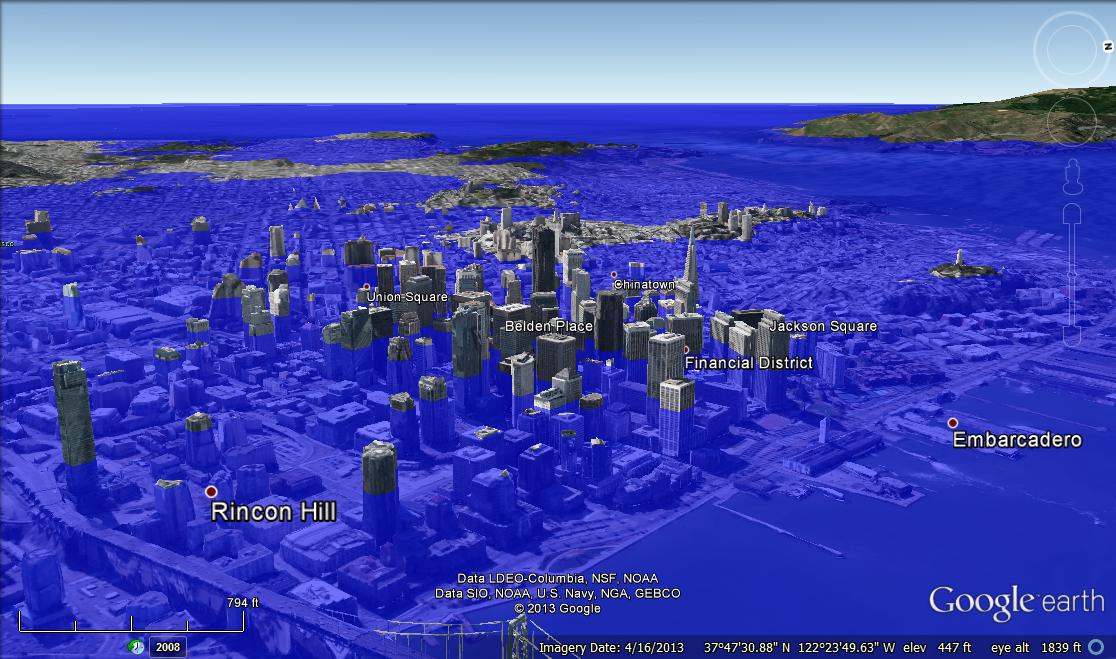
FleetCover1-REACHToday marks the release of Fleet: Wide Open, part 2 of my serial maritime science fiction adventure. With half the story revealed, we now see the roll technology plays in both the history and the day-to-day operations of the fleet. Specifically, we see three major technological advances that seem as though they would have been major solutions to the environmental problems facing the fleet, yet somehow, the world continues to fall apart.

In our world and the world of the fleet, we often hold up technological innovation as a panacea for global problems. It’s easy to look towards the next big advancement as the solution to our current woes — from alternative energy sources to groundbreaking trash removal devices — but what is often lost in the hype is the human component. Yes, technology is a necessary component of global environmental solutions. You can even look at the arc of human advancement as one long series of bootstrap-hoists — we need to utilize dirty tech to access environmentally sustainable tech (i.e. you can’t develop the ability to produce solar panels without first harnessing the energy locked in fossil fuels). But technology alone is useless without also changing human behavior. This creates a major problem, as technological innovation is often used as a tool to bypass human behavior entirely, the assumption being that it doesn’t matter what the individual does, so long as the tech is in place to mitigate it.

The horse piles of New York

Around the turn of the last century, New York City was in crisis. Horses, the primary means of transportation for people and products within the city have an unfortunate byproduct — feces, lots and lots of feces. At its peak, more than 60,000 horses were depositing upwards of 500 tones of manure every day. The horse crisis itself was the result of a major technological innovation — more efficient fertilizer based on mass produced phosphate. Where once there was a major economic incentive to collect the manure and resell it as fertilizer, now there was also no incentive. And so, the mountains of feces piled up. It got so bad that one editorial expounded that, by the 1930’s piles of horse manure would stand three stories tall and the city would be awash in an unending tide of feces.

Read More “Science in the Fleet: The Promise of Technology as a Panacea for Human Impacts” »

Fleet: Wide Open now available in the Amazon Kindle Store!

Posted on October 6, 2013October 27, 2013 By Andrew Thaler
Popular Culture

“The sea is big. The sea is cruel. She takes more than she gives. That’s how it’s always been.” Fuel is the lifeblood of the fleet and it is running out. It has been months since the crew of Miss Amy brought home a catch big enough to feed the fleet. With fuel rationed, there … Read More “Fleet: Wide Open now available in the Amazon Kindle Store!” »

Updated covers for Fleet: The Reach and Fleet: Wide Open

Posted on October 1, 2013October 27, 2013 By Andrew Thaler
Popular Culture

After receiving some great feedback on my first foray into indie publishing, I’ve decided to redo the covers for Fleet, my maritime science fiction serial. Take a look and let me know what you think. And, of course, check out Fleet: The Reach on Amazon’s kindle store. Fleet: Wide Open will be available on Monday!

Shift: an adventure in marine science from the not-too-distant future

Posted on September 24, 2013October 27, 2013 By Andrew Thaler
Popular Culture

FleetCover1-REACHAs I never stop telling you, I’m writing a book. Fleet is a dystopian maritime adventure in which sea level rise and disease has driven the last survivors of the human race to sea. I’m releasing the story in serials — 3 chapters per month — on Amazon. Loyal readers who can’t wait for the next installment can slate their thirst with a series of short stories set in the world of Fleet that will be published on Southern Fried Science every few weeks. Please enjoy the second of these distractions, Shift, a story that takes place before the main events of Fleet and fills in some of the backstory surrounding the fleet.

A version of Shift appeared last year in Eno Magazine, but this iteration has been revised to fit into the world of Fleet.


150 years before the Great Hurricane.

The old winch groaned under the strain of a full net. Captain Willis sighed. A heavy haul was a bad sign.

“Well, that’s the last cast this season, probably the last I’ll ever do.” He said the same thing last year.

The net cleared the ship’s deck. It bulged with the unmistakable quiver of a thousand tire-sized jellies, each one a tiny ecosystem. We dumped them into the shaker tray that violently separated the worthless goo from the precious catch.

I grabbed a few jellies to measure before tossing them over the side. They were smaller this year, a good sign. Something was eating them.

I turned back to the shaker. The captain was smiling. At the bottom of the catch bin were eight hollow-eyed shrimp, the largest haul we’d had all week. Hollow-eyes were a luxury, favored by the new international elite, who, despite living in massive floating cities that circled the world, imported more seafood than any other demographic. Hollow-eyes were particularly desirable, as they had the dual caché of being both new to the world market and already extremely rare. At current market price, they would cover the repairs to the winch, with a little left over for fuel. We counted sixty-seven hollow-eyes in the Miss Amy’s hold. It had been a very good week.

Read More “Shift: an adventure in marine science from the not-too-distant future” »

News from the Fleet, plus the cover unveiling for episode 2: Wide Open

Posted on September 22, 2013October 27, 2013 By Andrew Thaler
Popular Culture

Last month I debuted Fleet: The Reach, the first part of my dystopian maritime science fiction adventure.  Part Two: Wide Open will be hitting the Amazon Kindle store in a few week. If you’ve read Fleet: The Reach and are are looking for a way to get your Fleet fix, you can check out the … Read More “News from the Fleet, plus the cover unveiling for episode 2: Wide Open” »

Eleven Marine Organisms that would make Amazing Aquaman Villains

Posted on September 19, 2013October 27, 2013 By Andrew Thaler 2 Comments on Eleven Marine Organisms that would make Amazing Aquaman Villains
Popular Culture, Science
Physalia_physalis1
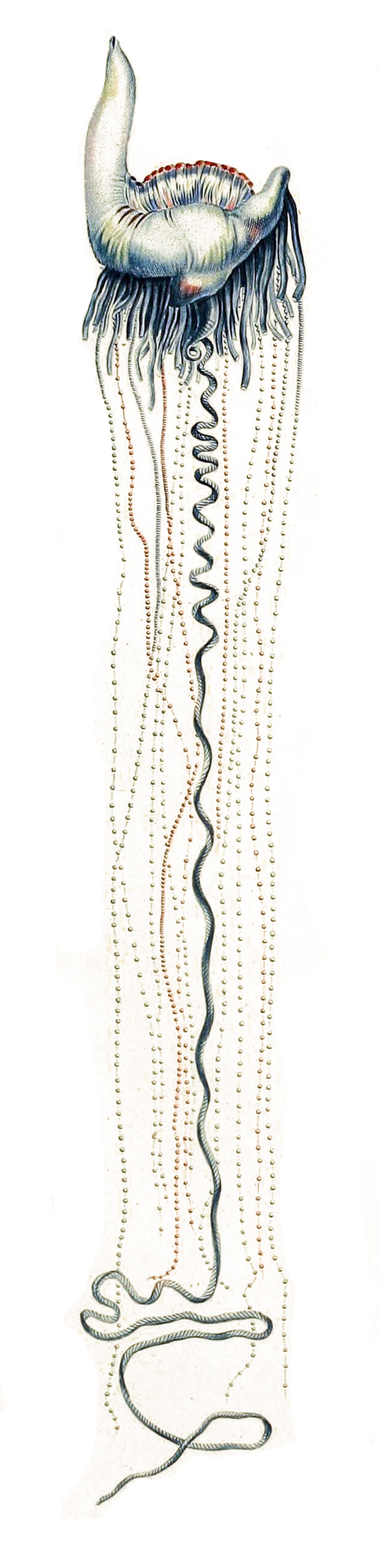
Physalia physalis. Public domain.

Black Manta. Ocean Master. The Trench. Scavenger. King Shark. Toxin. The Fisherman. Aquaman has had some pretty memorable villains over the last 80 years. Also, the Fisherman. This is Southern Fried Science, a blog famous for two things – inspiring the world with our unique blend of marine science and conservation and doing horrible, horrible things to Aquaman.

Catch me flounder for I have finned. It has been 98 days since my last Aquaman is Awesome post.

Sure, Black Manta has some pretty sweet gear, a compelling back story that justifies his hatred of the Atlantean king, and he looks like he’s poised for some serious awesome during DC’s Villains Month. The Trench even appear to be able to utilize chemosynthesis, when they’re not trapping dogs in cocoons. You know where I’m going with this, don’t you?

That’s right. No matter how ridiculous Aquaman’s comic book foes become, you can bet all your clams I’ll find real marine organisms that would make equally amazing villains. Here’s eleven of them.

Meet Man-o-War, the colonial killer that understands the value of teamwork.

Imagine a super villain composed of thousand of individual organisms that form one giant super-organism. Rather than a body filled with vital organs, this villain can take massive damage without a loss of ‘self’, only to spawn new minions to replaced the damaged parts. Now give this deadly foe 60-foot long venom-filled tentacles whose sting brings excruciating pain. Such a villain would certainly assume the identity ‘Man-o-War’.

The Portuguese Man-o-War (Physalia physalis), arguably the best known of the siphonophores (it is a cnidarian, but it is not a jellyfish) possess tentacles that unleash an unbelievably painful sting, the weapon of choice for our newest menace. But the weapon does’t make the man (o-war), and our villain has a strategic secret. Man-o-Wars are not singular animals, they are a colony of highly specialized polyps — each one an individual animal that combines to form a deadly super-organism.

The pneumatophore is a polyp the creates a gas-filled bladder for flotation. This produces the distinctive ‘sail’ of the Man-o-War, a bilaterally symmetric air sac that allows the colonial to remain at the surface and provides some propulsion by catching the wind. The sail is not just a sac of air, it also has defensive capabilities. When attacked, the sail is able to deflate, allowing the colony to sink below the surface and avoid predators. The gonozooids, which occur in tight clusters, are responsible for reproduction. Man-o-Wars engage in both asexual and sexual reproduction. Young colonies can reproduce clonally by budding, but as the colony becomes more mature, that gonozooids become sexually differentiated and release eggs and sperm to form new colonies. The gastrozooid takes care of all the digestion-related needs and surround the dastardly dactylozooids. Finally, the dactylozooids produce 10-meter (or longer!) tentacles that capture prey and drag them towards the gastrozooids. This is some serious teamwork.

Man-o-War even has minions. The shepherd fish is immune t the stinging tentacles and hangs out within the tentacles. The fish gains the protection of its lethal ally while the Man-o-War gets to use the shepherd fish as bait to lure other fish into its deadly trap.

Imagine Aquaman facing off against a colony of polyps that combine to form a deadly super-organism with massive stinging tentacles. Siphonophores have no nervous system, so Aquaman’s fish-talking power are useless. No matter how many dactylozooids, gatrozooids, and pneumatophores he destroyed, the gonozooids are there, churning out more.

But Man-o-Wars are not without their own predators, the largest of which is the enormous, cnidarian nom nom-ing Leatherback Turtle. Despite their size, leatherbacks are the largest live sea turtle, they survive exclusively on large numbers of jelly-like organisms — to the tune of the equivalent of eating 16 cucumbers per day. Leatherbacks aren’t the only animals that prey on Man-o-War, the salacious siphonophore has many foes, two of which join this list as super-villains in their own right.

Read More “Eleven Marine Organisms that would make Amazing Aquaman Villains” »

Blackfish: the Science Behind the Movie

Posted on September 18, 2013June 11, 2015 By Chris Parsons 13 Comments on Blackfish: the Science Behind the Movie
Conservation, Popular Culture, Science

Blackfishn649728329_1260668_3283

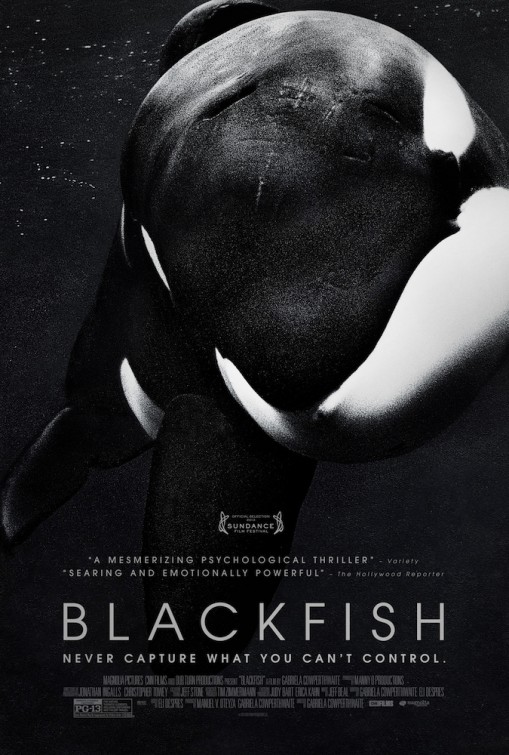
The Oscar-winning documentary “The Cove” told the story of the dolphin hunt in the Japanese town of Taiji. Dolphins there are driven into a shallow cove and killed for meat and other products, with a select few set aside alive for sale to dolphinariums. Many are now saying that this year’s documentary on killer whales (Orcinus orca) in captivity, “Blackfish,” will be nominated for next year’s Oscar. Documentaries rarely get many viewers in movie theaters, but Blackfish, which cost only $76,000 to make and was initially released at only five movie theaters, has already grossed about $2 million nationwide and has been ranked among the 10 best performing nature documentaries, which include “March of the Penguins” and the much vaunted IMAX-friendly “Earth” and “Oceans” documentaries.

Blackfish focuses on the four people who have been killed by captive killer whales, bad corporate behavior by marine theme parks (especially SeaWorld) and the ethics of keeping killer whales in captivity. The film focuses particularly on the story of Tilikum, a 12,000lb male killer whale who was captured from Iceland in the early 1980s, has been living at SeaWorld of Florida since 1992, and to date has been involved in the deaths of three people. His last victim, his trainer of six years Dawn Brancheau, was brutally dismembered after he pulled her into the tank with him on February 24, 2010.

Read More “Blackfish: the Science Behind the Movie” »

Momentary Distractions: Bonus Fleet short story for Southern Fried Science readers

Posted on September 13, 2013October 27, 2013 By Andrew Thaler
Popular Culture

FleetCover1-REACHFleet, my fist foray into book-length, serialized science fiction, is a decidedly salty vision of the near future, where an unknown plague has left land uninhabitable and sea level rise has created vast new oceans to explore. The last survivors of the human race are scattered across new and dangerous seas. The only traces of a previous world are lost among the flotsam.

Fleet is an experiment in serial self-publishing. New parts will be released the first Monday of every month through the end of 2013, but Southern Fried Science don’t have to wait a whole month to revisit the fleet. Near the middle of each month, I will post a short mini-chapter for anyone to read and enjoy. While not part of the central story line, these mini-chapters will add details to the world of Fleet and provide glimpses into the lives of minor, yet still important, characters.

The first Momentary Distraction, Genesis, tells the story of the fleet’s ancient origin, as remembered by the last survivors of global disaster.

Read More “Momentary Distractions: Bonus Fleet short story for Southern Fried Science readers” »

Six sea monsters that make their horror movie counterparts look tame

Posted on September 8, 2013January 3, 2017 By Andrew Thaler
Popular Culture, Science

Evolution is infinitely creative. Sometimes, amid the beauty and wonder, the awe that emanates from the shear power of natural selection, and the poetry of descent with modification, evolution produces something that terrifies. I am not talking about our natural predators, for whom fear is part of our evolutionary heritage, but rather creatures that appear as though they emerged from our darkest nightmares. But even our nightmares are limited by our finite minds.

Evolution has no such limits and the immense size and incomprehensible diversity of the oceans has produce animals that make us yearn for the comforting familiarity of the common Pumpkinhead. Submitted for the approval of the Midnight Society, I present six sea monsters that make their horror movie counterparts look tame:

1. These mind-bending tapeworms crawled straight out of Slither.

Here is a classic horror movie scenario for you: alien/parasite/mutant invaders enter your body, latch on to you brain, and take control, forcing you to do their bidding as they multiply and infect those around you. From Body Snatchers to Slither, mind-controlling parasites are a mainstay of the genre. But you’re a reader of Southern Fried Science. You already know all about barnacles that take over crab brains and induce sex-changes when necessary or fungi that invade ants and force them to climb to their doom. Mind control parasites aren’t really all that uncommon, but they mostly infect invertebrates. There aren’t any deadly mind-melting monsters that can take over us higher organisms, right? Right?!

Wrong.

Read More “Six sea monsters that make their horror movie counterparts look tame” »

Sick of fictional mermaid documentaries? Try some dystopian maritime science fiction, instead!

Posted on September 2, 2013October 27, 2013 By Andrew Thaler 4 Comments on Sick of fictional mermaid documentaries? Try some dystopian maritime science fiction, instead!
Popular Culture

Welcome to the Fleet! It’s the near future, the rising tides have swallowed much of the world’s coastlines, and the last survivors of a deadly plague are scattered across a new and vastly different ocean. But all is not well in the Reach. The fish are dwindling, the currents are shifting, and secrets long thought … Read More “Sick of fictional mermaid documentaries? Try some dystopian maritime science fiction, instead!” »

Posts pagination

Previous 1 … 9 10 11 … 20 Next

Popular Posts

The story of the pride flag made from NASA imagery: Bluesky's most-liked imageThe story of the pride flag made from NASA imagery: Bluesky's most-liked imageSeptember 27, 2024David Shiffman
"Why Sustainable Seafood Matters" is now available for preorder! Here's what it's about, and why I decided to write it."Why Sustainable Seafood Matters" is now available for preorder! Here's what it's about, and why I decided to write it.June 8, 2026David Shiffman
I just told 850 shark scientists a hard truth: We’re not communicating shark conservation correctly.I just told 850 shark scientists a hard truth: We’re not communicating shark conservation correctly.June 1, 2026David Shiffman
What Ocean Ramsey does is not shark science or conservation: some brief thoughts on "the Shark Whisperer" documentaryWhat Ocean Ramsey does is not shark science or conservation: some brief thoughts on "the Shark Whisperer" documentaryJuly 2, 2025David Shiffman
Deep-sea Mining, Domestic Cats, Star Trek, and Ocean Exploration: Andrew's mid-year podcast round-up.Deep-sea Mining, Domestic Cats, Star Trek, and Ocean Exploration: Andrew's mid-year podcast round-up.June 6, 2026Andrew Thaler
Shark of Darkness: Wrath of Submarine is a fake documentaryShark of Darkness: Wrath of Submarine is a fake documentaryAugust 10, 2014Michelle Jewell
Why ocean science is still one of the worst-funded scientific fields worldwideWhy ocean science is still one of the worst-funded scientific fields worldwideJune 3, 2026Chris Parsons
That's not a blobfish: Deep Sea Social Media is Flooded by AI SlopThat's not a blobfish: Deep Sea Social Media is Flooded by AI SlopDecember 19, 2025Andrew Thaler
What is a Sand Shark?What is a Sand Shark?November 12, 2017Chuck Bangley
Here's how to join my IMCC8 symposium, "Ocean Science Communication: What's New and What's Next?"Here's how to join my IMCC8 symposium, "Ocean Science Communication: What's New and What's Next?"April 22, 2026David Shiffman
Subscribe to our RSS Feed for updates whenever new articles are published.

We recommend Feedly for RSS management. It's like Google Reader, except it still exists.

Southern Fried Science

  • Home
  • About SFS
  • Authors
  • Support SFS


If you enjoy Southern Fried Science, consider contributing to our Patreon campaign.

Copyright © 2026 Southern Fried Science.

Theme: Oceanly Premium by ScriptsTown